-
annual review
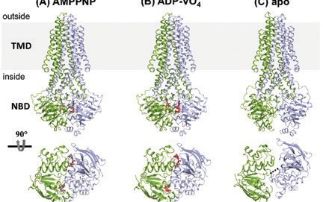
Bacteria utilise ATP-binding cassette (ABC) transporters to import nutrients and detoxify themselves. These transporters have been shown to exist in wide open conformations that permit the access of many substrates in the binding pocket.
-
annual review

Many types of single-celled microorganisms such as bacteria are covered with a protective outer layer of proteins known as the S-layer.
-
annual review
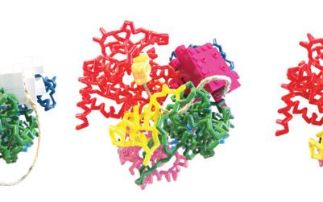
In all cells derived from animals, plants, fungi and protozoa a single protein called UGGT acts as a quality control checkpoint that inspects secreted glycoproteins.
-
annual review
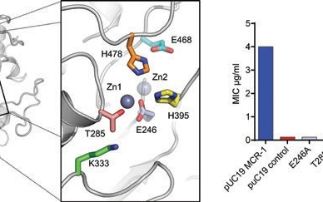
Gram-negative bacteria that are extensively resistant to multiple antibiotics are an ever-increasing global threat. Colistin is an antibiotic used as the last line of defence against highly resistant Gram-negative bacteria. However, in recent years bacteria have emerged with resistance to this crucial antibiotic.
-
annual review
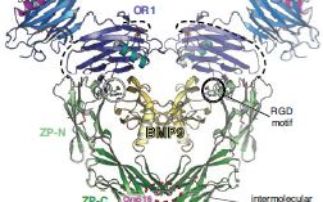
Endoglin (ENG)/CD105 is a mammalian glycoprotein that is found in the membranes of cells that line blood vessels. It is essential for healthy heart development and blood vessel growth, but conversely it is also involved in preeclampsia and can help tumours establish their blood supply.
-
annual review
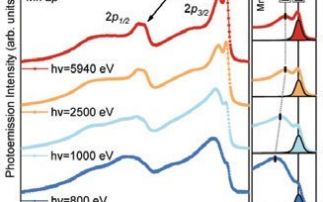
As the interface between magnetic and non-magnetic materials is a key feature of spintronic devices, it is crucial to characterise and understand both the surface and bulk electronic and magnetic properties of the materials used in their production.
-
annual review
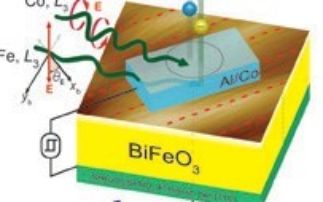
The data storage on which out smartphones, tablets and computers rely works via electrical fields (e.g. flash drives) or magnetic fields (e.g. hard drives), but research into magnetoelectric materials could lead to a new generation of multifunctional devices that use a combination of the two.
-
annual review
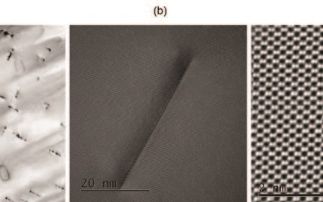
Flawless diamonds are extremely rare and expensive. Most diamonds contain defects, and for scientific and industrial applications, the defects are very important. In a naturally-formed diamond, the presence and structure of defects can be used to accurately determine the geological environment in which it was formed. The defects also shape the electronic and optical properties of diamonds, and exploiting these properties in synthetic diamonds could lead to next-generation optical storage ...
-
annual review
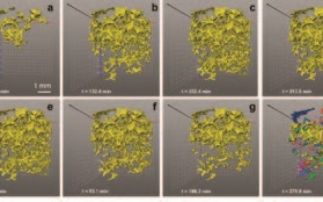
Knowing how fluids move through micron-sized voids (or ‘pores’) in rock kilometres below the Earth’s surface is crucial information to help understand and optimise underground carbon dioxide (CO2) sequestration, oil recovery from reservoir rocks, and a host of other processes.
-
annual review
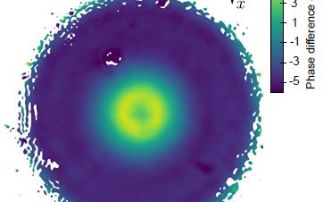
The intense X-ray light produced by modern synchrotron radiation sources and X-ray free-electron lasers (XFELs) allows the fine structure and dynamics of matter to be studied in exquisite detail. In principle, beams should be able to be focused to a few nanometres and below.
-
annual review
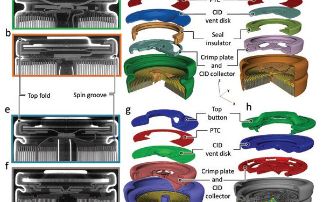
The 18650 cylinder is the most widely used lithium ion (Li-ion) cell geometry, powering everything from laptops to electric vehicles. Its capacity has been steadily increasing, and now more than ever, the safety of Li-ion batteries is of the utmost importance. Cell failure is extremely rare during normal operation, but under abusive conditions the active materials within Li-ion batteries break down exothermically, generating large amounts of heat that can lead to a positive feedback loop, ...
-
highlight

-
news

-
highlight

The detection of iron and calcium compounds in amyloid plaque cores
-
news

-
news

-
highlight
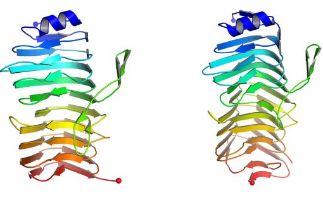
Researchers reveal the structure of a protein that helps bacteria aggregate
-
news
-
news
-
highlight
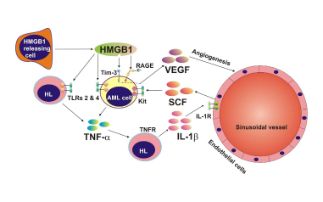
Targeting the mechanisms that allow leukaemia to thrive