-
highlight
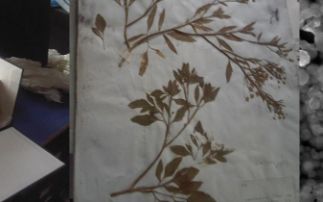
The University of Manchester museum herbarium was founded in 1860 and contains over a million specimens from all over the world, with collections spanning hundreds of years. The challenge of how to preserve botanical specimens is centuries old, and a wide range of techniques have been used to prevent decay by bacteria, fungi, insects and rodents. The effectiveness of the treatments is demonstrated in the excellent preservation of many museum specimens, but could the pesticides used present a ...
-
highlight
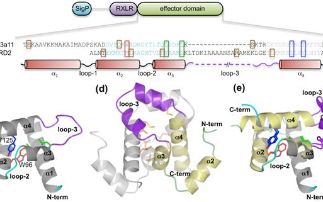
Fungus-like eukaryotic plant pathogens of the genus Phytophthora are devastating to root crops and vegetables because the effector proteins they produce can evolve rapidly to evade recognition by the host’s immune system.
Until now the molecular mechanisms underlying this evolutionary arms race have been poorly understood. New research by a team from the BBSRC’s John Innes Centre, Sainsbury Laboratory and the University of East Anglia, have used Diamond’s MX beamlines to shed light on the ...
-
highlight
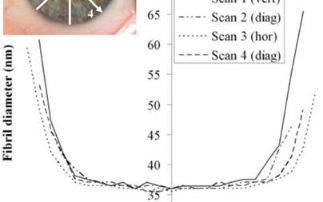
The cornea is the external lens of the eye, responsible for refracting incoming light onto the crystalline lens behind, which in turn focuses it on to the retina. It also plays a protective role, shielding the rest of the eye from dust and infection. To function, the cornea must be transparent to visible light, possess high mechanical strength, and have precisely defined curvature to focus.
-
highlight
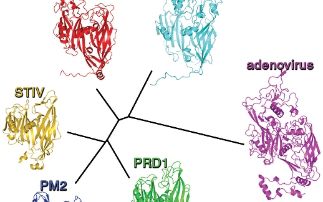
Just as humans have an ancestry, so too do viruses. But whereas we can use fossils to help identify the creatures that roamed the earth before us, viruses are much harder to classify and have left no fossilised remains for us to study. A group of researchers from Diamond Light Source and the Wellcome Trust Centre for Human Genetics are currently working on piecing together a complete history of viruses, mapping out their evolutionary lineage by solving the 3D structures of the organism’s ...
-
highlight
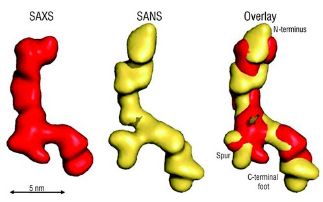
Elastin is the most abundant protein in mammalian elastic tissues and is responsible for their elastic recoil and resilience. Elastin dominates the mass of the aorta where it encounters the peaks and troughs of systole and diastole over the course of two billion heartbeats in a lifetime. Tropoelastin is the soluble precursor to elastin, which is constructed by the hierarchical assembly and cross-linking of many tropoelastin monomers that accumulate on a microfibrillar scaffold.1 Tropoelastin ...
-
highlight
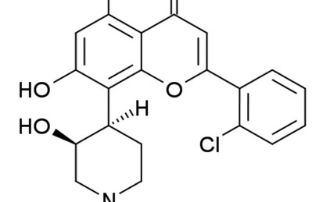
Flavopiridol was discovered to have anti-cancer properties in 19921, specifically by binding to cyclin-dependant kinases (CDKs) and inhibiting ATP binding. Since then it has been involved in a number of phase I and II clinical studies, on its own and in combination with other drugs. Although it binds to specific CDKs with nanomolar affinity, flavopiridol has been given intravenously in higher than expected concentrations to reach a therapeutic concentration at the cancer site. The high ...
-
highlight
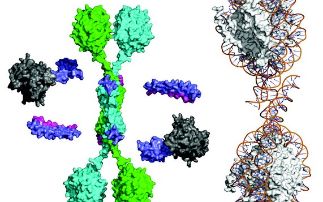
Transcriptional repression in eukaryotes requires the recruitment of large protein complexes to gene promoters and enhancers. These complexes contain histone deacetylases, and other enzymes, that facilitate chromatin remodelling so as to repress gene transcription. SMRT and NCoR are homologous co-repressor proteins that are recruited to multiple repressive transcription factors. When isolated from HeLa cells, SMRT and NCoR purify as large complexes of between 1 and 2 megadaltons containing ...
-
highlight
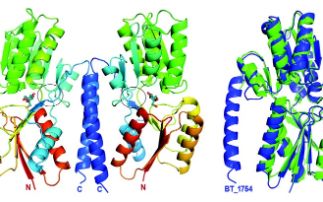
Our indigenous gut microbiota play an important role in maintaining normal health and nutrition. They provide us with traits that the human genome does not encode, such as the degradation of otherwise indigestible dietary polysaccharides. Survival in the gastrointestinal (GI) tract depends on the ability of these microorganisms to rapidly respond to changes in their dynamic nutrient environment. Here we show that a dominant member of the normal gut microbiota, Bacteroides thetaiotaomicron, ...
-
highlight
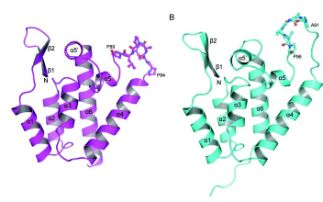
Lentiviruses are associated with chronic disease states in a variety of mammals. However, until recently it was thought that these pathogens had no capacity for germ-line integration, and were only spread horizontally in an exogenous fashion. The discovery of the prehistoric endogenous lentiviruses in rabbits (RELIK)1 and lemurs (PSIV)2 refuted these ideas revealing lentiviruses to be present in a range of mammals, capable of germ-line integration and far more ancient than previously ...
-
highlight
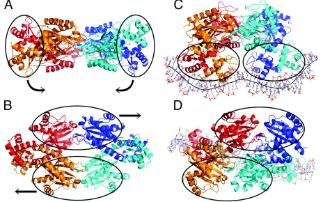
The majority of bacterial gene regulators bind as symmetric dimers to palindromic DNA operators. Multimeric forms of proteins, including tetramers, are able to recognize longer operator sequences in a cooperative manner, although how this is achieved is not well understood due to the lack of complete structural information. Using data collected at Diamond Light Source beamline I04, we solved the crystal structures of the multidrug binding protein TtgV, a gene repressor that controls efflux ...
-
highlight
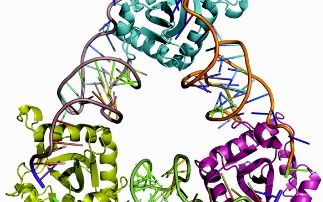
There are literally astronomical numbers of bacteriophages on Earth. These are viral parasites of bacteria and as such generate an immense selective pressure, driving adaptive co-evolution between predator and prey. Bacterial hosts are forced to evolve protective mechanisms1 whilst the predating phages must respond to subvert these new counter-measures. One broad class of phage-resistance mechanisms takes an extreme approach, causing the suicide of phage-infected bacteria before the ...
-
highlight
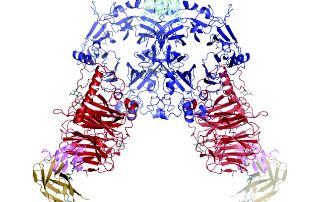
The intricate wiring of the human brain requires cell surface signalling systems to guide the growing neurites to their correct locations. Indeed, the development and homeostasis of tissues throughout the body is founded on cell guidance systems. The semaphorins constitute one of the major families of cell guidance cues and with their cognate receptors, the plexins play central roles in diverse physiological processes ranging from cell migration, angiogenesis and neural connectivity to ...
-
highlight
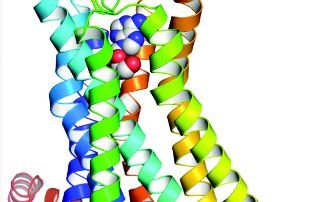
G protein coupled receptors (GPCRs) are a large family of proteins that span the cell membrane of eukaryotes and consist of seven transmembrane helices. GPCRs respond to molecules outside the cell and activate signal transduction pathways inside the cell. The adenosine receptor and β-adrenoceptors (βARs) are GPCRs that activate intracellular G proteins in response to the binding of agonists like adenosine or noradrenaline, respectively. The importance of agonist-induced activation of ...
-
highlight
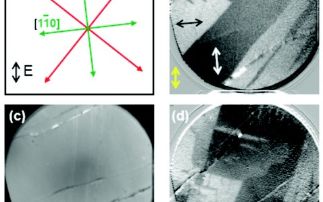
Optimizing the electronic and magnetic properties of layered magnetic heterostructures for specific applications remains a challenging task for materials engineering. Characterization techniques employing the absorption and scattering of soft X-rays have emerged as important and powerful tools for the study of heterostructures and their interfaces. In fact, magnetic dichroism in X-ray absorption (XA) i.e., the difference in absorption based on the relative orientation of the X-ray ...
-
highlight
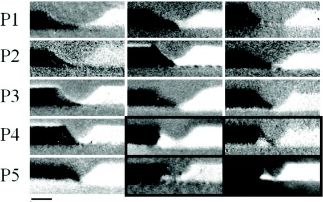
The spin-torque resonance effect on domain walls is an exciting new line of research for spintronic devices such as race-track memory and magnetic logic as it allows depinning of domain walls from pinning sites at lower threshold current densities. Following the initial observation of domain wall resonance using an oscillating current in a semicircular Ni80Fe20 (Py) wire 1 where the restoring force was provided by an applied magnetic field perpendicular to the wire, further work has shown an ...
-
highlight
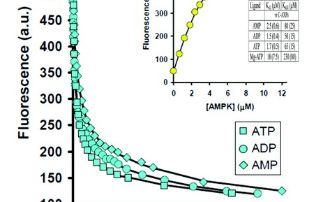
All living cells require energy, usually provided in the form of ATP, to carry out fundamental processes like movement and growth. Therefore, cells have to balance energy supply with the demand. AMP-activated protein kinase (AMPK) has emerged as a central component of a signalling pathway involved in regulating intracellular energy homeostasis. When ADP and AMP levels increase, concomitant with a fall in ATP levels, AMPK is activated by phosphorylation on threonine-172 within the catalytic a ...
-
highlight
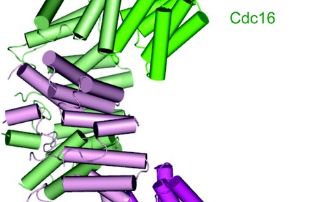
The anaphase promoting complex or cyclosome (APC/C) is a multi-subunit cullin-RING E3 ubiquitin ligase that functions to regulate progression through the mitotic phase of the cell cycle and controls entry into S phase 1. APC/C-mediated coordination of cell cycle progression is achieved through the temporal regulation of APC/C activity and substrate specificity. The core APC/C is assembled from 13 different proteins, mostly highly conserved and essential for function, generating a ...
-
highlight
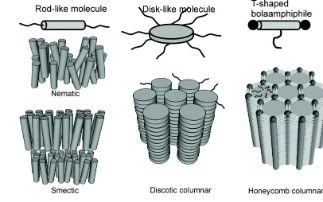
Liquid crystals have transformed our daily lives, with the LCD industry currently being worth £300 bn per year worldwide. The nematic phase, the most common LC phase used in displays and also the simplest, is formed by rod-like aromatic molecules bearing a flexible chain at one or both ends. Such molecules also form layered, or smectic, phases (Fig. 1, left). Thirty years ago a third type of LC, the columnar phase, was discovered in disc-like molecules, with columns of stacked discs placed ...
-
highlight
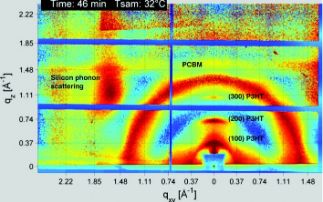
Organic photovoltaic (PV) materials have long-term promise for large area devices on flexible substrates produced by low-cost processes such as inkjet printing. Control of order and morphology at the nanometre scale during processing steps such as thermal annealing is crucial for optimized device efficiency. In this study, the structural changes during in-situ annealing are characterised by time-resolved grazing incidence X-ray diffraction.
-
highlight
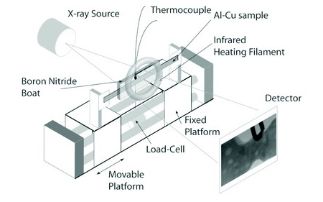
Our society takes for granted the high performance aluminium alloys used in aircraft, trains, fast ferries and motor vehicles. This high performance exists thanks to extensive research and development in industry and academia. One part of that research involves studying alloys as they solidify. During solidification, an alloy is a semi-solid “mush”, with properties that will significantly affect the quality of the final solid material. One property of great importance is the formation of ...