-
highlight
%20allowed%20new%20insights%20into%20host%20plant%20interactions%20%20%20Reprod.jpg)
In contrast to mammals, plants do not have mobile defender cells and an adaptive immune system; they defend themselves against attack from pathogens using an innate immune system. This immune system relies on the detection of foreign molecules and responds to these in different ways. One such way is the Hypersensitive Response (HR) where plant host cells undergo localised cell death. This makes it challenging for invading pathogens to establish a successful infection. HR is normally observed ...
-
highlight
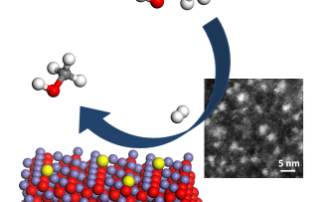
Scientists at the University of Oxford and Diamond Light Source have described a new chemical catalyst for producing methanol, a promising future biofuel. By reducing the energy needed to convert biomass to methanol, the new catalyst offers a more sustainable way to make the useful chemical and fuel.
At present, methanol is used primarily in industrial chemistry, including the manufacture of plastics and synthetic fibres, and as a fuel in fuel cells. It is manufactured from natural gas, ...
-
highlight
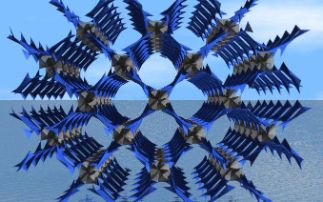
A collaboration of scientists from the University of Nottingham, STFC’s ISIS Neutron and Muon Source, Diamond Light Source, the University of Oxford and Peking University in China, have created a new low-cost material that can capture harmful gases, offering exciting prospects for combating atmospheric pollution.
-
highlight
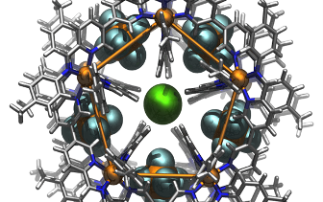
The discovery of a synthetic molecule made up of 60 simple components able to reorganise themselves to produce new functions will lead to better understanding of Nature’s processes.
The incredibly complex structure of the pentagonal prismatic molecule was discovered when researchers working at The University of Queensland, The University of Cambridge, and Randolph-Macon College in the USA, formed the structure by transforming a tetrahedral molecule into a second structure - a barrel-like ...
-
highlight
.%20CaB61%20(2).%20CaB61%20(2).%20CaB61%20(2).%20CaB61%20(2).%20CaB61%20(2).%20CaB61%20(2).%20CaB61%20(2).%20CaB61%20(2).%20CaB61%20(2).%20CaB61%20(2).%20CaB61%20(2).%20CaB61%20(2).%20CaB61%20(2).png)
Researchers from the University of Oxford and Diamond Light Source have discovered a new material, a Calcium hexaboride (CaB6) compound crystallising in a previously unknown crystal structure. Published in Physical Review Letters these findings can pave the way to customised boron-based intermetallics. The ordinary CaB6 is a semiconductor with an amazing hardness and high melting temperature governed by a high chemical stability. It has been investigated for a long time due to its relevance ...
-
highlight
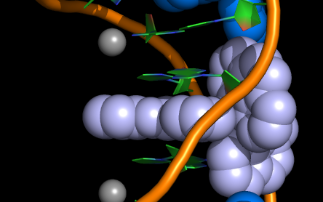
A collaboration of scientists from Diamond Light Source and the University of Reading has revealed the binding mechanism of a so-called ‘light-switch’ effect complex, a type of chemical compound that fluoresces on binding to DNA. There are two possible applications for these compounds – in sensitive diagnostic tests and as sensitizers for photodynamic therapy. The team used the Diamond synchrotron to determine exactly how the photoreactive metal complex binds to DNA, revealing that the ...
-
highlight
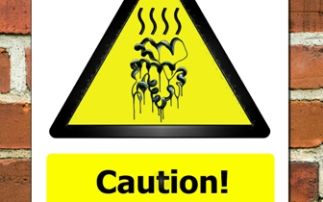
Water, essential to life… or is it?
Proteins are large biological molecules that are synonymous with living things. They allow us to convert food into energy, supply oxygen to our blood and muscles, and drive our immune systems.
It is the general understanding that since proteins have evolved in a water-rich environment, they are dependent on water to survive and function. Researchers at the University of Bristol have used the Circular Dichroism beamline (B23) at Diamond Light Source to ...
-
highlight
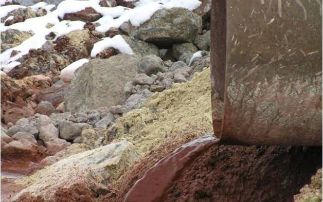
In October 2010, a dam failure at an aluminium producing plant in western Hungary released around one million cubic metres of toxic red sludge into nearby towns and villages and across agricultural land. The sludge was a mixture of water and mining waste containing heavy metals and was deemed a threat to the environment by Hungarian officials. A large cleanup operation ensued. A team from the University of Leeds has used Diamond’s Microfocus Spectroscopy beamline, I18, to study samples of ...
-
highlight
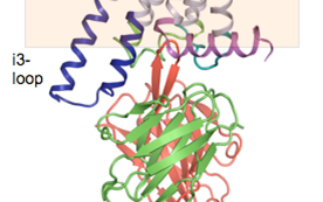
G-protein-coupled receptors (GPCRs) are the single most important drug target in the body because they are central to so many biological processes. Gaining a better understanding of how GPCRs operate will help scientists develop novel strategies to modulate their activity, potentially affecting their role in diseases such as Parkinson’s or conditions such as insomnia.
-
highlight
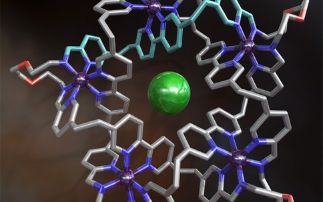
Diamond Light Source has recently played a key role in helping to reveal the exact structure of the most complex non-DNA molecular knot prepared to date.
-
highlight
Ice cores drilled from the frozen Antarctic landscape are made up of layer upon layer of frozen snow, dating back hundreds of thousands of years. Trapped within the ice are minute dust particles which can yield valuable information on temperature, precipitation, atmospheric composition and volcanic activity, frozen at the time of the snowfall. A group of Italian scientists have been using one of Diamond’s spectroscopy beamlines, B18, and the Stanford Synchrotron Radiation Lightsource to ...
-
highlight
.jpg)
Artificial heart valves have been used since the 1960s to replace natural heart valves damaged through disease. Each of four valves enables unimpeded blood flow through the heart itself and from the heart to the major arteries. As the heart beats the valve opens and closes, subjecting it to pressure loading and unloading. Artificial heart valves must be able to withstand repeated cycles of tensile loading and unloading in realistic conditions. Scientists from the University of Cambridge and ...
-
highlight
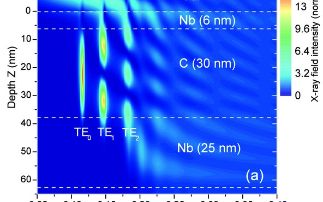
Thin multilayer structures comprising of thin layers of alternating elements or compounds find widespread technological applications – be it the anti-reflection coating in the visible range or the waveguide structures for X-rays. In the X-ray regime they are also used in many technological applications such as X-ray astronomy, microscopy, spectroscopy, and as filters and monochromators for synchrotron radiation and free electron X-ray lasers. It is important to correlate the measured optical ...
-
highlight
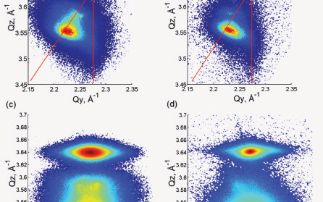
With the phase-out of incandescent light bulbs becoming more common around the world, there is a need to investigate more efficient and robust alternatives. Thanks to their low energy consumption, prolonged lifetime, small size and reliability, Light-emitting diodes (LEDs) are seen as an attractive option. But they are not quite ready to take over from the light bulb yet. A bright white LED powerful enough to light up a room is currently very expensive. Research is underway to make white ...
-
highlight
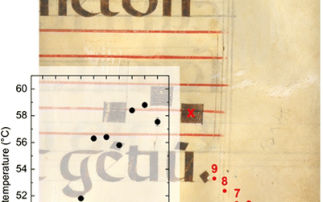
Parchment has been used for recording historical information since at least the 2nd century BC and makes an important contribution to our nation’s cultural heritage. Parchments are routinely assessed for degradation, but techniques with higher spatial resolution are needed to assess what is happening on the microscopic/nanoscopic scale. A group of scientists from Slovenia, Germany and the UK have been using I22, Diamond’s Small Angle Scattering and Diffraction beamline along with infrared ...
-
highlight
Nanoparticles have been incorporated in many consumer products, however their safety and toxicity have not been clearly identified. This is made worse by difficulty in measuring how biological systems interact with nanoparticles.
-
highlight
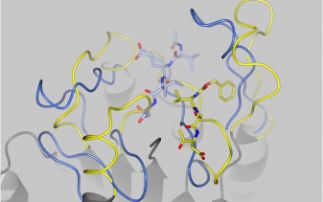
Huntington’s disease (HD) is a dominantly-inherited neuropsychiatric disorder. Typically the symptoms begin in adulthood, slowly progressing from movement disorder to behavioural and cognitive disturbances, often manifested in depression and dementia. It has been known since 1993 that the disease is due to mutation of a single gene coding for huntingtin (HTT) that extends the poly-glutamine (poly-Q) repeats in the protein. Aggregation of poly-Q repeat fragments is considered to be the ...
-
highlight
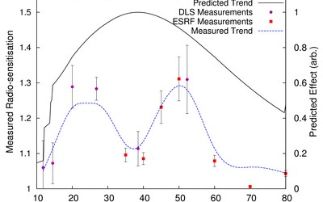
During the course of their treatment, around half of cancer patients receive some type of radiation therapy. This therapy is widely used to target tumours and modern techniques aim to avoid dose to healthy tissue as much as possible. However, toxicity developing within healthy tissue is still a problem and, as a result, scientists are looking for new techniques that can make cancer cells more sensitive to radiation.
-
highlight
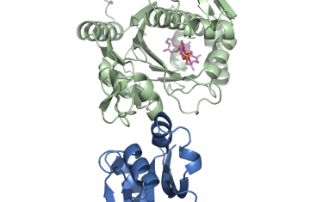
Bacteria are single-celled organisms that inhabit almost every environment on the planet, including the bodies of humans and animals. The cell wall maintains the structural integrity of the cell, and enables the bacteria to survive in its chosen environment. In disease-causing bacteria (pathogens) it also plays a role in the progression of the disease. A group of scientists from Newcastle University and the Nara Institute of Science and Technology in Japan have used Diamond to identify a ...
-
highlight
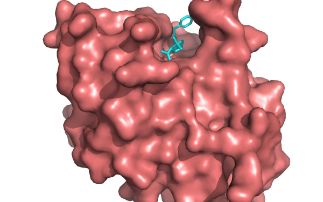
A breakthrough in the fight against drug-resistant infections is one step closer following the discovery of the structure of NDM-1: a vicious form of bacteria that is currently resistant to the most powerful antibiotics available. The structure was determined by crystallography carried out at Diamond Light Source.