-
highlight
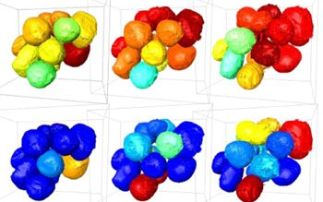
Scientists on I12 reveal key insights into how casting defects form in semi-solid alloys.
-
highlight
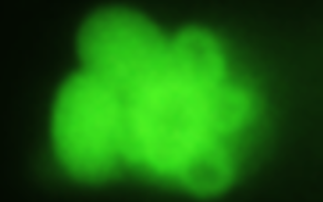
Small angle scattering patterns lead to plausible protocell model
-
highlight
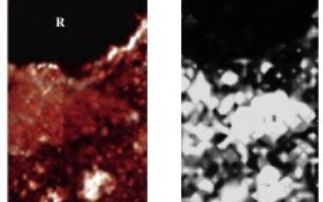
Scientists working at Diamond Light Source have revealed new information about 10,000 years old pigments used in Neolithic wall paintings and designs from two sites. The work, which took place on the Multimode InfraRed Imaging And Microspectroscopy (MIRIAM) beamline B22, helped to identify an unexpected component thought to have been included to improve the visual aesthetic of the displays. The research also showed that a naturally occurring pigment was used, providing researchers with ...
-
highlight
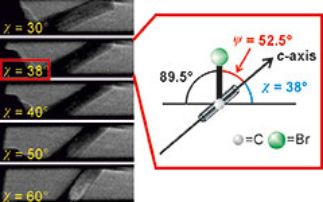
New imaging technique uses X-rays to uncover the spatial distribution and orientation of molecules and their bonds.
-
highlight

A group of scientists working on antimicrobial resistance, a global problem that has recently been announced as the challenge set for the Longitude Prize, have used Diamond’s Circular Dichroism beamline to further understand the mechanisms involved.
-
highlight
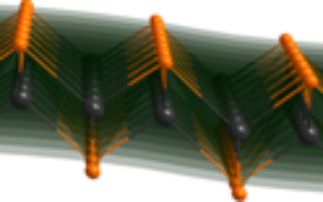
High-energy X-ray powder diffraction used to investigate the transition of materials into high-temperature superconductors.
-
highlight
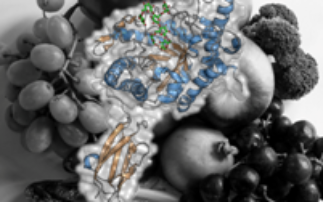
Digestion of abundant fibre sources may be mediated by niche species of bacteria within the distal gut.
-
highlight
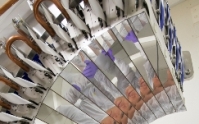
Diamond is celebrating an important milestone this month as a 2 year project to design and build a highly specialised in vacuum X-ray detector for its new long wavelength life science beamline enters the commissioning phase. The beamline, one of the most ambitious macromolecular crystallography (MX) beamlines to be built anywhere in the world, will facilitate challenging research on DNA, RNA, native proteins and other building blocks of life.
-
highlight
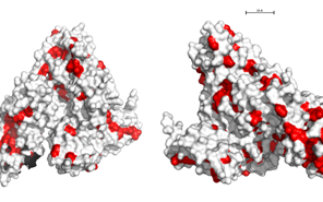
THz Coherent Synchrotron Radiation for probing water-protein interaction.
The latest published paper using data from the Multimode InfraRed Imaging and Microspectroscopy (MIRIAM) beamline (B22) at Diamond Light Source has shown how far InfraRed (IR) radiation can be used to understand water interaction with protein systems at the molecular level.
-
highlight
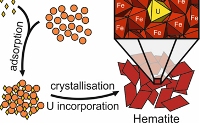
X-ray spectroscopy techniques at Diamond have given scientists a new insight into the behaviour of uranium during deep disposal of radioactive waste. Many countries will use geological disposal facilities as the final way to dispose of radioactive wastes and so it is important to be able to predict the behaviour and potential impacts of uranium under alkaline conditions relevant to deep disposal. The effectiveness of iron (oxyhydr)oxides to reduce the mobility of uranium is well known due to ...
-
highlight
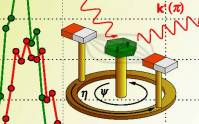
Researchers working at Diamond Light Source and the European Synchrotron Radiation Facility (ESRF) have combined a novel experimental technique with a sophisticated modelling method to investigate the interactions between atoms that can result in the twisting of atomic-scale magnetism within a crystal.
-
highlight
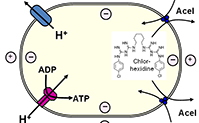
Research performed at Diamond Light Source has helped to understand how a bacterium responsible for many hospital-acquired infections is able to resist one of the most widely used antiseptic agents. By using ultraviolet light to perform circular dichroism measurements of the proteins within the cells, the scientists were able to characterise a previously unknown method by which the antiseptic could be actively transported out of the cell.
-
highlight
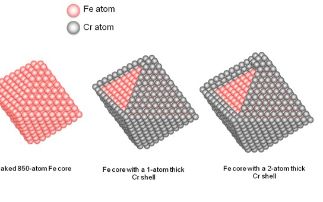
Two coats are better than one to bring nanomagnetism out of its shell.
Diamond Light Source has been used to determine that at least two chromium atomic layers are required to stabilise important magnetic effects at the interface of iron-chromium nanoparticles. Understanding these new nanoscale effects should help efforts to develop advanced computer memory devices.
-
highlight
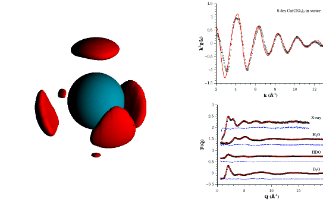
Copper ions form an important part of everyday life, as they are incorporated into a number of proteins and enzymes, amongst which are some that help the body to respire, fight infections and maintain health bones and tissues. Understanding how these ions are accommodated in a solution of water is key to understanding many of these processes.
-
highlight
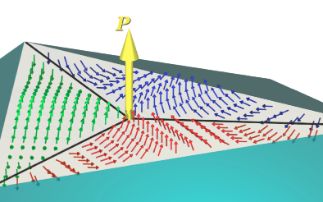
Much as some materials exhibit ferromagnetic properties, meaning they form permanent magnets, some are known to exhibit ferroelectric properties, where the material possesses a spontaneous electric polarization. Rarely, materials possess both these properties, and are known as multiferroics. Scientists working at the Diamond Light Source have now been able to probe the magnetic properties of a multiferroic using the beam line I16
-
highlight
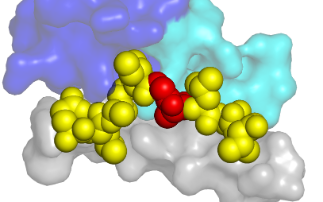
T-cells are a key component of our immune systems, patrolling the body, interacting with proteins on the surface of cells which display small fragments from the cell interior. Usually, these fragments are ‘self’ – small parts of our own proteins. Where infection occurs, the cell displays fragments of the infectious agent, alerting T-cells to the presence of a pathogen. This activates the immune system, and allows the body to act against the invader and destroy the infected cell without ...
-
highlight
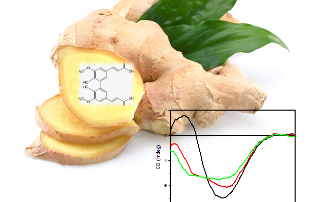
The mis-folding of proteins within our bodies has been linked to a number of wide ranging effects, from common allergies to neurodegenerative diseases. In particular, the protein α-synuclein has been linked to Parkinson's disease. Curcumin (the chemical that gives the Indian spice tumeric its bright yellow colour) has been shown to be a potentially useful treatment, as it is anti-oxidant, anti-inflammatory and has an ability to prevent the build-up of these mis-folded proteins. ...
-
highlight
.png)
Building bodies is a complicated business. Thousands of growing cell types, which all need to end up in the right place, doing the right job. Even when we are fully grown, our cells and tissues still need to communicate, and new cells grow and migrate to repair and renew our tissues. To assist with this huge task, the body uses signalling molecules and receptors to direct and guide cells, and to allow communication between different cells in the body. These signals act like traffic lights, ...
-
highlight
All cells have a cell membrane, made up of a lipid bilayer. Through this membrane sit the membrane proteins; a vital family of proteins which control how the cell interacts with its environment, and control passage of materials in and out of the cell. The family are challenging to study, as the process of crystallisation – the first step to determining a protein’s atomic structure – is incredibly difficult to perform with lipid soluble proteins. Researchers from Trinity College Dublin have ...
-
highlight
Scientists have been using both I13 and ID17 at the ESRF, Grenoble, France to develop a new quantitative x-ray phase-contrast imaging method, based on the edge illumination principle, which achieves unprecedented nanoradian sensitivity. Using both very high and very low x-ray energies at the two facilities, the team showed that this highly sensitive technique can be efficiently exploited over a very broad range of experimental conditions. Not only that, it is simple, scalable, and relatively ...