-
highlight
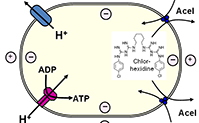
Research performed at Diamond Light Source has helped to understand how a bacterium responsible for many hospital-acquired infections is able to resist one of the most widely used antiseptic agents. By using ultraviolet light to perform circular dichroism measurements of the proteins within the cells, the scientists were able to characterise a previously unknown method by which the antiseptic could be actively transported out of the cell.
-
highlight
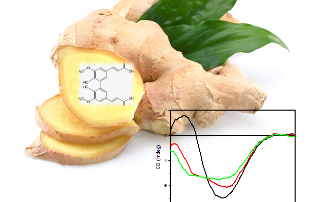
The mis-folding of proteins within our bodies has been linked to a number of wide ranging effects, from common allergies to neurodegenerative diseases. In particular, the protein α-synuclein has been linked to Parkinson's disease. Curcumin (the chemical that gives the Indian spice tumeric its bright yellow colour) has been shown to be a potentially useful treatment, as it is anti-oxidant, anti-inflammatory and has an ability to prevent the build-up of these mis-folded proteins. ...
-
highlight
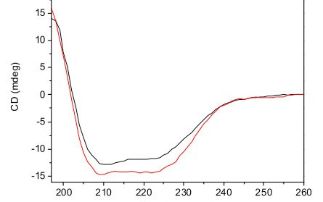
Nanoparticles (NP) are used in different applications such as cosmetics and medicine. To assess potential toxic effects and to design NP-based drug delivery systems it is critical to understand what happens to proteins upon interaction with these special particles. This information is difficult to obtain, but for the first time we have shown that using the B23 beamline, it is possible to detect and analyze structural changes of proteins in protein-metallic nanoparticle complexes1. By using ...
-
highlight
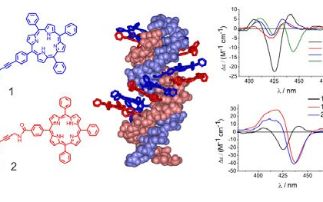
DNA is, besides displaying its central biological role as bearer of the genetic material, an extremely versatile construction material. DNA has become very attractive for the creation of novel nanosized objects. We are studying the influence of modifications of DNA with the aim to create functional DNA based nano-materials. Our modifications generally consist of large chromophores, which show specific light-induced activity such as energy or electron transfer. We are using modifications ...
-
highlight
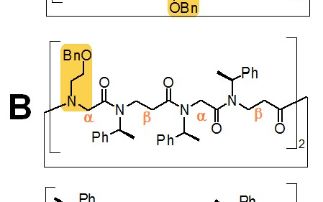
The three dimensional structure (i.e. conformation) of natural proteins and peptides plays an important role in their biological activity and has led to the development of non-natural backbones which mimic such conformations and offers therapeutic advantages. Peptoids are peptidomimetics where the chemical modification is responsible for desirable chemical, physical and biological properties. The presence of tertiary amides in the peptoid backbone results in complex NMR spectra due to ...
-
highlight
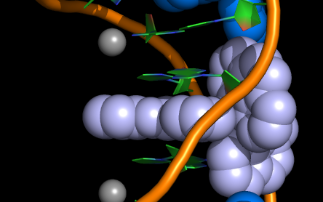
A collaboration of scientists from Diamond Light Source and the University of Reading has revealed the binding mechanism of a so-called ‘light-switch’ effect complex, a type of chemical compound that fluoresces on binding to DNA. There are two possible applications for these compounds – in sensitive diagnostic tests and as sensitizers for photodynamic therapy. The team used the Diamond synchrotron to determine exactly how the photoreactive metal complex binds to DNA, revealing that the ...
-
highlight

Water, essential to life… or is it?
Proteins are large biological molecules that are synonymous with living things. They allow us to convert food into energy, supply oxygen to our blood and muscles, and drive our immune systems.
It is the general understanding that since proteins have evolved in a water-rich environment, they are dependent on water to survive and function. Researchers at the University of Bristol have used the Circular Dichroism beamline (B23) at Diamond Light Source to ...
-
highlight
Nanoparticles have been incorporated in many consumer products, however their safety and toxicity have not been clearly identified. This is made worse by difficulty in measuring how biological systems interact with nanoparticles.
-
highlight
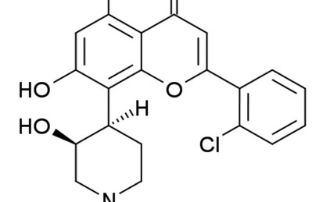
Flavopiridol was discovered to have anti-cancer properties in 19921, specifically by binding to cyclin-dependant kinases (CDKs) and inhibiting ATP binding. Since then it has been involved in a number of phase I and II clinical studies, on its own and in combination with other drugs. Although it binds to specific CDKs with nanomolar affinity, flavopiridol has been given intravenously in higher than expected concentrations to reach a therapeutic concentration at the cancer site. The high ...
-
highlight
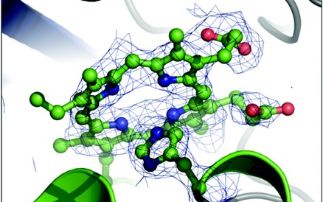
Iron is necessary for many cellular reactions and is therefore an essential nutrient for all living organisms. However, insolubility and toxicity of iron make its acquisition and processing a great challenge for living organisms. Thus to overcome such difficulties, bacteria have developed iron homeostasis mechanisms that involve control of three key processes: iron uptake, iron utilisation and storage of excess iron. Among these processes, uptake of iron plays a particularly crucial role for ...
 Macromolecular
 Soft Condensed
  Imaging and
 Biological
 Magnetic
 Structures and
 Crystallography
  Spectroscopy