 Macromolecular
 Soft Condensed
  Imaging and
 Biological
 Magnetic
 Structures and
 Crystallography
  Spectroscopy
 PanDDA was developed by Nicholas Pearce to find and extract weak density from large numbers of datasets. The software is distributed with CCP4, and detailed instructions can be found here. XChemExplorer (XCE) manages large-scale processing and analysis of X-ray diffraction data, provides an interface to PanDDA, and guides the validation workflow for PanDDA-derived models.
Further information can be found within the XChem Manual for current data processing protocols: XChem_User_Training_DataProcessing_XCE_and_PanDDA_2024
PanDDA2
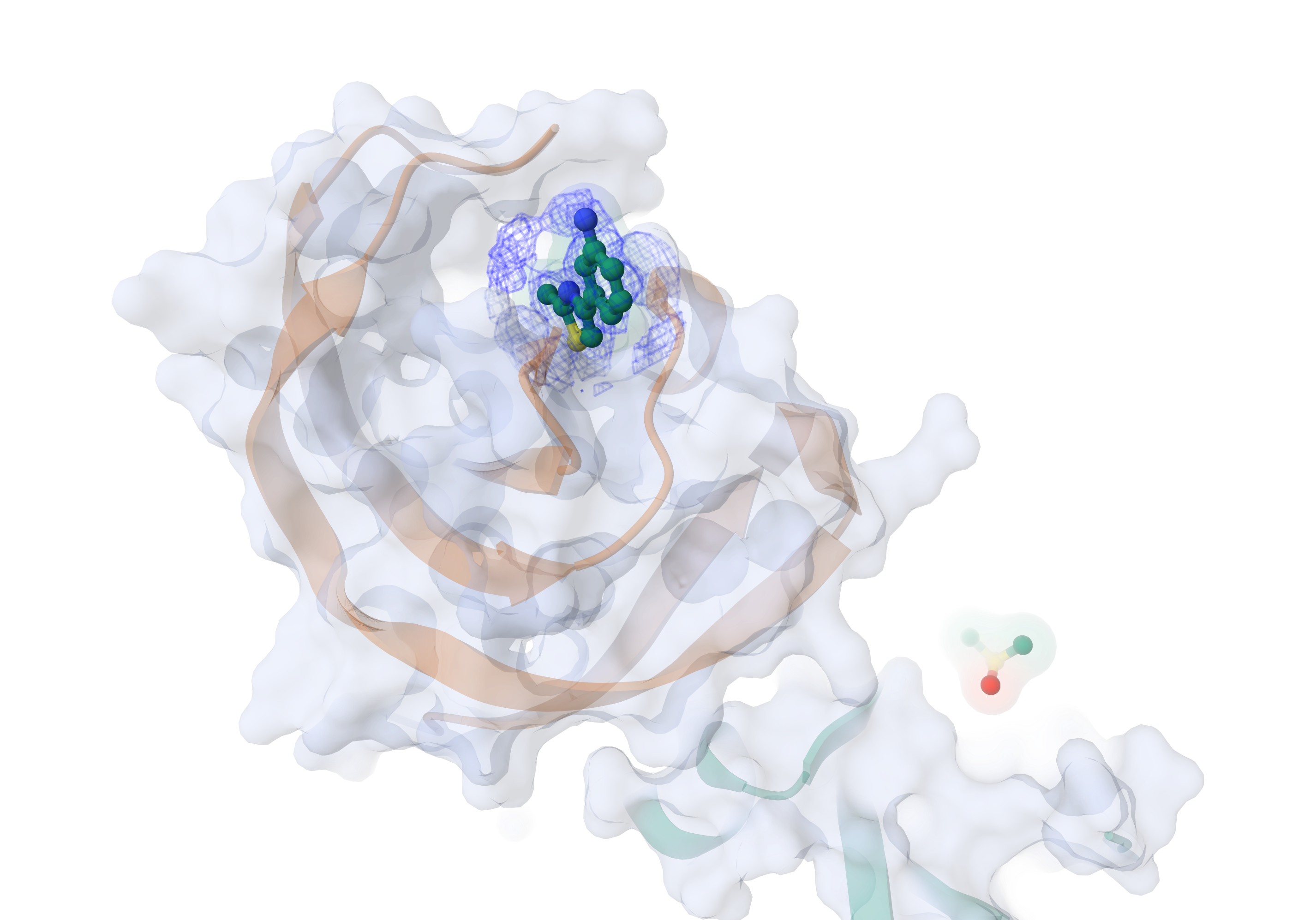
PanDDA2 is an updated version of PanDDA which has been developed by Conor Wild and differs from PanDDA in two major methodological ways: Firstly, it attempts to identify which sets of datasets should be used to produce a statistical model which has the optimal contrast (to each test dataset individually). This allows it to handle subtle heterogeneity between datasets. Secondly it attempts to autobuild the events returned, and then rank the events based on the quality of the model of the fragment that could be constructed. This allows improved rankings of events. PanDDA2 is distributed on GitHub (https://github.com/ConorFWild/pandda_2_gemmi).
An automated PanDDA2 pipeline for fragment screening experiments is under development at DLS and is now availble for testing, please contact Rowan Walker-Gibbons or Conor Wild if you would like to have your visit data processed in this way or have any questions. Auto-processed results can be found at:
/dls/labxchem/data/<proposal>/<visit>/processing/auto/analysis
Automated Pipeline User Guide
The hit identification pipelines (PanDDA2 & Pipedream) will trigger downstream from Dimple (CCP4) as data arrives from beamline data collection, once all such jobs have finished processing for a particular crystal. PanDDA2 has an additional requirement that a threshold number of comparator datasets must first be collected before processing can begin (default `comparator_threshold = 300`).
Unless specified otherwise, PanDDA2 will run with default settings applied. However, if you would like specific options applied, you can add these to the `.user.yaml` file in the visit directory, e.g:
autoprocessing:
pandda:
high_res_lower_limit: 2.5
data:
acronym: A71EV2A
Analysis of the auto-pipeline results
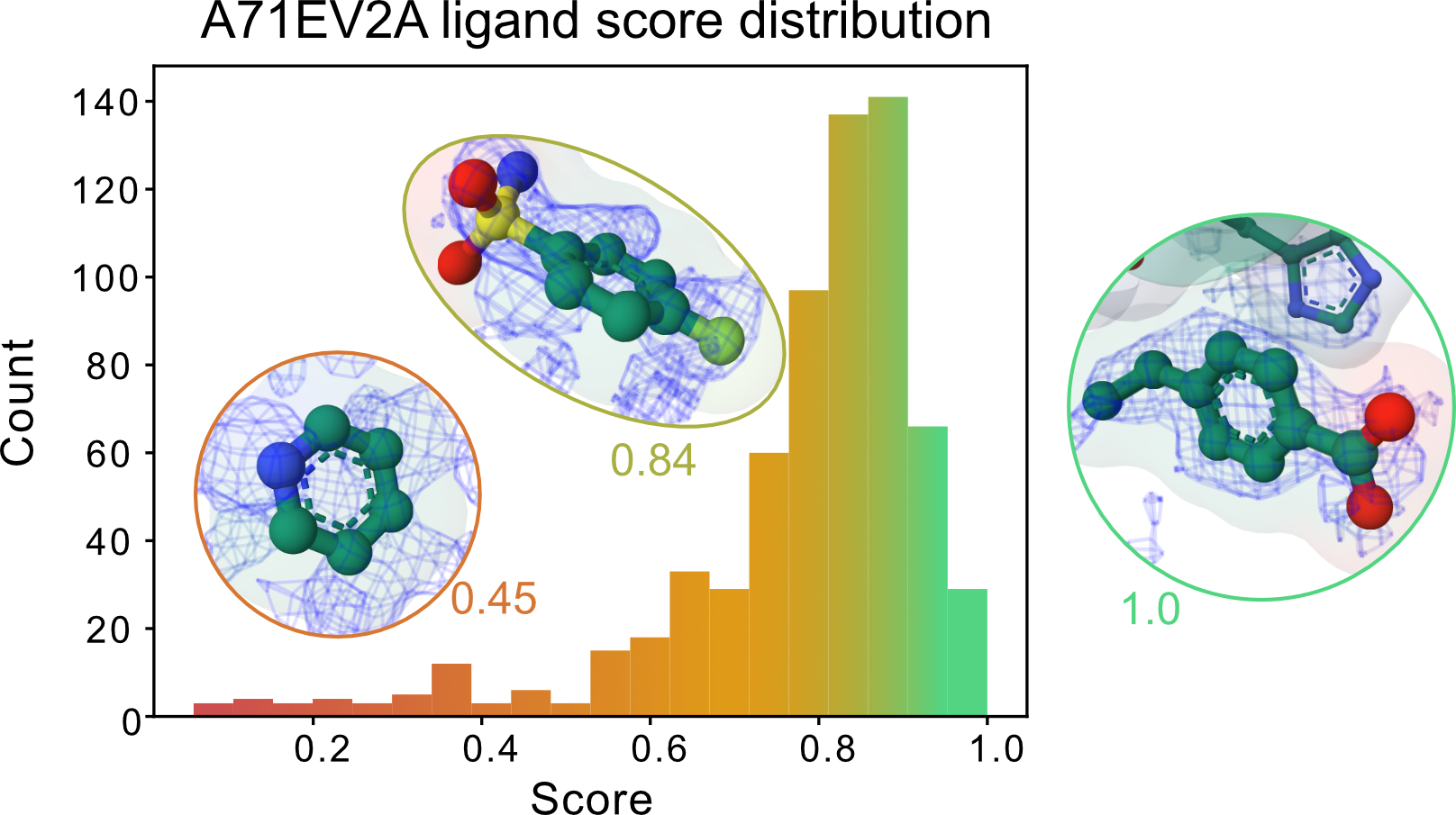
Currently, we advise that the auto PanDDA2 results must be analysed as normal via the `pandda.inspect` tool in XChemExplorer. To aid the analysis of large fragment screens, we have implemented a CNN scoring method to rank the quality of the final autobuilds. Since many aspects of the pipeline are still under development, feedback is always appreciated.

Diamond Light Source is the UK's national synchrotron science facility, located at the Harwell Science and Innovation Campus in Oxfordshire.
Diamond Light Source Ltd
Diamond House
Harwell Science & Innovation Campus
Didcot
Oxfordshire
OX11 0DE
Copyright © Diamond Light Source. Diamond Light Source® and the Diamond logo are registered trademarks of Diamond Light Source Ltd
Registered in England and Wales at Diamond House, Harwell Science and Innovation Campus, Didcot, Oxfordshire, OX11 0DE, United Kingdom. Company number: 4375679. VAT number: 287 461 957. Economic Operators Registration and Identification (EORI) number: GB287461957003.