 Macromolecular
 Soft Condensed
  Imaging and
 Biological
 Magnetic
 Structures and
 Crystallography
  Spectroscopy
 BigEP pipeline
BigEP is an advanced experimental phasing pipeline using the output of autoprocessed xia2 processing. It assesses the quality of anomalous signal using the SHELX suite and automatically runs three pipelines; autoSHARP, phenix.autobuild and Crank2 to phase and build a model. It will do this without any prior information but if you provide a sequence and a heavy atom in ISPyB for your crystals this can improve success.
Note that these processes take some time to run following the xia2 jobs so it is worth periodically checking in ISPyB for new results.
autoSHARP
autoSHARP is a tool for experimental phasing including SAD, MAD, MIRAS and SIRAS developed by Global Phasing. Its use at Diamond is subject to academic license. When run automatically as downstream processing at diamond, a sequnce and anomalous scatter need to be provided. The pipeline will attempt to phase, find a substructure, density modify and automatically build a model into the resutlant electron density.
A wide set of examples and tutorials and manual are available from global phasing.
The downstream processing panel shows for the results of each autoprocessing pipeline:
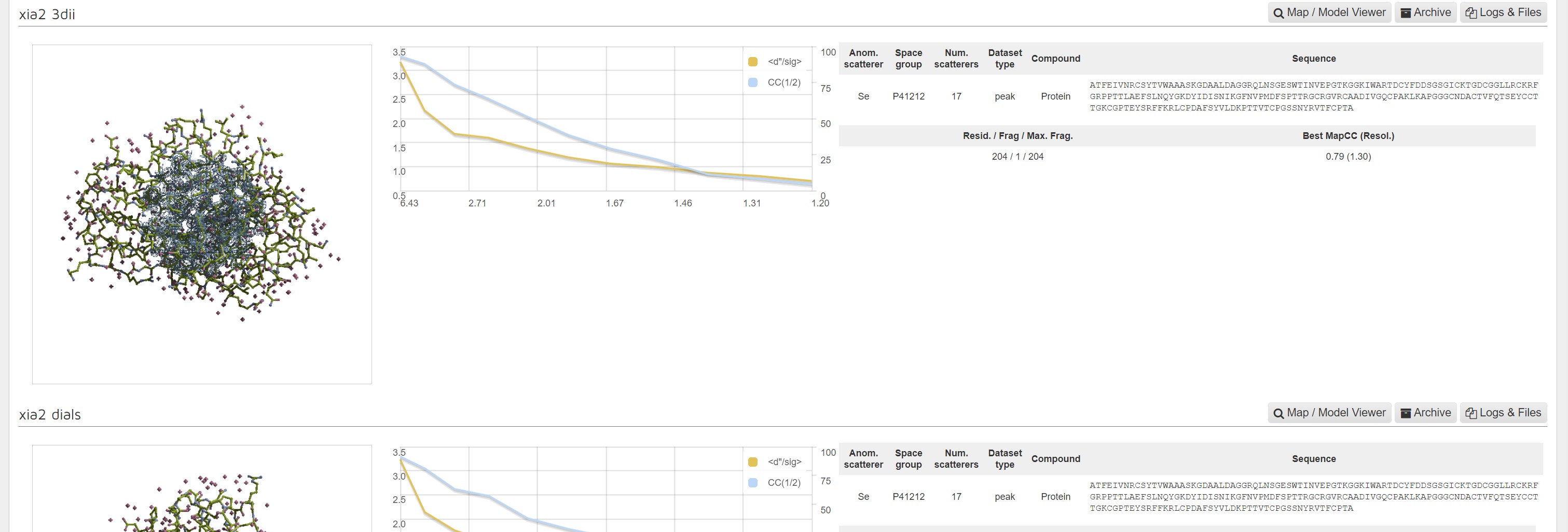
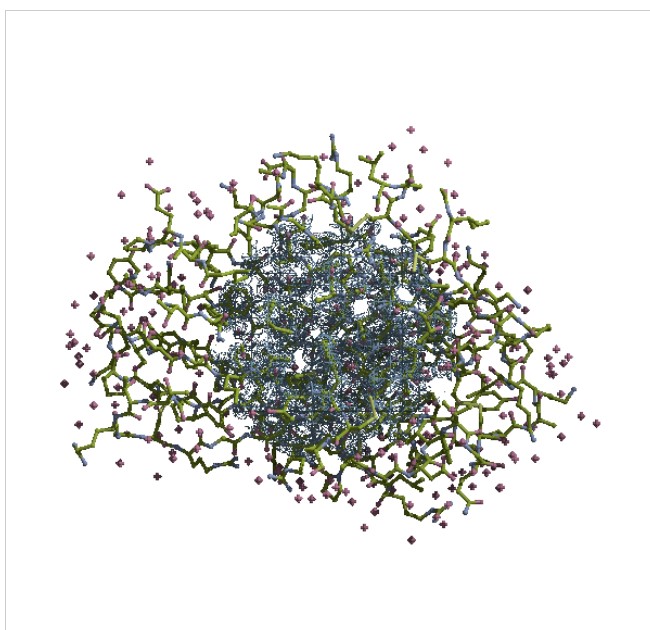
There is a image showing the whole model:
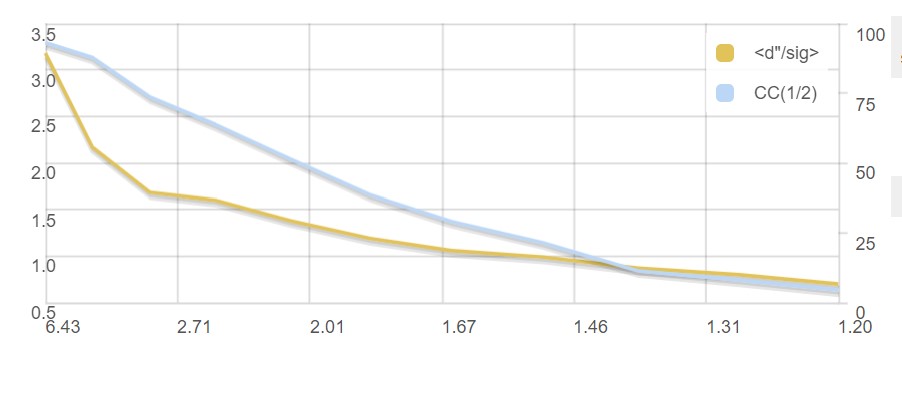
A graph showing CC1/2 and <d"/σ> versus resolution:
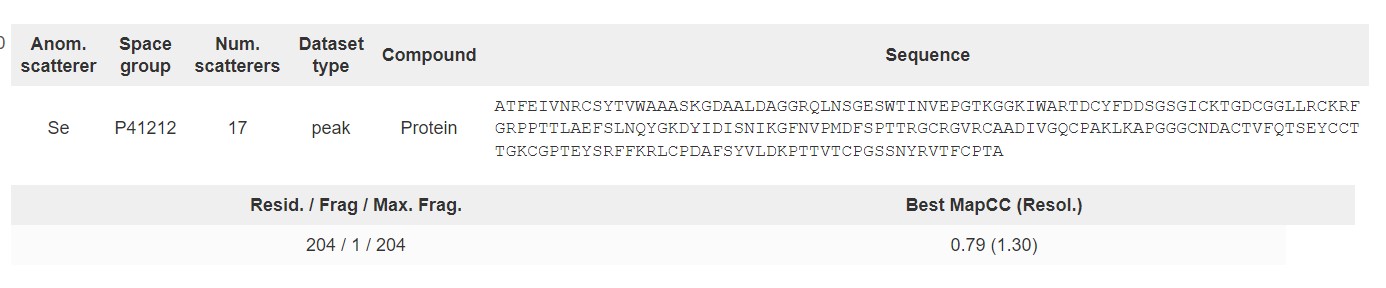
and a summary of inputs and results:
Through the "Logs and Files" window, a summary html of the autoSHARP process is available:
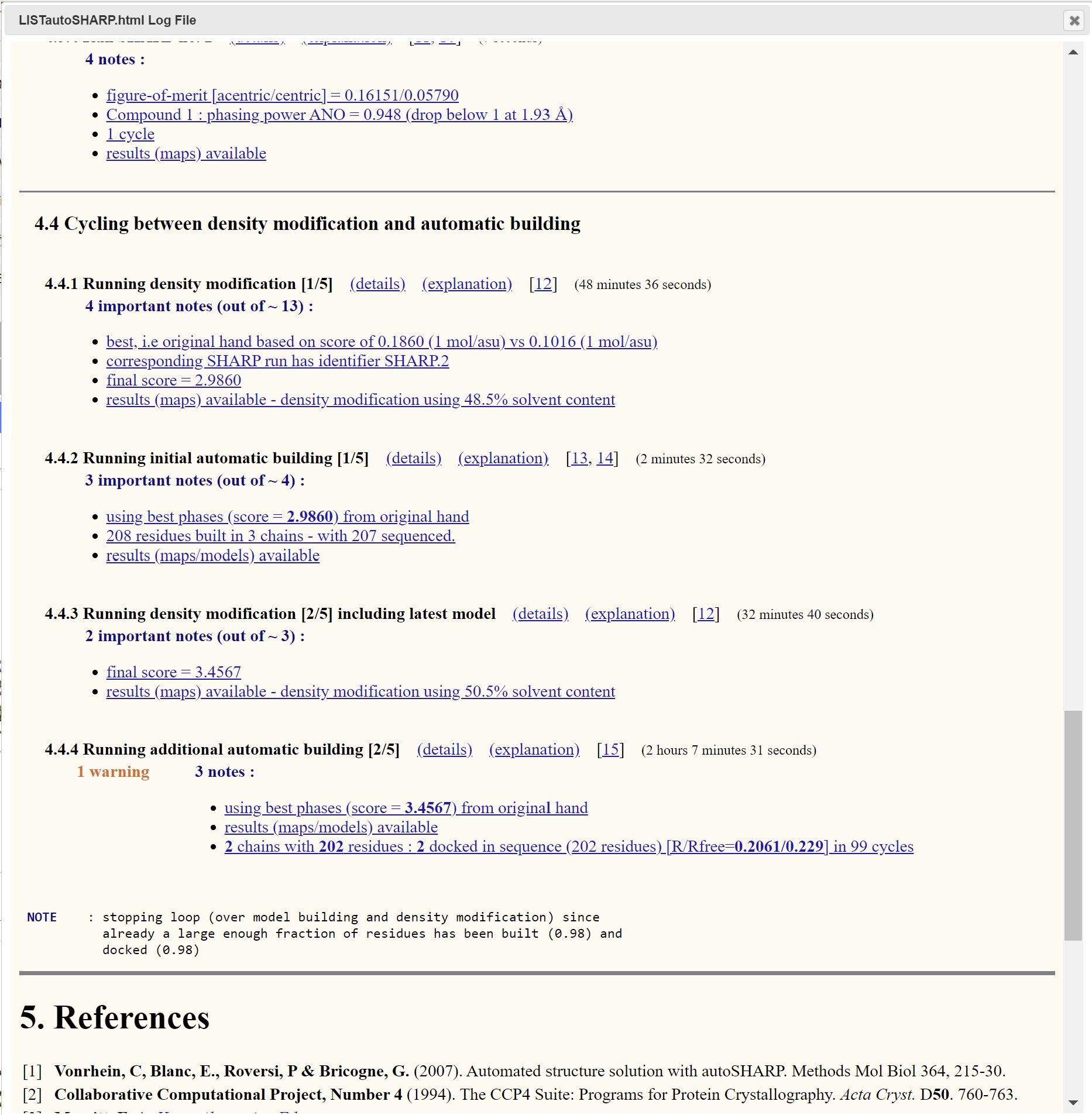
This is a good place to determine if the result of the autoSHARP process has produced a viable or optimal results. There is also a map and model viewer where the structure can be viewed.
Citations
Please refer to Citations on the autoSHARP website, shown below. Also remember to cite the appropriate publication for the autoprocessing pipeline used prior to autoSHARP.
SHARP: Bricogne, G., Vonrhein, C., Flensburg, C., Schiltz, M. & Paciorek, W. (2003). Generation, representation and flow of phase information in structure determination: recent developments in and around SHARP 2.0. Acta Cryst. D59, 2023-2030.
autoSHARP: C. Vonrhein, E. Blanc, P. Roversi & G. Bricogne (2007). Automated structure solution with autoSHARP. Methods Mol Biol 364, 215-30.
Autobuild
Autobuild shows the results of phenix.autobuild run on each of the autoprocessing pipeline. The summary information shown is the same above for autoSHARP.
Citations
It may also be necessary to cite some of those listed in the set of phenix related papers. Also remember to cite the appropriate publication for the autoprocessing pipeline used prior to phenix.autobuild.
Main phenix paper: Macromolecular structure determination using X-rays, neutrons and electrons: recent developments in Phenix. D. Liebschner, P.V. Afonine, M.L. Baker, G. Bunkóczi, V.B. Chen, T.I. Croll, B. Hintze, L.W. Hung, S. Jain, A.J. McCoy, N.W. Moriarty, R.D. Oeffner, B.K. Poon, M.G. Prisant, R.J. Read, J.S. Richardson, D.C. Richardson, M.D. Sammito, O.V. Sobolev, D.H. Stockwell, T.C. Terwilliger, A.G. Urzhumtsev, L.L. Videau, C.J. Williams, and P.D. Adams. Acta Cryst. D75, 861-877 (2019).
Phenix autobuild: Iterative model building, structure refinement and density modification with the PHENIX AutoBuild wizard. T.C. Terwilliger, R.W. Grosse-Kunstleve, P.V. Afonine, N.W. Moriarty, P.H. Zwart, L.-W. Hung, R.J. Read, and P.D. Adams. Acta Cryst. D64, 61-69 (2008).
Crank2
Crank2 (Paper & CCP4i2 tutorial ) shows results for Crank2 run on each of the autoprocessing pipelines. The information displayed is the same as that shown for phenix.autobuild and autoSHARP.
Citation
Also remember to cite the appropriate publication for the autoprocessing pipeline used prior to Crank2
Skubák, P., Pannu, N. Automatic protein structure solution from weak X-ray data. Nat Commun 4, 2777 (2013).

Diamond Light Source is the UK's national synchrotron science facility, located at the Harwell Science and Innovation Campus in Oxfordshire.
Diamond Light Source Ltd
Diamond House
Harwell Science & Innovation Campus
Didcot
Oxfordshire
OX11 0DE
Copyright © Diamond Light Source. Diamond Light Source® and the Diamond logo are registered trademarks of Diamond Light Source Ltd
Registered in England and Wales at Diamond House, Harwell Science and Innovation Campus, Didcot, Oxfordshire, OX11 0DE, United Kingdom. Company number: 4375679. VAT number: 287 461 957. Economic Operators Registration and Identification (EORI) number: GB287461957003.