Instruments by Science Group
 Macromolecular
 Soft Condensed
  Imaging and
 Biological
 Magnetic
 Structures and
 Crystallography
  Spectroscopy
 I14 Contact
I14 Control room:
Tel: +44 (0) 1235 778570
Principal Beamline Scientist:
Majid Kazemian
Email: [email protected]
Tel: +44 (0) 1235 778222
Science Group Leader
Julia Parker
Email: [email protected]
Tel: +44 (0)1235 778924
I14 Hard X-ray Nanoprobe
Status: Operational
Beamsize: 50nm x 50nm
Energy: 5 - 20 keV
Energy: 5 - 20 keV
Biomineralization is the production of mineralised tissues by organisms. At I14, we have a number of projects looking at the structure, composition and production of bio minerals from a range of species. Learning more about these materials and the design strategies employed by biological systems can provide inspiration for materials science and expand our understanding of key species in the natural world.
Crystallization
.gif)
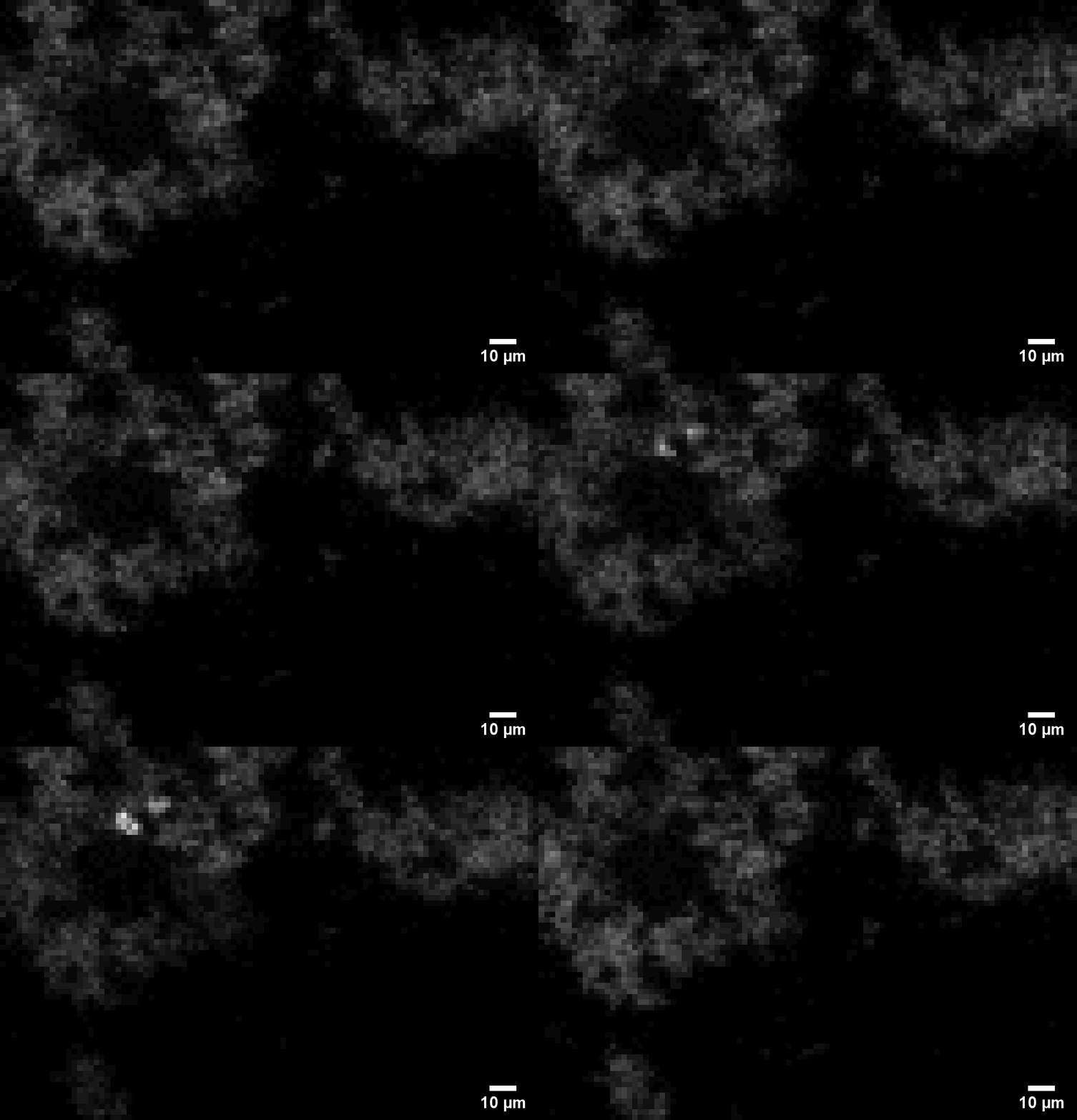
A key aspect of biomineral growth is crystallisation. Organisms are able to direct nucleation and edit growth processes of crystals to form specific morphologies with precise distributions. We are interested in learning more about crystallisation from a materials science perspective, looking at growth and structure of crystalline materials that are biologically relevant.
We have a number of projects in this area, generally using our in situ liquid cell to investigate the influence of additives on calcium phosphate and calcium carbonate crystallisation. For more information on our crystal growth projects please contact Dr Majid Kazemian. Further information on our in situ cell can also be found here: in situ.
Sea urchin mineralization
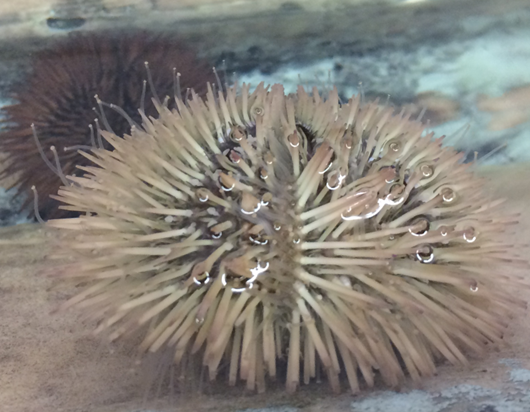
Sea urchins use calcium carbonate to grow their skeletal parts, comprising of their test (shell), spines, and an inner assembly known as the Aristotle's lantern that contains the teeth. Currently, we are looking at the structure of the teeth, their design, composition and make up of the cells responsible for producing these materials.
In collaboration with the University of Southampton, we are investigating how the design strategies of the sea urchin develop during its life stages using the facilities at I14 and the wider Harwell campus, including the Research Campus at Harwell.
For more information about the project, please email
Dr Jessica Walker.
Coccolithophore growth and design
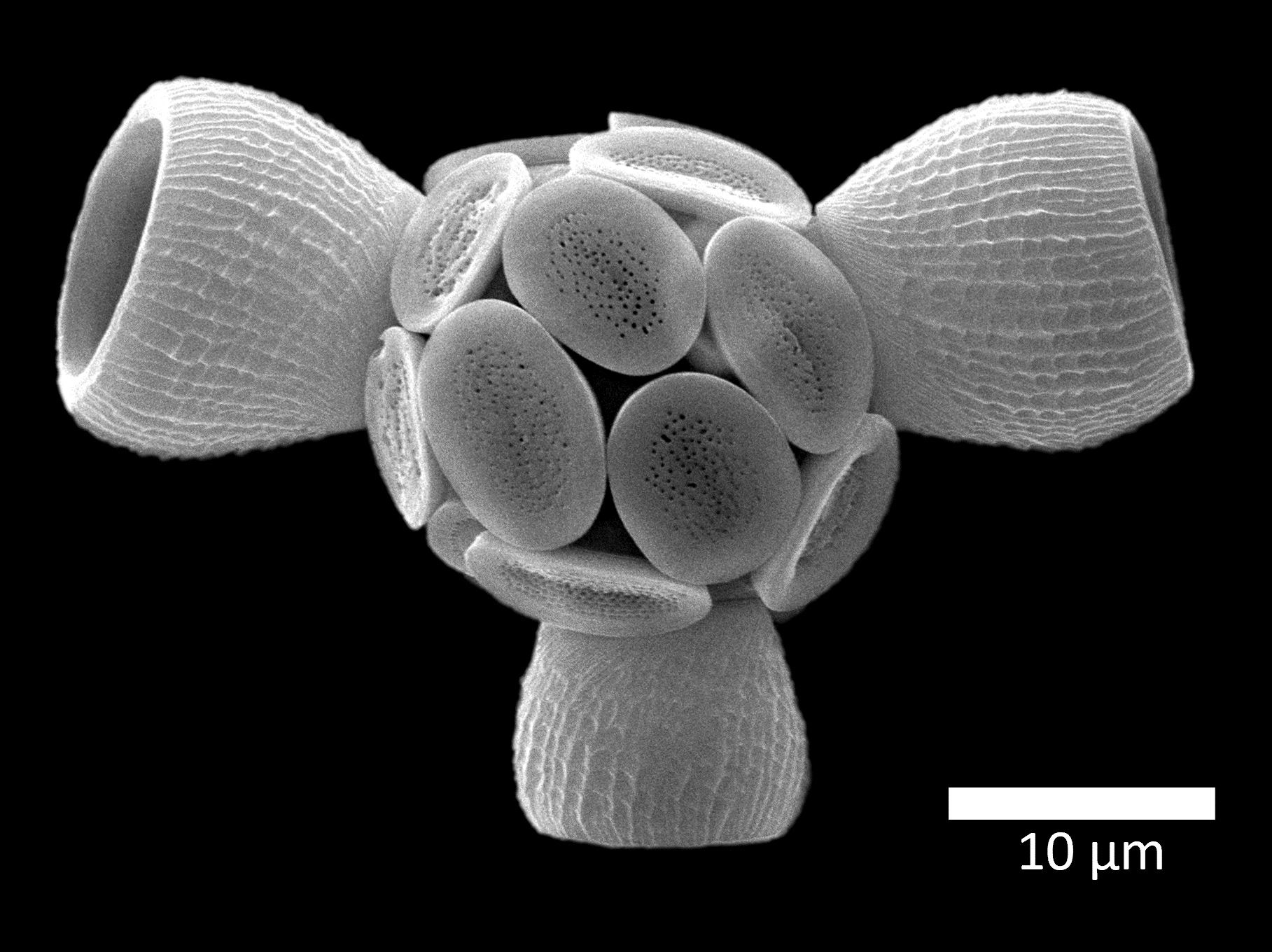
Coccolithophores are marine unicellular algae that produce calcium carbonate scales called coccoliths. Different species produce different design of coccolith, manipulating single crystals of calcite to create their morphology. Each coccolith is produced inside the cell, then extruded to the outside to form a protective cover around the cell. We are interested in how coccoliths are formed, and the composition and structure of the final coccolith. This project applies the capabilities of I14 to investigate these structures.
We also work across other beamlines and institutions on Harwell campus to further this research, including B24 and the Research Complex at Harwell. This work has been supported by a Year in Industry studentship provided by Diamond.

Diamond Light Source is the UK's national synchrotron science facility, located at the Harwell Science and Innovation Campus in Oxfordshire.
Diamond Light Source Ltd
Diamond House
Harwell Science & Innovation Campus
Didcot
Oxfordshire
OX11 0DE
Copyright © Diamond Light Source. Diamond Light Source® and the Diamond logo are registered trademarks of Diamond Light Source Ltd
Registered in England and Wales at Diamond House, Harwell Science and Innovation Campus, Didcot, Oxfordshire, OX11 0DE, United Kingdom. Company number: 4375679. VAT number: 287 461 957. Economic Operators Registration and Identification (EORI) number: GB287461957003.