-
news

As a shareholder, Diamond is delighted to announce the appointment of Professor James Naismith FRS FRSE FMedSci as RCaH's new Director.
-
highlight
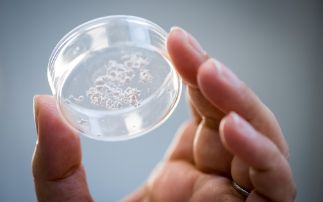
The encasing of proteins in silica to improve their thermal stability
-
news
Diamond plays key role in developing sample holder that enables efficient use of beamtime.
-
highlight
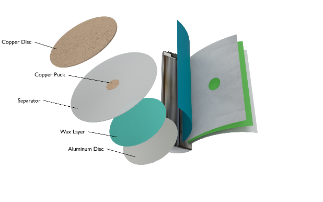
How short circuits can lead to thermal runaway in Li-ion batteries
-
news
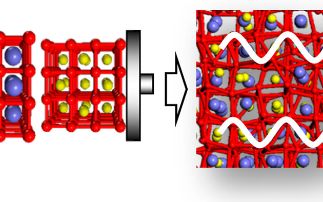
An international team of scientists have used Diamond to reveal how a phenomenon, known as geometric frustration, can be used to increase the way in which a ceramic material can conduct charge.
-
news

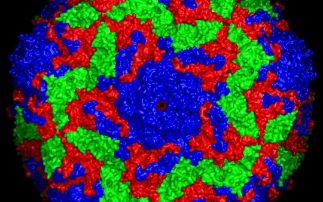
Research has helped to understand the complex interaction between the foot-and-mouth-disease virus (FMDV) and host cells.
-
highlight

Investigating the reactivity of organic aerosol films
-
news
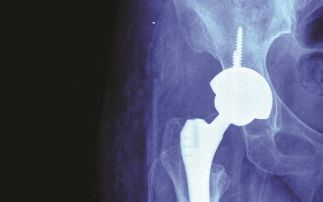
Diamond has provided facilities for many UK and international groups studying bone, with more than 30 papers being published over the last two years, which should lead to new ways to tackle bone disease.
-
highlight
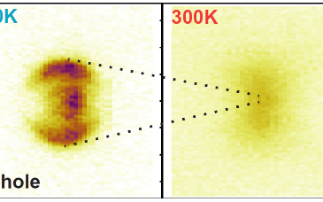
Understanding FeSe with ARPES spectroscopy at I05
-
highlight
The structure of a pathogenic effector protein from Legionella pneumophila
-
highlight
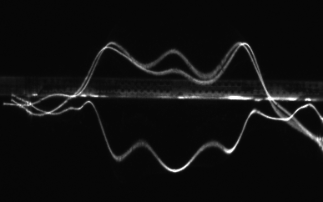
Novel technique measures warpage in next-gen integrated circuits
-
highlight
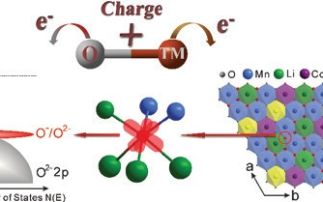
Conventional lithium ion batteries work by storing charge through redox changes involving cations. However the storage capacity is limited by the redox capacity of tradition metal ions in the cathode. Newer lithium-rich cathodes on the other hand are able to exceed this limit, leading researchers to believe that the anion must be playing a role. However, the mechanism of behavio had yet to be experimentally verified.
-
highlight
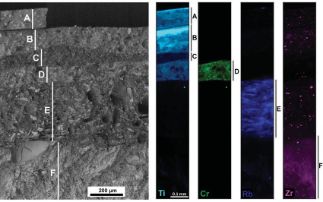
It is estimated it will cost £117 bn and take more than 100 years to deal with the UK’s legacy of radioactively contaminated waste materials from our nuclear past. This waste includes 2.5 million tons of cementitious materials from power stations: decontamination of this waste greatly reduces its volume and reduces disposal costs enormously and understanding the chemical speciation of radionuclides in the waste is key to optimising decontamination now, and planning for new facilities in the ...
-
highlight
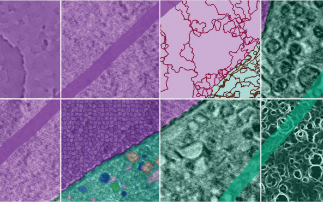
A new suite of software tools and machine learning for 3D volume analysis
-
news
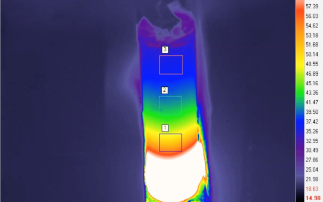
Researchers have used Diamond’s I12 beamline to investigate how lithium-ion batteries behave under short-circuit conditions.
-
news
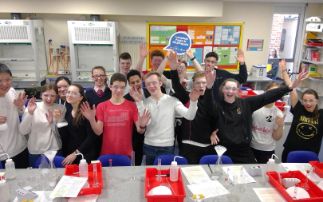
At 11am today, Diamond scientists Dr Claire Murray and Dr Julia Parker will begin the mammoth task of processing the 1,000 samples sent back to us from 100 schools across the UK as part of Project M – Diamond’s largest public engagement project to date.
-
highlight
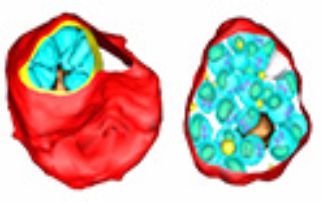
How malaria parasites escape from red blood cells
-
news
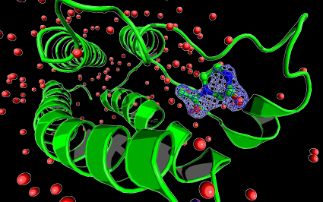
Scientists have utilised Diamond Light Source to develop a new method to extract previously hidden information from the X-ray diffraction data that are measured when resolving the three-dimensional (3D) atomic structures of proteins and other biological molecules.
-
highlight
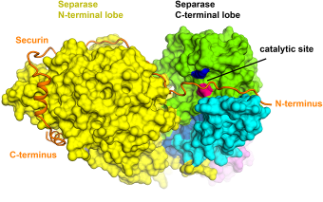
The cryo-EM structure of a crucial cell cycle protease bound to its inhibitory chaperone
-

In an article originally published in the Oxford Times, Diamond's Press Officer, Steve Pritchard, writes how food research is a priority for us all.