-
annual review
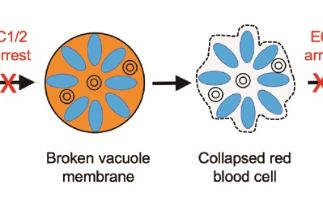
Malaria is a highly infectious disease that is widespread in tropical and sub-tropical regions of the world. It is caused by a group of
parasitic single-celled microorganisms, which are carried by mosquitoes. When malaria parasites enter a human via a mosquito
bite, they rapidly multiply in red blood cells within a protective casing known as the parasitophorous vacuole.
-
annual review
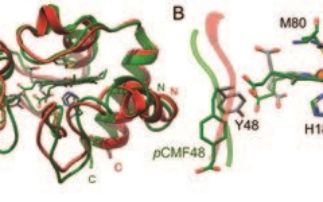
Some diseases, including cancer and ischemia (an inadequate blood supply to an organ or part of the body), involve reversible phosphorylation at a given site on the cytochrome c protein. Cytochrome c is essential for human metabolism and contains a heme iron, which allows it to function as an electron carrier. To understand the molecular basis underlying the effects of phosphorylation, an international team of researchers has used several methods to analyse the structure, dynamics and ...
-
annual review

Current production process for vinyl chloride, the monomer used in PVC and everything from piping and tubing to gels and lubricants, relies on a mercury-based catalyst. Mercury is one of the most toxic substances on the planet, and the UN recently ratified the Minamata Convention, meaning that a more environmentally-friendly alternative is required.
-
annual review
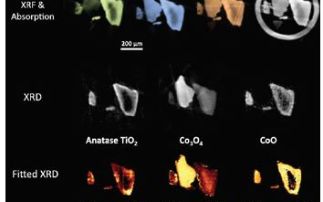
The Fischer-Tropsch process is used to convert hydrogen and carbon monoxide to hydrocarbons. It relies on the use of catalysts, which
make the process more efficient and can control which products are produced, from long hydrocarbon chains to heavy waxes.
-
annual review
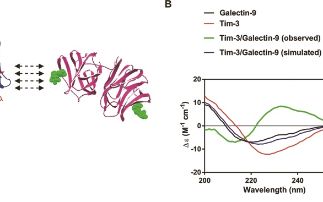
Acute myeloid leukaemia (AML) is a type of blood cancer that originates from white blood cells in the bone marrow. It is often fatal and is considered one of the most common cancers of children and the elderly. The high mortality rate associated with this cancer can partly be ascribed to ineffective current treatments, which consist of aggressive chemotherapy and stem cell transplantation. There is a great need to find alternative treatments for AML patients to improve their outcomes. By ...
-
annual review
![Shocking protein crystals into action: combining electrochemistry and infrared microscopy provides insight into [NiFe] hydrogenase mechanism](/.imaging/mte/diamond-lite-lm-theme/newsListThumb/dam/Images/publications/AR18/p85fig1/jcr:content/p85fig1.jpg)
Proteins are the nanoscale ‘machines’ that control almost all processes in cells, and revealing their structures is paramount to understanding how they work. X-ray crystallography is a valuable tool for providing ‘snapshot’ images of working proteins at an atomic level; however, some proteins are very tricky to freeze at particular moments in time.
-
annual review
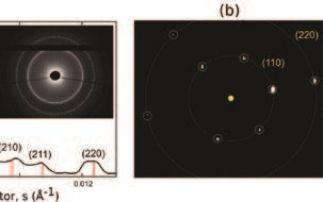
Several technological applications, spanning from energy storage to biomedicine, require the preparation of new materials with a finely organised 3D nanoscale structure. To achieve such delicate structures, they must be assembled from the bottom up, much like the iconic Lego bricks. However, unlike Lego, the building blocks in these scenarios are too small to be handled directly, so they must be encouraged to self-assemble.
-
annual review
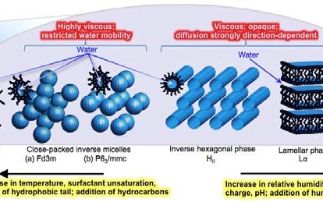
Aerosols are significant to the Earth’s climate, with nearly all atmospheric aerosols containing organic compounds that often contain amphiphilic molecules. However, the nature of how these compounds are arranged within an aerosol droplet remains unknown. It was recently demonstrated that fatty acids in proxies for atmospheric aerosols self-assemble into highly ordered three-dimensional nanostructures known as lyotropic liquid crystalline phases. This finding may have implications for ...
-
annual review

With the melting Arctic ice cap causing its rivers to swell, understanding how organic carbon (C) is transported to the ocean and crucially trapped by these rivers is important for climate change modelling and mitigation.
-
annual review
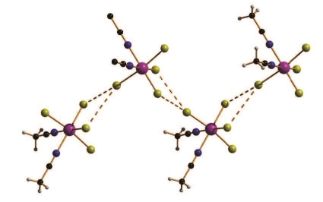
Materials that have long range magnetic order are fundamental to modern technologies, including data storage devices, space
research, cancer therapy and biomedical imaging techniques. Future miniaturisation of these components depends on designing
molecules that behave in the same way as larger magnets, and to do this we need an improved understanding of the connection
between molecular structures and their resulting properties.
Although high-temperature- and high-magnetic-field-based ...