
• Diamond Home page
  • About
  • For Users
  • Public
  • Industry
  • Instruments
  • Careers
  • More Show more menu items
Search

About

  • About Diamond
  • About Synchrotrons
  • News and Features
  • Events
  • Contact Us
  • FAQ

For Users

  • Apply for beamtime
  • User guide
  • Diamond Users Commitee
  • FAQ
  • User Administration System
  • iSpyB

Industry

  • Techniques Available
  • Industry Research
  • Industry Case Studies
  • News
  • Meet the Industry Team

Science

  • Research
  • Computing
  • The Machine
  • Publications
  • Research Expertise
  • Membrane Protein Laboratory
  • Additional Facilities
  • Publications Database

Instruments

  • Biological Cryo-Imaging
  • Crystallography
  • Imaging and Microscopy
  • Macromolecular Crystallography
  • Magnetic Materials
  • Soft Condensed Matter
  • Spectroscopy
  • Structures and Surfaces

Diamond-II

  • Science
  • Machine
  • Beamlines
  • Software, Control and Computing
  • Infrastructure

Public

  • Public open days
  • School visits
  • Partner with Diamond
  • Explore Diamond

Procurement

  • Non-OJEU Tender Notices
  • OJEU PINs
  • OJEU Tender Notices
  • Registration Form

Careers

  • Vacancies
  • Info for applicants
  • Company Benefits
  • Apprenticeships
  • PhD Studentships
  • Work Placement

Main Content

Macromolecular Crystallography
Sub-navigation
  • MX
  • I03
  • I04
  • I04-1
  • I23
  • I24
  • VMXi
  • VMXm
  • HeXI
  • XFEL-HUB
  • XChem
  • MPL
  • Crystallisation Facility
  • MX Data Analysis
  • Staff Research
  • Contacts

In This Section

Sub Navigation
  • MX Responsive Beamtime Guide
  • Manual
    • Preparing for Beamtime
    • ISPyB/SynchWeb
    • Sample Holders
    • Shipping Samples
    • Remote Access
    • Data Collection Software
    • Data Analysis
      • Automatic Software Pipeline
        • Immediately Following Data Collection
        • Fast_ep
        • Dimple
      • Fluorescence Data
      • Multi-Crystal Data
      • MX-Software
      • Reprocessing Data in ISPyB
      • Running AutoSHARP
      • Processing Data on the Cluster
    • Data Backup
    • Webcams
    • Acknowledging MX beamlines
    • Introduction to Eiger2 X Detectors for MX at Diamond
    • Redhat user environment
  • Science Highlights
  • Useful Calculators
  • MX beamtime guide for COVID-19 work
  • MX Training
  • Getting Started at Diamond MX

Instruments by Science Group

Macromolecular
Crystallography
Soft Condensed
Matter
Imaging and
Microscopy
Biological
Cryo-Imaging
Magnetic
Materials
Structures and
Surfaces
Crystallography
Spectroscopy
  1. Instruments
  2. MX
  3. Common
  4. Manual
  5. Data Analysis
  6. Automatic Software Pipeline
  7. Fast_ep

Fast_ep

At the end of fast_dp two additional pipelines are run, an automated experimental phasing system fast_ep and dimple, a difference map pipeline. These are to answer the questions “can I determine my heavy atom substructure” and “do I have a ligand bound” respectively.

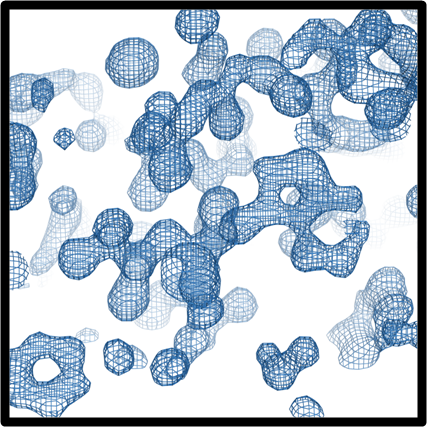
The fast_ep pipeline (Figure 1) first performs an initial analysis to decide if there is an anomalous signal present. If this is the case then SHELXC is run to generate the input files needed for substructure determination with SHELXD. These are then duplicated and modified to generate input files for: all possible (enantiomorph-unique) spacegroups and all sensible numbers of heavy atom sites. Each of these tasks are then run on the cluster using the multi-processor version of SHELXD, and the solution with the highest combined figure-of-merit taken as correct. This solution is then phased in both enantiomorphs and with solvent fractions in the range 25% – 75% in 5% steps. The solution with the highest CC is then taken as correct and converted to MTZ format for viewing in Coot, typically within three minutes (Figure 2).
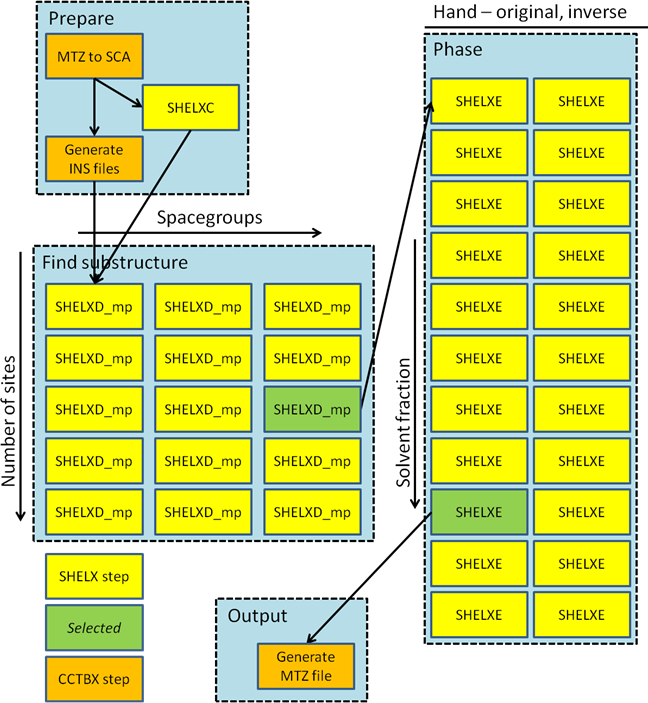


Figure 1 Workflow for experimental phasing with fast_ep

EP

Figure 2 Illustration of results of experimental phasing with fast_ep

  • Contact Us
  • About Diamond Light Source
  • Procurement
  • Supply Chain Transparency
  • Cookie Policy
  • Website Terms of Use
  • Privacy Notice

Diamond Light Source

Diamond Light Source is the UK's national synchrotron science facility, located at the Harwell Science and Innovation Campus in Oxfordshire.

Follow us on Facebook Follow us on Linkedin Follow us on Instagram Follow us on Bluesky

Diamond Light Source Ltd
Diamond House
Harwell Science & Innovation Campus
Didcot
Oxfordshire
OX11 0DE

See on Google Maps

Copyright © Diamond Light Source. Diamond Light Source® and the Diamond logo are registered trademarks of Diamond Light Source Ltd

Registered in England and Wales at Diamond House, Harwell Science and Innovation Campus, Didcot, Oxfordshire, OX11 0DE, United Kingdom. Company number: 4375679. VAT number: 287 461 957. Economic Operators Registration and Identification (EORI) number: GB287461957003.

feedback