Instruments by Science Group
 Macromolecular
 Soft Condensed
  Imaging and
 Biological
 Magnetic
 Structures and
 Crystallography
  Spectroscopy
 VMXm Contact
Beamline Phone Number:
+44 (0) 1235 778451
Interim Principal Beamline Scientist:
Anna Warren
Tel: +44 (0) 1235 567455
E-mail: a[email protected]
Science Group Leader
Dave Hall
Email: [email protected]
Tel: +44 (0) 1235 778926
VMXm accommodates a wide range of chemical crystallography samples, offering the flexibility to conduct experiments at either room temperature or cryogenic temperatures. We can handle samples prepared from dry crystalline powders as well as those retained in solvent.
Variations of these experiments, as well as non-standard experiments may be feasible. We recommend contacting the beamline team to discuss your specific experimental requirements.
Unlike conventional crystallography beamlines, the crystals for VMXm are mounted on cryoEM grids. These are 3 mm diameter discs usually made from copper, gold or nickel. The grids can be purchased with varying sizes of grid spacing, and support material. Usual support materials consist of a carbon based polymer with holes that allow liquid to be wicked away.
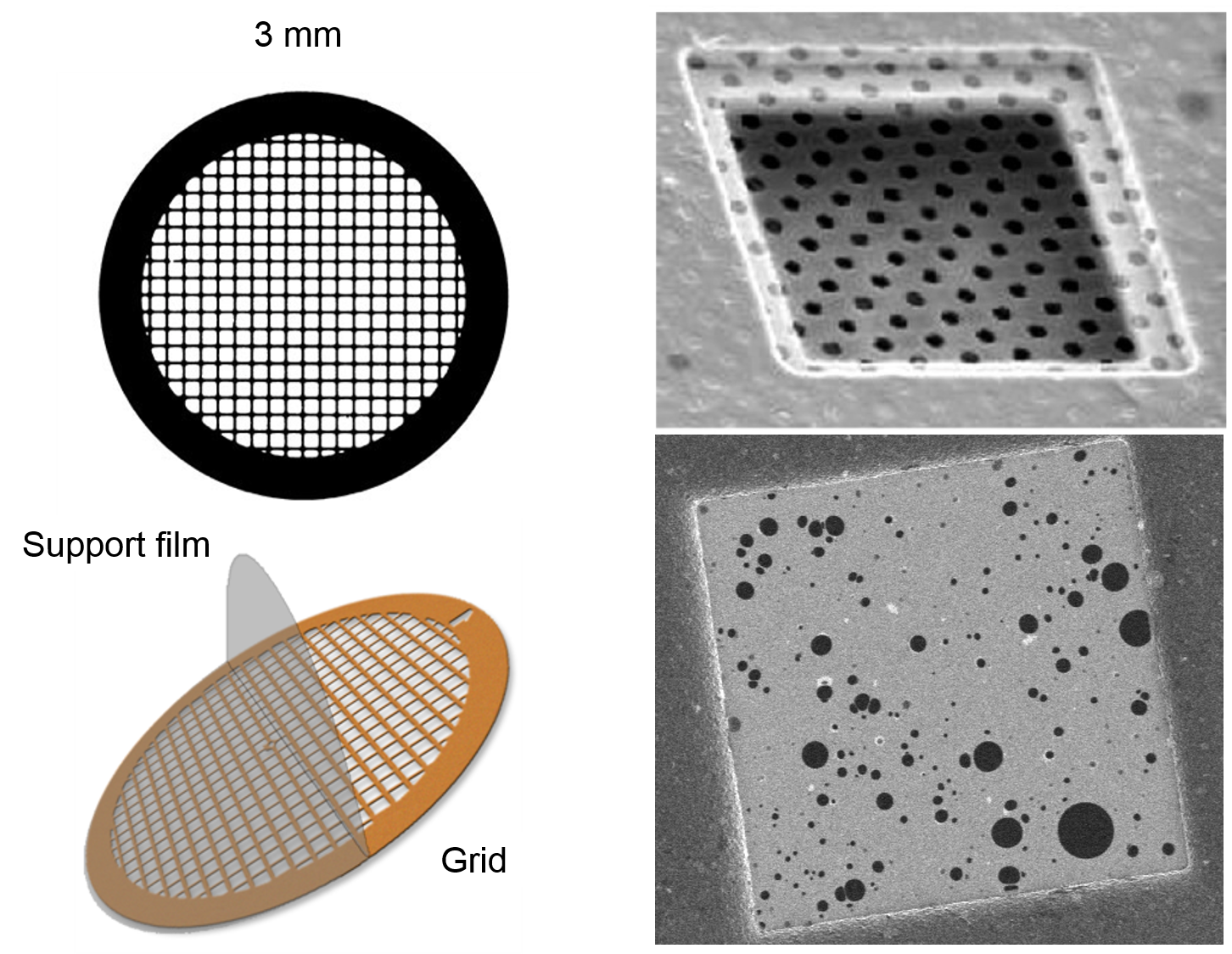
VMXm supplies these grids for scheduled beamtime, we routinely use the following depending on the crystal size for testing:
- Quantifoil Cu 200 mesh R2/2 (2 µm holes in Qunatifoil support material)
- Quantifoil Cu 200 mesh R1/4 (1 µm holes in Qunatifoil support material)
Dry crystalline powders
Dry crystal powders can be directly applied to cryoEM grids by gently agitating the grid in a tube containing the crystals. Any excess powder can be removed by softly brushing the grid against a lint-free cloth. The concentration, size, and distribution of the crystals can be evaluated using a lab-based scanning electron microscope.
Crystalline material suspended in solvent
Crystals can also be brought to VMXm in their native solution, there are two different methods we use for mounting samples of this type.
Crystals stable after solvent removal
If the crystalline material remains stable after the solvent is removed, the samples can be directly pipetted onto a cryoEM grid placed on filter paper. The filter paper absorbs most of the solvent, and the remaining liquid evaporates relatively quickly when left on the paper.
Grids are initially subjected to a glow discharge treatment, which creates a negatively charged surface to facilitate the even spreading of the crystal suspension. The VMXm sample preparation lab is equipped with a Pelco easiGlow discharge cleaning system for this process.
After drying, the grids can be screened using the lab SEM (JEOL JSM-IT100) to assess the crystal concentration on the grid and determine their size. If the concentration is too high or too low, additional grids can be prepared using the same method with a different concentration of crystals.
Solvent-sensitive materials
Certain crystals, such as metal-organic frameworks, are sensitive to solvent loss when removed from their mother liquor, often resulting in lattice collapse and reduced diffracting power. To address this, we employ sample preparation techniques from protein crystallography to maintain solvation throughout both preparation and data collection.
Grids are initially subjected to a glow discharge treatment, which creates a negatively charged surface to facilitate the even spreading of the crystal suspension. The VMXm sample preparation lab is equipped with a Pelco easiGlow discharge cleaning system for this process.
Crystal suspensions are then applied to these pre-prepared grids inside the humidity chamber of the Leica EM GP2. Samples are maintained at a high humidity to keep the crystals hydrated, while they are then blotted with filter paper to remove excess liquid. This leaves the crystals mounted on the thin carbon support of the grids, with a small amount of mother liquor remaining around the crystals. The majority of the liquid is removed to improve the signal to noise when diffraction data is collected on the beamline. Once blotted the crystals are then quickly plunge cooled into a container of liquid ethane.
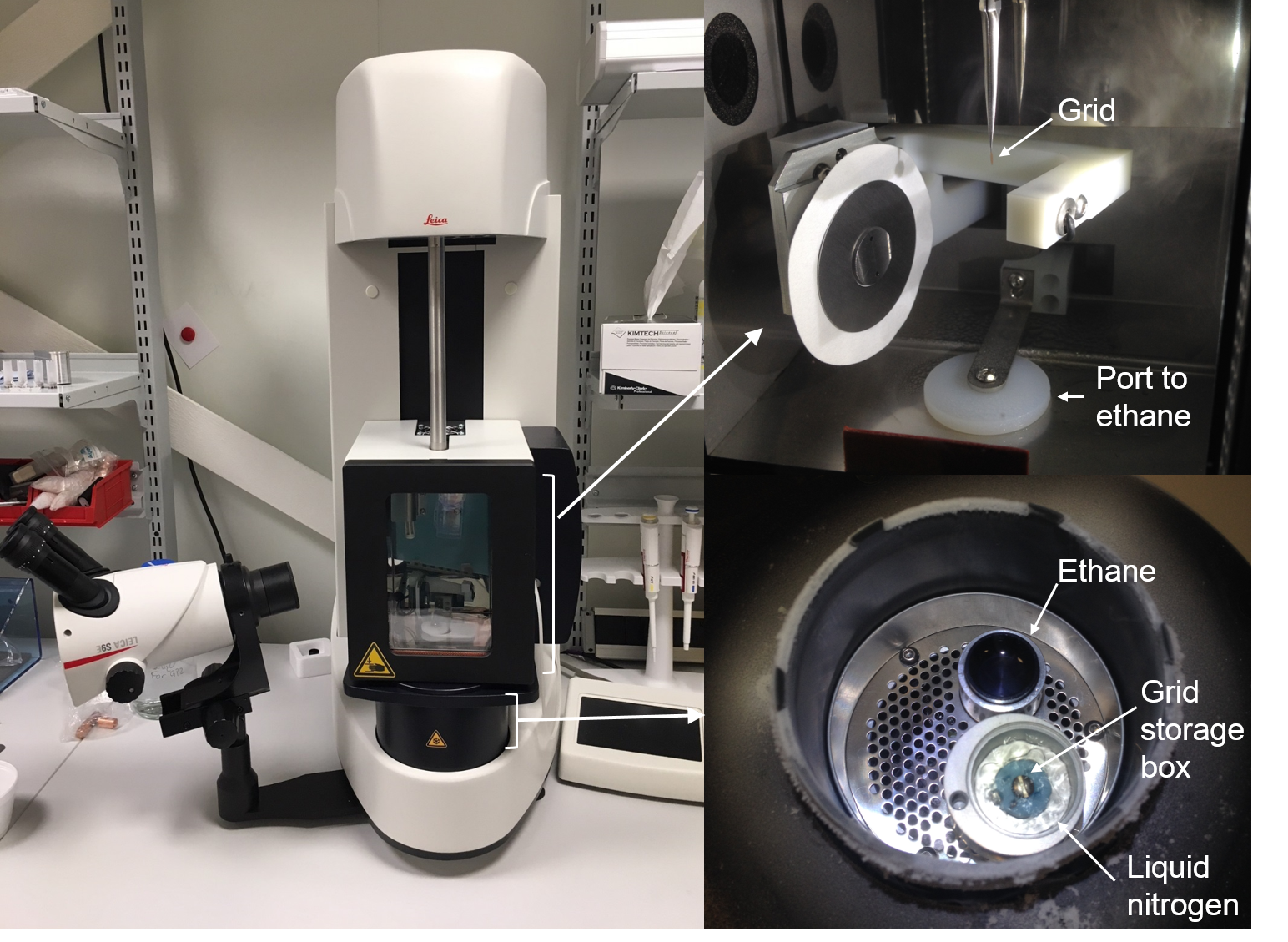
Leica EM GP2 housed within the VMXm sample preparation lab.
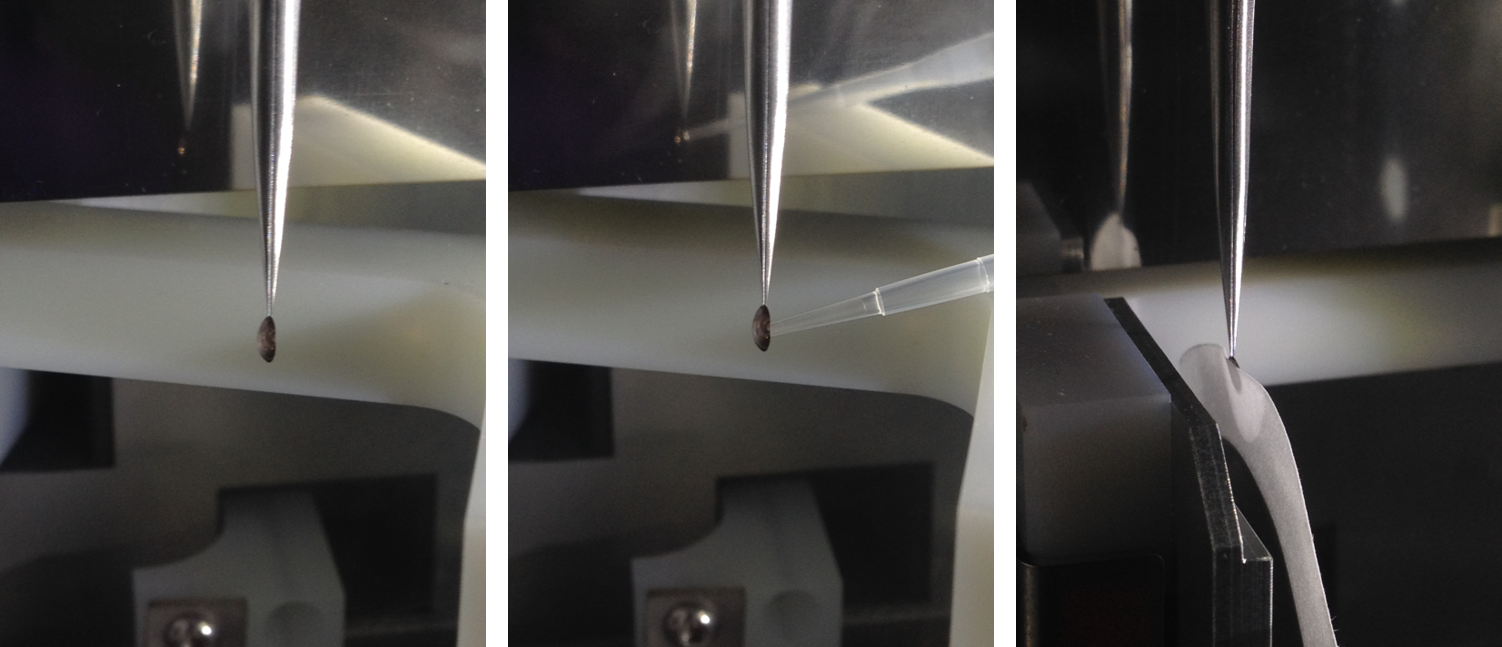
A TEM grid held with tweezers inside the Leica EM GP2 humidity chamber. A crystal suspension is pipetted onto the grid and then blotted before plunge freezing in liquid ethane. After plunge freezing the grid is transferred into the grid storage box which is surrounded in liquid nitorgen to maintain the low temperature. The grid box can hold four prepared grids.

Diamond Light Source is the UK's national synchrotron science facility, located at the Harwell Science and Innovation Campus in Oxfordshire.
Diamond Light Source Ltd
Diamond House
Harwell Science & Innovation Campus
Didcot
Oxfordshire
OX11 0DE
Copyright © Diamond Light Source. Diamond Light Source® and the Diamond logo are registered trademarks of Diamond Light Source Ltd
Registered in England and Wales at Diamond House, Harwell Science and Innovation Campus, Didcot, Oxfordshire, OX11 0DE, United Kingdom. Company number: 4375679. VAT number: 287 461 957. Economic Operators Registration and Identification (EORI) number: GB287461957003.