-
news
This week Diamond Light Source, the UK’s national synchrotron science facility, is celebrating eight years since the UK government, via the Science and Technology Facilities Council (STFC), and the Wellcome Trust signed a Joint Venture to build and operate the facility.
-
news
Are you interested in promoting your research to a wider audience? If so then you are invited to a free STFC Public Engagement Symposium on the 19th May at the Rutherford Appleton Laboratory. It is aimed at light source, neutron and muon users (e.g. Diamond, ESRF, CLF, ISIS and ILL) interested in developing public engagement activities that highlight their research to wider audiences.
-
highlight
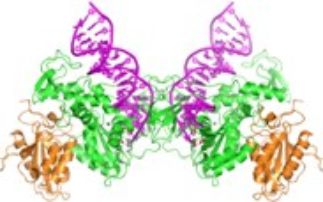
Cancer comes in many forms, but it is characterised by cells rapidly dividing out of control. Chemotherapy refers to a group of drugs which use a range of mechanisms to try and block the cells from dividing. One group of chemotherapy drugs, commonly used to treat chronic and acute leukemia, lymphoma and Hodgkin disease among others, works by targeting the genetic material inside cancer cells linking together the DNA strands, thereby stopping the cell copying its genetic material so the cell ...
-
news

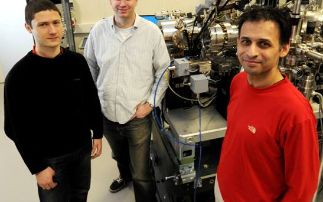
Three young scientists from Diamond Light Source, the UK’s national synchrotron on the Harwell Science & Innovation Campus have just taken part in the prestigious (Scientists, Engineers and Technologists) SET for Britain competitions and exhibitions held annually at the Houses of Parliament on 8th March 2010.
-
news
A one day meeting on “Imaging and life sciences applications of new light sources” will take place at The Italian Cultural Institute, 39 Belgrave Square, London SW1X 8NX, on the 26th March 2010.
-
highlight
Extending our knowledge of how magnetic materials behave on an atomic scale has led to considerable technological advances, particularly in the area of information storage. University of Leeds scientists have been working with the Nanoscience beamline team at Diamond to study the properties of magnetic domain walls, which are areas where the sample magnetisation rapidly changes direction. The ability to manipulate domain walls using an electric current has recently generated a great deal of ...
-
news
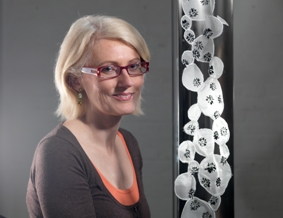
From Monday 11th to Friday 29th January 2010, artworks inspired by Diamond Light Source will be on display at the North Wall Arts Centre in Summertown, Oxford. Local artists and community groups have interpreted the research carried out at the facility into a collection of stunning pieces.
-
news
Funding is available to carry out multidisciplinary research at the Research Complex adjacent to Diamond, in close collaboration with the central facilities at Harwell.
-
news
Two teams of Oxford University researchers led by Professors Judith Armitage and David Stuart have made the first steps towards being able to engineer a bacterial cell that can sense and respond to novel environmental cues. The groups demonstrated that it should be possible to design synthetic signalling circuits inside a cell, ultimately enabling the development of new biosensors.
-
highlight
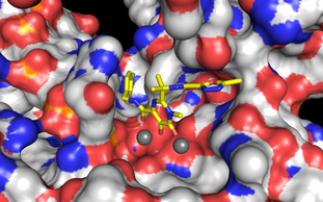
Researchers into from Imperial College London and Harvard University have used Diamond to solve a 20-year-old puzzle about how HIV establishes itself in the human body. They have used the synchrotron to determine the structure of an enzyme called integrase, used by the HIV and similar viruses to copy their genetic information into the DNA of their hosts. Antiretroviral drugs have already been developed which work by blocking integrase, but the mechanism behind this was not fully understood ...
-
news
Diamond Light Source is holding a workshop on the processing and analysis of XAS data from the 7th-9th of June. Diamond has three x-ray absorption spectroscopy beamlines, one of which is operational, I18, with the other two, B18 and I20, coming online in the first half of 2010.
-
news
Research containing data collected on Diamond’s Small Molecule Single Crystal Diffraction (I19) beamline has been published in Chemistry – A European Journal and has become one of the ‘Most Accessed’ article in the journal.
-
news
Diamond are pleased to announce that they will be hosting the 10th International Workshop on X-Ray Spectroscopy of Magnetic Solids (XRMS10).
-
news
On Monday 11th January, Tim Stevenson OBE, Lord Lieutenant of Oxfordshire, launched Science in a new light, an exhibition of science and art taking place at the North Wall Arts Centre in Summertown.
-
news
On Friday 8th January 2010 Diamond became the proud owner of a new instrument that will enhance the capabilities of the facility’s surface and interfaces research village, enabling more complicated and sensitive experiments.
-
highlight
MX beamlines are extremely powerful instruments for solving the structure of proteins. There are nearly 100 operational Macromolecular Crystallography (MX) beamlines around the world, and being able to accurately calibrate them is vital to ensuring the accuracy of the data they collect. Scientists from Diamond have shown that an unusual calibration standard – beeswax – may be able to help this happen. This work has been published in the Journal of Synchrotron Radiation.
-
news
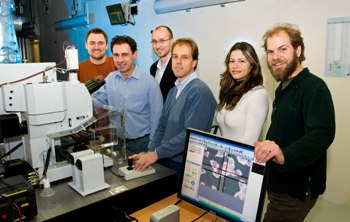
The first experimental station to use InfraRed light at the UK’s national synchrotron facility, Diamond Light Source, has now started operation.
-
highlight

Breaks in DNA cause a cascade of intercellular responses including the activation of the Mre11/Rad50/Nbs1 (MRN) complex. This complex attaches itself to the strand break point and holds the broken ends in close proximity to one another ready for rejoining.
-
highlight
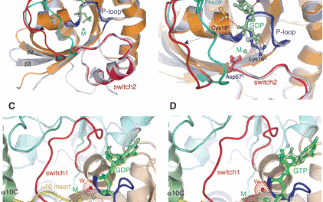
A critical step involved in regulating the cytoskeleton and cell signalling is the activation of Rho guanosine triphosphatases (GTPases), initiated by the exchange of guanine diphosphate (GDP) for guanosine triphosphate (GTP), a process catalysed by guanine nucleotide exchange factors (GEFs). Here structural research provides us with evidence that a nucleotide sensor on the GEF DOCK9 is intrinsic to the release of guanine diphosphate (GDP) from the Rho-family GTPase Cdc42. This nucleotide ...
-
news

It is with great pleasure that we announce the making of our core Data Acquisition framework "Open Source".