-
highlight
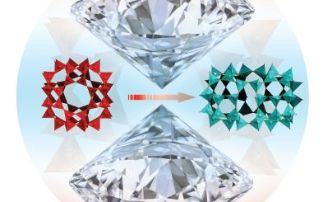
Diamond Light Source has been used to profile a new zeolitic microporous solid, created via a process that had previously been thought impossible. Using beam line I15 researchers were able to perform high-pressure synchrotron X-ray diffraction analysis of a material known as a zeolite ITQ-29, and were able to study how it transitioned into a new zeolite. The research also showed that the daughter zeolite is a more efficient adsorber for carrying out the separation of propene from mixtures ...
-
highlight
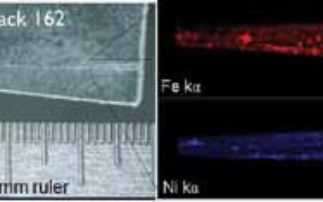
In 2006 the Stardust mission returned to Earth with the first bona fide samples of a short period comet 81P/Wild2. Micron – sized dust samples were collected from the coma of the comet at a closing velocity of 6 km/s. The Stardust sample analyses including the work carried out by us at Diamond has shown that the traditional ideas of all comets being predominantly a mixture of low temperature material with a high proportion of interstellar grains and secondly of a rigid distinction between ...
-
highlight
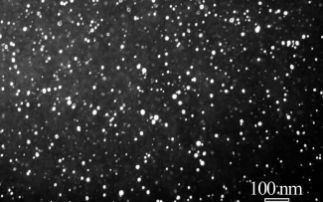
The vast majority of the electronic devices today are based on silicon technology and their performance and operation depend on the movement and mobility of electronic charge. This mode of operation sets the limits on power consumption, operation speed and results in potential device overheating, particularly at fast switching speeds. At the same time, it is well-known that electrons also possess a spin and the idea of manipulating this property led to a relatively new field of
research - ...
-
news
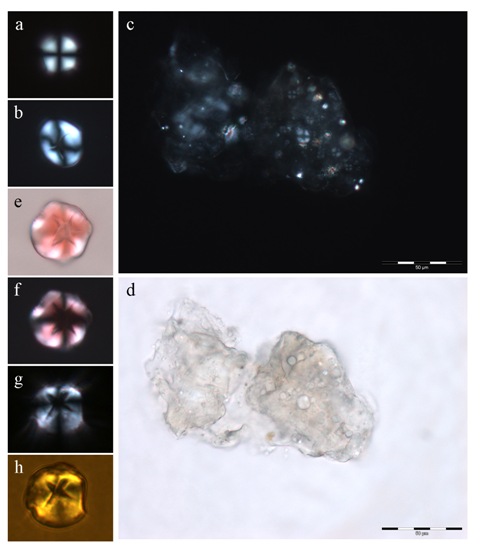
With the arrival of World Alzheimer’s Day (21st September), Diamond Light Source takes a closer look at the research taking place at the synchrotron into the disease that is the most common cause of dementia and affects over 400,000 people in the UK.
-
highlight
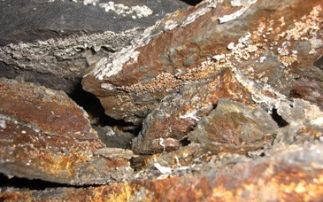
Great Britain is an island nation, with over 11,000 miles of coastline*. But the coastline is continually changing, due to the process of coastal erosion. A group of scientists have been using Diamond Light Source to study the weathering of shale cliffs in North Yorkshire to understand physical and chemical interactions on the molecular scale that could cause weakening of the cliffs , including the intriguing possibility that a novel microbial community might be responsible.
-
highlight

Metal-on-metal hip replacement is a treatment for “wear and tear” arthritis (osteoarthritis) – one of the commonest diseases in the world. These hip replacements use cobalt chrome alloy for both bearing surfaces and are the only type that can be made thin enough to enable resurfacing of both sides of the worn hip joint, called a hip resurfacing. The most common type was developed 13 years ago in the UK and has been adopted world wide. One million people now have a metal-on-metal hip ...
-
highlight
Battlefield use of depleted uranium (DU) weapons has generated considerable controversy because of the potential long-term effects on the environment and on the health of people exposed to it. DU projectiles have been used as armour-piercing weapons by both the British and American militaries and deployed in the Balkans and both Gulf wars. Upon impact the metal combusts and a fraction is dispersed as uranium oxide particulates. Inhalation of these particulates constitutes the main long-term ...
-
highlight
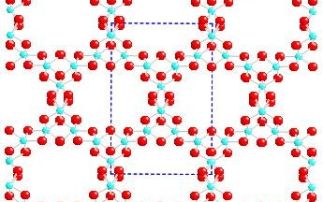
Framework structures are molecular cages which are capable of selectively trapping atoms, ions and molecules within the cage. Materials that adopt framework structures have attracted significant attention recently as they have potential applications in a wide range of areas, including catalysis and the pharmaceutical industry. Currently almost all existing framework structures are neutral or negatively charged, but a group led by researchers from the University of Liverpool in collaboration ...
-
news
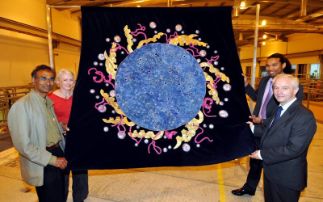
During a visit to Diamond Light Source, the UK’s national synchrotron science facility, on Friday 9th July, Prof. Venki Ramakrishnan, winner of the 2009 Nobel Prize for Chemistry, unveiled the World’s largest diffraction pattern – an innovative textile project which has had stitches added to it by over 5000 people in the UK, Europe and America.
-
highlight
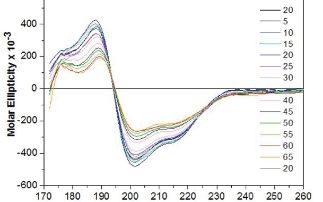
Peptoids are analogues of α-peptides where the backbone is achiral due to the proteinogenic side chains being relocated from the α-C to the amide nitrogen. In the peptoids discussed here, chiral centres are present in the side chains thus making them suitable for chiroptical analysis. The presence of tertiary amides complicates NMR interpretation which means that circular dichroism (CD) becomes an invaluable tool for the study of peptoid conformation. Understanding of the spatial orientation ...
-
news
Diamond is taking part in the 350th Anniversary of the Royal Society and their special Science Exhibition at the Southbank Centre in London.
-
highlight
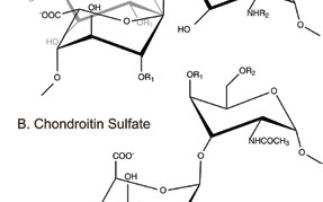
The two prototypical members of the Fibroblast growth factors (FGF) family, FGF-1 and-2, have fundamentally distinct binding requirements and the secondary structures induced by binding of polysaccharides are also distinct. Analogues of HS, which are active with FGF-1 act in essentially the same way as the natural ligand, but not in the case of FGF-2. This improves our understanding of the structural basis of the signalling complexes and is vital for the design of analogues, which can be ...
-
highlight
Metal organic frameworks (MOFs) are molecular structures, constructed from metal cations linked by organic molecules. They have recently shown considerable promise in a wide range of applications, including hydrogen storage, catalysis and drug delivery. MOFs can be built systematically for desired applications, including particular configurations that are stable and porous and which can be used to trap other molecules in a cage-like structure.
-
news
%2520False%2520colour%2520map%2520of%2520a%2520single%2520cancer%2520cell.jpg)
Diamond Light Source, the UK’s synchrotron science facility, is being used by a Stoke-on-Trent based clinician to develop new ways to detect cancer.
-
news
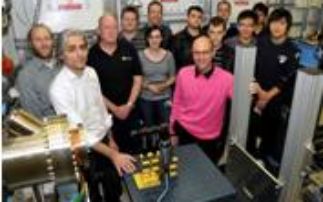
Diamond Light Source, the UK’s national synchrotron science facility, is being used to look inside aero-engine materials and components, right down to the scale of atoms.
-
news
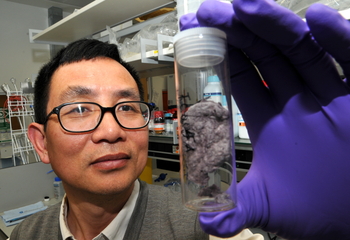
On Wednesday 27th April, the first researchers arrived on the latest experimental station to become operational at Diamond.
-
news
A team of researchers from the Universities of Leeds, Oxford and Imperial College London have captured the 3D atomic models of a single transporter protein in each of its three main structural states, a goal of researchers from around the world for over 25 years.
-
news
Business secretary Lord Mandelson today announced almost £100m investment in Diamond so that a further 10 beamlines can be added to fully maximise the scientific discovery potential of the machine.
-
news
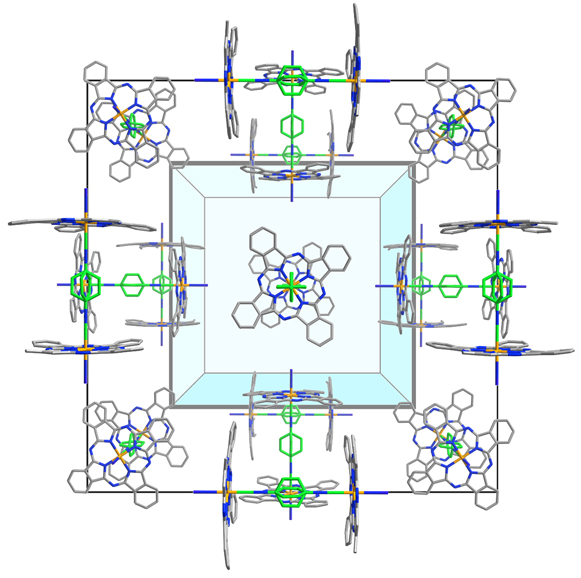
It is a long-held ambition of scientists to prepare porous solids within which they are able to mimic the sophisticated chemistry performed by nature.
-
news
There will be a one day meeting on the "Scientific Potential of Free Electron Lasers", which will take place at The Royal Society, London, on Thursday 22nd April 2010