-
highlight
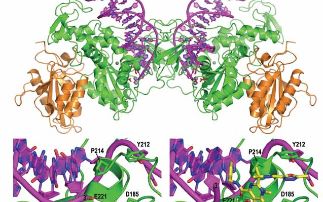
To establish successful infection, a retrovirus must insert DNA replica of its genome into a host cell chromosome. This process is catalysed by integrase (IN), the viral enzyme that synapses ends of viral DNA forming a highly stable nucleoprotein complex, intasome. The structure of full-length IN, either separately or in complex with viral DNA, has been lacking. Furthermore, although clinically useful inhibitors of HIV IN have been developed, their mechanism of action remained speculative. ...
-
news
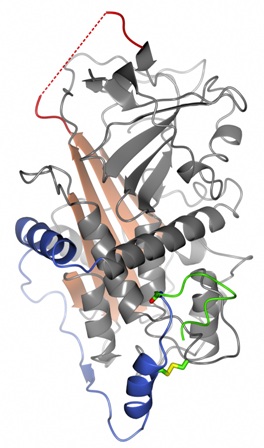
Researchers from the University of Cambridge have used Diamond Light Source to solve the 3D structure of a protein that plays a major role in hypertension in pre-eclampsia.
-
highlight
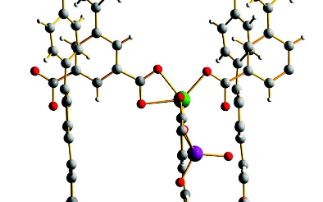
A major programme of research into metal-organic frameworks (MOFs) as materials for hydrogen and fuel gas storage is underway at the University of Nottingham. Safe, efficient hydrogen storage is a pre-condition for powering cars using this clean fuel, which has no carbon emissions at the point of use. In order to understand how our MOFs can store hydrogen, we need to determine their three-dimensional crystal structures. This is often not possible to achieve in-house because the crystals are ...
-
highlight
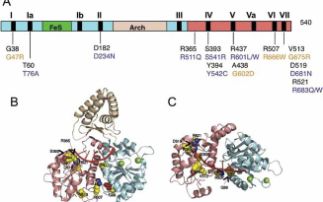
DNA repair is found in all branches of life, it is the natural response to an environment which damages DNA. Defects in repair, structure of the archaeal protein XPD provides a model to interpret genetic mutations of the human homologue. These mutations lead to three related diseases: xeroderma pigmentosum (XP), trichothiodystrophy (TTD), and combined XP with Cockayne’s syndrome (XP/CS). The sequence homology allows us to use an orthologue from the organism Sulfolobus sulfataricus which we ...
-
highlight
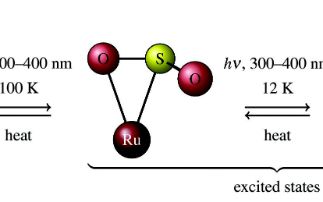
Materials with metastable excited states hold great potential for optical data storage applications. Their functionality arises directly from their ability to act as binary switches: if the ground state is taken to signify a ‘0’ and the metastable state a ‘1’, data can be written and re-read using suitable wavelengths of light. However, only a handful of such materials have been reported and little is known about the correlation between their structure and optical properties. As part of an ...
-
highlight
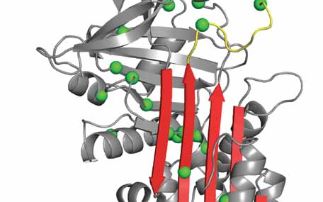
Ordered protein aggregation is thought to be the cause of several diseases including Alzheimer’s, Huntington’s, Parkinson’s, the prion encephalopathies, and many more. However, the molecular basis of the intermolecular linkage of the underlying protein (Aβ1-42, huntingtin, α-synuclein, and prions) is not known for any of these ‘conformational diseases’ [1]. The SERPIN family of proteins also cause disease when mutations lead to their intracellular aggregation. The process has become known as ...
-
highlight
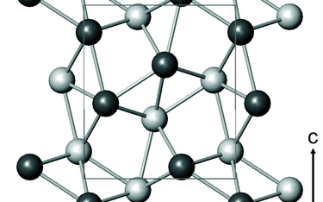
We have used the high intensity x-ray beam on beamline I15 to examine the crystal structures of the alkali metals Na and K to above 100 GPa (1 million atmospheres). In Na, we have utilised the low melting temperature near 100 GPa to grow a single crystal of sodium at 108 GPa, and have investigated the complex crystal structure at this pressure using single-crystal diffraction. We confirm that at this pressure sodium is isostructural with the cI16 phase of lithium, and we have refined the ...
-
highlight
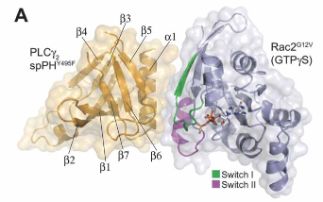
Rho family GTPases are important cellular switches and control a number of physiological functions. Understanding the molecular basis of interaction of these GTPases with their effectors is crucial in understanding their functions in the cell. Here we present the crystal structure of he complex of Rac2 bound to the split pleckstrin homology (spPH) domain of phospholipase C-γ2 (PLCγ2). Based on this structure, we illustrate distinct requirements for PLCγ2 activation by Rac and EGF and ...
-
highlight
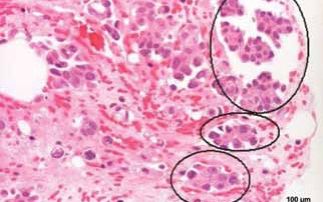
Over the last few years, IR absorption spectroscopy has grown up as a potential analytical method in tissue and cell studies for cancer diagnosis. The application could be twofold: as a tool to assess the presence or absence of malignant cells in biopsies; and as an aid to help pathologists to classify those cells that are suspicious but not diagnostic for cancer. The last application has the problem that in order to assess these cells pathologists would have already dealt with stained ...
-
highlight
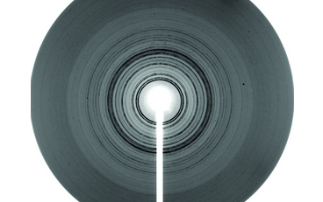
The crystal structure of the high-pressure ζ-form of the explosive CL-20 has been determined using a combination of x-ray single crystal and powder diffraction techniques. Conformational changes in the orientation of the nitro groups of the CL-20 molecule were observed in the γ→ζ transition, such that molecules in the ζ-form adopt the conformation in which all of the nitro groups are exo with respect to the five- and six-membered rings. The level of complexity of this crystal structure ...
-
highlight
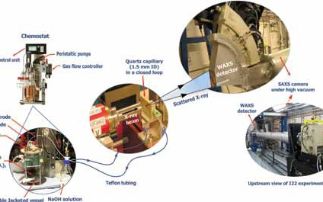
A combined time-resolved synchrotron-based Wide-Angle X-ray Scattering (WAXS) utilising a controlled chemical synthesis apparatus including electrochemical monitoring of the reaction was successfully developed to study the formation and transformation of the redox-reactive ‘green rust’ phases. Iron corrosion in some marine environments and waterlogged soils is known to involve the formation of dark olive-green compounds called green rusts (GR) which transform quickly into the usual brown ...
-
highlight
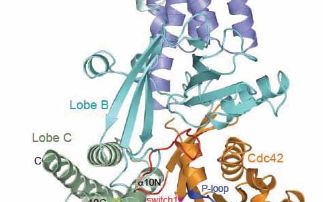
Rho proteins are small GTPases that function to regulate cell motility, polarity, adhesion, cytoskeletal organisation, proliferation and apoptosis. Two distinct families of Rho guanine nucleotide exchange factors (GEFs), the Dbl homology (DH) and DOCK proteins, activate Rho GTPases through the exchange of GDP for GTP. In humans, DOCK proteins are organised into four subfamilies, characterised by their differing specificities for Rac and Cdc42, regulatory domains and associated subunits. All ...
-
news
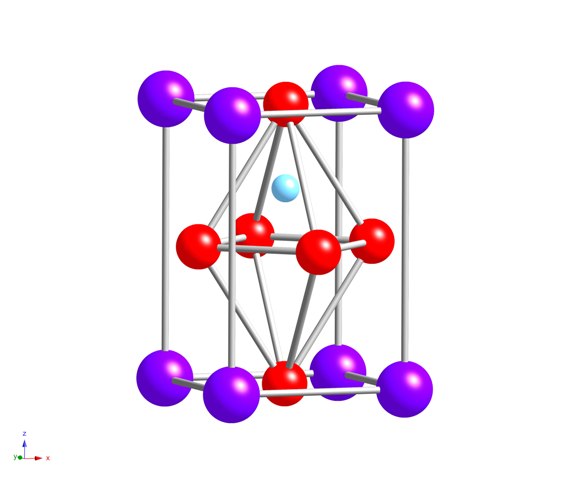
Scientists are using Diamond Light Source, the UK’s national synchrotron facility, to discover how we can detoxify our electronic gadgets. Results published in the journal Applied Physics Letters on 1st October reveal the potential for new artificial materials that could replace lead-based components in everyday products from inkjet printers to digital cameras.
-
highlight
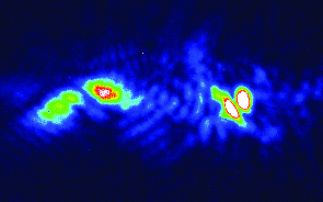
The experiment undertaken on I16 showed strong evidence of twinning, from the ‘speckled’ Bragg peaks of manganites crystallites. This was consistent with a new theory of the connection between ab-twinning, a classic disorder mode of these layered materials, and the phase of the domain that contributes to a given Bragg peak.
-
highlight

We show that small quantities of 1,3:2,4-di(4- chlorobenzylidene) sorbitol dispersed in poly(ε- caprolactone) provide a very effective self-assembling nanoscale framework which, with a flow field, yields extremely high levels of polymer crystal orientation. We have used the small-angle X-ray scattering beamline I22 at Diamond to follow in a time resolving manner the formation of the particles and the subsequent crystallisation of the polymer. During modest shear flow of the polymer melt, the ...
-
highlight

Why do some fossils preserve soft tissue in very fine detail while others most of the detail is lost? After death there is a race against time between soft tissue destruction and mineralisation of the carcass. In some cases soft tissue becomes mineralised in a state similar to the living animal; in others, only bone survives. One theory is that if the body is allowed to dehydrate, for example during a period of drought, and later rehydrated, for example during a flood, the soft tissue may be ...
-
highlight
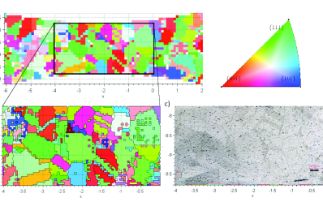
Better understanding of the distribution of elastic and plastic strains in deformed polycrystalline, multiphase materials is important for structural engineering. The deformation response depends upon the interaction of grains of different orientations, and the anisotropy associated with each phase. Strain partitioning and tensile-compressive hardening asymmetry arises due to mismatches in modulus and ductility between grains and phases in alloys such as Ti-6Al-4V, or Ni-base superalloys ...
-
highlight
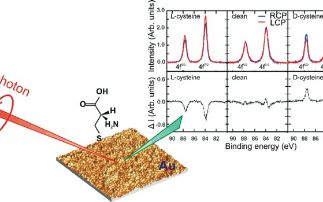
Chirality, the property of an object to exist as distinguishable mirror image forms (known as enantiomers), is ubiquitous. Intriguingly, the chemistry of life is intrinsically homochiral, as biological molecules such as sugars, amino acids and DNA exist almost exclusively as only one enantiomer. Identifying potential mechanisms for such asymmetry is therefore of tremendous interest, not least because those mechanisms may also allow more efficient asymmetric synthesis of pharmaceuticals. In a ...
-
highlight
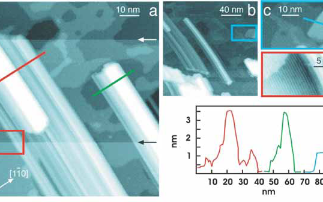
Electronic devices are getting smaller all the time, and the challenge is to make the individual components as small as possible without affecting how they function. This includes the need for nanometre scale wires to be placed on electrically insulating substrates. We used a technique called metal vapour deposition to grow palladium nanostructures on a dielectric support. We then used Scanning Tunnelling Microscopy (STM) to identify two distinct structures: roughly hexagonal islands and ...
-
highlight
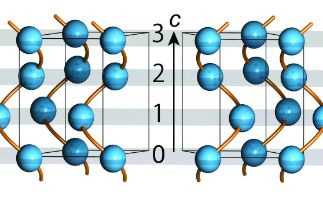
We have demonstrated the use of a new technique for determining absolute crystal chirality by resonant X-ray diffraction of circularly polarized X-rays from a crystal of tellurium. The new approach is based on studies of ‘forbidden’ reflections, which, as the name implies, are normally considered not to exist. With the high-intensity X-ray beam available on Diamond beamline I16 such signals gain considerable intensity and are exceptionally sensitive to the chirality (handedness) of the ...