-
news
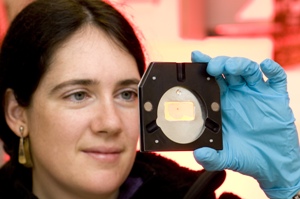
Assistant Professor of Engineering at the University of Warwick School of Engineering, Dr Joanna Collingwood, has been elected as Chair by the members of the newly formed Diamond User Committee.
-
highlight
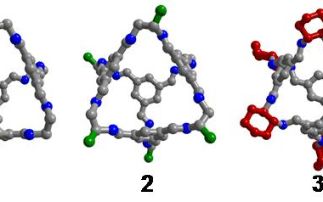
Porous materials are important in a wide range of applications including catalysis and storage of gases such as carbon dioxide, a major contributor to climate change. Finding new ways to synthesise these materials will enable more control over their properties and performance. A group from the University of Liverpool has developed a technique for assembling prefabricated organic cage structures into crystalline materials where controlling how the cages connect determines whether the material ...
-
highlight
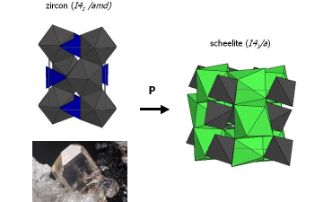
Orthovanadates have recently emerged as promising optical materials for birefringent solid-state laser applications. They can be also used in a number of applications including cathodoluminescent materials, thermophosphors, scintillators, and nuclear waste storage. Given the technological importance of zircon-type orthovanadates, their electronic and optical properties have been extensively studied but their mechanical properties, which are of interest in several areas of materials research, ...
-
news
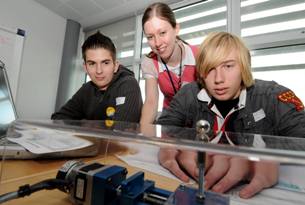
Today (5th Nov 2009) over 80 students from across Oxfordshire and beyond attended a careers day that focused on the wide range of exciting opportunities that exist for engineers in the UK.
-
highlight
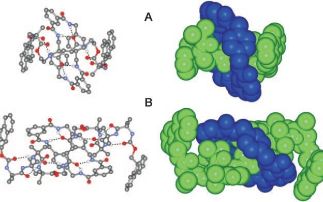
Rotaxanes are tiny molecular structures where a central straight molecule passes through a macrocycle, making a molecular machine in the shape of an axle inside a wheel. Bulky stoppers at either end of the straight molecules keep the wheel on the axle. These molecular machines have the potential to be used as molecular shuttles by moving the wheel along the axle, which is of interest for nanoscale electronic components and also in biology, where many biochemical functions are based on ...
-
highlight
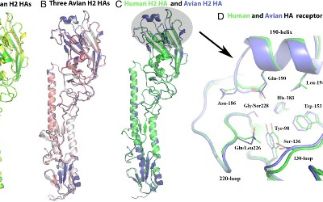
How can a disease that affects one species such as birds transfer to another such as humans? In the case of influenza, the answer could lie in a protein called hemagglutinin – the part of the flu virus that binds it to human cells when a person is infected. In the twentieth century there were three flu pandemics in 1918, 1957 and 1968. Scientists from the Medical Research Council have been using Diamond to study the structure of hemagglutinin from the virus strain that caused the 1957 ...
-
highlight
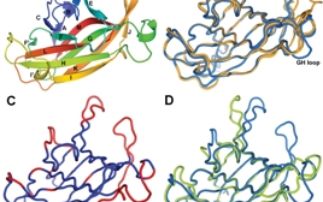
EphA4 is a protein which is attached to the surfaces of many types of human cells and plays a role in a wide range of biological processes. EphA4 functions by binding to ephrin ligands, cell surface proteins which sit on opposing cells. The signalling cascades which result from this contact direct cells to move in a particular direction, to the right place in the body. This is critical in the development of the nervous system, and has also been linked with the suppression of melanoma tumours.
-
news
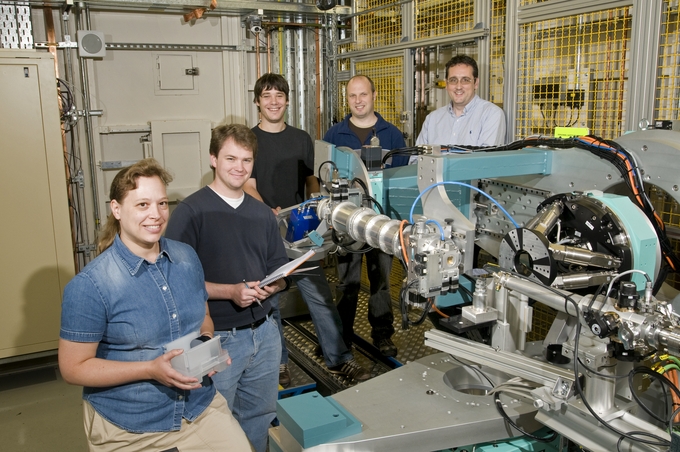
On Monday 12th October, a team of scientists from the University of Bath became the first researchers to use the UK’s national synchrotron facility’s latest experimental station (I07).
-
news
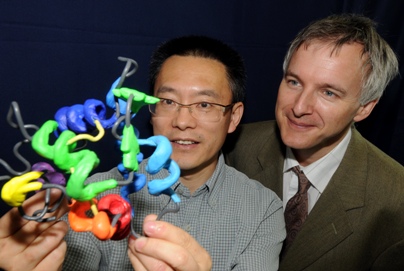
Why recognising sex pheromone components of the silkworm moth at the scale of atoms and molecules impacts on eco friendly agriculture.
-
highlight
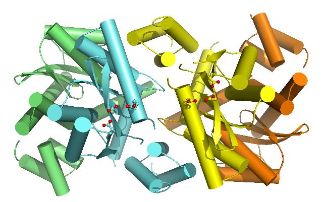
Understanding how viruses such as HIV function is vital in the search for more effective antiviral medicines, as well as opening up novel possibilities in gene therapy. A collaborative study involving researchers from Imperial College London, Yale University, and Dana-Farber Cancer Institute, led by Dr. Peter Cherepanov from the Division of Medicine at Imperial took advantage of Diamond’s I02 and I04 macromolecular crystallography beamlines to reveal important mechanistic aspects of ...
-
highlight
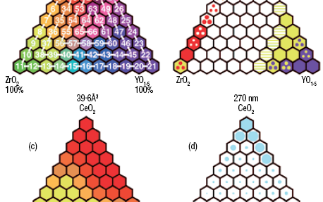
Since the Stone Age humans have been adept at selecting materials for specific tasks based on the material’s properties. With the discovery of smelting man learned to manipulate materials to improve performance. Now new materials can be “built” on a nm scale with properties that are required for a host of applications, from solar cells to catalysts in industrial process.
-
highlight
The self-assembly of peptides into fibrils is commonly observed. Such fibrils may have biological roles and may also be useful in nanotechnology applications, as scaffolds to create metal nanowires or to template the self-assembly of other inorganic materials, for biosensors or as supports for cell adhesion. The misfolding of proteins into so-called amyloid fibrils is also implicated in amyloid diseases such as Alzheimer’s and type II diabetes. It has been suggested that amyloid fibrils are ...
-
news

Professor So Iwata, who leads the Membrane Protein Laboratory at Diamond Light Source and is also a professor at Imperial College London, has been awarded the Gregori Aminoff prize in crystallography for 2010.
-
news
BBSRC is planning to award one Diamond Professorial Research Fellowship to be located in the Research Complex at Harwell
-
highlight
%20hydrogen.jpg)
Hydrogen is difficult to store or transport with current technology. Hydrogen gas has good energy density by weight, but poor energy density by volume compared to the hydrocarbons used currently to power cars. In principle, hydrogen requires a larger tank than petrol to store the same energy, making it a less practical alternative in volumetric terms. One approach to improve the energy density of gaseous hydrogen is by storing the gas at higher pressures. This requires material and design ...
-
highlight
Many nanotechnology and biotechnology applications rely on how tiny metal particles arrange themselves on flat surfaces. These patterned structures on the nanometre scale are of great importance in making novel electronic, magnetic and photonic devices. Therefore being able to accurately characterise them is vital. However, this can be very challenging and sometimes requires several different techniques to find the detailed shape and chemical composition of the nanoparticles. A group of ...
-
news
On Tuesday 1st September the Lord Lieutenant of Surrey, Mrs Sarah Goad JP, took part in an innovative science and art project to launch the involvement of the UK’s national synchrotron facility, Diamond Light Source, in the British Science Festival, which opens in Surrey this weekend.
-
highlight
Understanding the deformation of polycrystalline structural materials is the key to improving performance and reliability of complex engineering components and systems. The interaction between grains in the metal and how they behave under stress is vital to determining the strength of a component and how it will deform. However capturing full details of polycrystalline deformation is a significant challenge, partly because of the sheer volume of information involved, and partly due to the ...
-
highlight
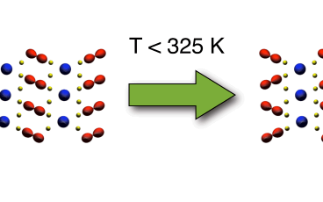
Transition metal oxides are an intriguing class of materials since it is possible to drastically modify their properties by changing their temperature, applying a magnetic field or simply by irradiating them with light. Of particular interest are the manganites that exhibit complex interactions bewteen the spin and and orbital degrees of freedom. To fully understand the nature of this delicate balance between the different phases of the same material it is crucial to exploit the versatility ...
-
news

Professor So Iwata, an Imperial College London scientist, has been awarded the first ever ‘Diamond Fellowship’ of the Biotechnology and Biological Sciences Research Council (BBSRC).