-
highlight
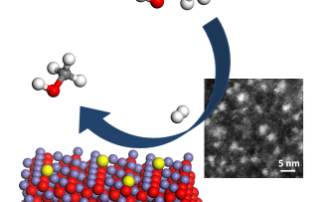
Scientists at the University of Oxford and Diamond Light Source have described a new chemical catalyst for producing methanol, a promising future biofuel. By reducing the energy needed to convert biomass to methanol, the new catalyst offers a more sustainable way to make the useful chemical and fuel.
At present, methanol is used primarily in industrial chemistry, including the manufacture of plastics and synthetic fibres, and as a fuel in fuel cells. It is manufactured from natural gas, ...
-
news

Diamond Light Source, the UK’s national synchrotron science facility, launched its first collection of fiction stories on Friday 7th September with the help of a 6ft leaking, inquisitive alien slug - the star of a witty and strangely credible story entitled The Sound of Science.
-
highlight

A collaboration of scientists from the University of Nottingham, STFC’s ISIS Neutron and Muon Source, Diamond Light Source, the University of Oxford and Peking University in China, have created a new low-cost material that can capture harmful gases, offering exciting prospects for combating atmospheric pollution.
-
highlight
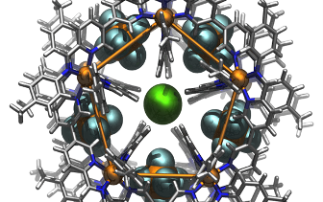
The discovery of a synthetic molecule made up of 60 simple components able to reorganise themselves to produce new functions will lead to better understanding of Nature’s processes.
The incredibly complex structure of the pentagonal prismatic molecule was discovered when researchers working at The University of Queensland, The University of Cambridge, and Randolph-Macon College in the USA, formed the structure by transforming a tetrahedral molecule into a second structure - a barrel-like ...
-
highlight
.%20CaB61%20(2).%20CaB61%20(2).%20CaB61%20(2).%20CaB61%20(2).%20CaB61%20(2).%20CaB61%20(2).%20CaB61%20(2).%20CaB61%20(2).%20CaB61%20(2).%20CaB61%20(2).%20CaB61%20(2).%20CaB61%20(2).%20CaB61%20(2).png)
Researchers from the University of Oxford and Diamond Light Source have discovered a new material, a Calcium hexaboride (CaB6) compound crystallising in a previously unknown crystal structure. Published in Physical Review Letters these findings can pave the way to customised boron-based intermetallics. The ordinary CaB6 is a semiconductor with an amazing hardness and high melting temperature governed by a high chemical stability. It has been investigated for a long time due to its relevance ...
-
news
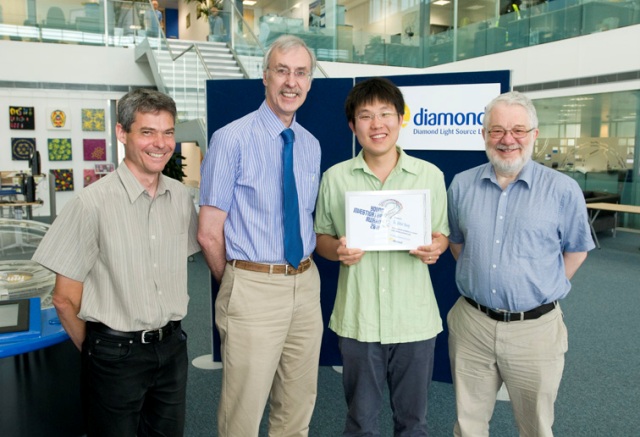
Dr Sihai Yang from the University of Nottingham is the winner of the 2011 Diamond PhD Investigator Award, a new initiative that rewards outstanding synchrotron research by Early Career Scientists.
-
news

Tom Carey, a Diamond/University of Birmingham PhD student who has been working on the synchrotron's Powder Diffraction beamline (I11), has been presented with the British Zeolite Association's Founders' Award for the most promising postgraduate student of the year. Tom received his Founders' cup trophy and cash prize at the British Zeolite Association's 35th Annual Meeting in Chester on the 19th July.
-
news
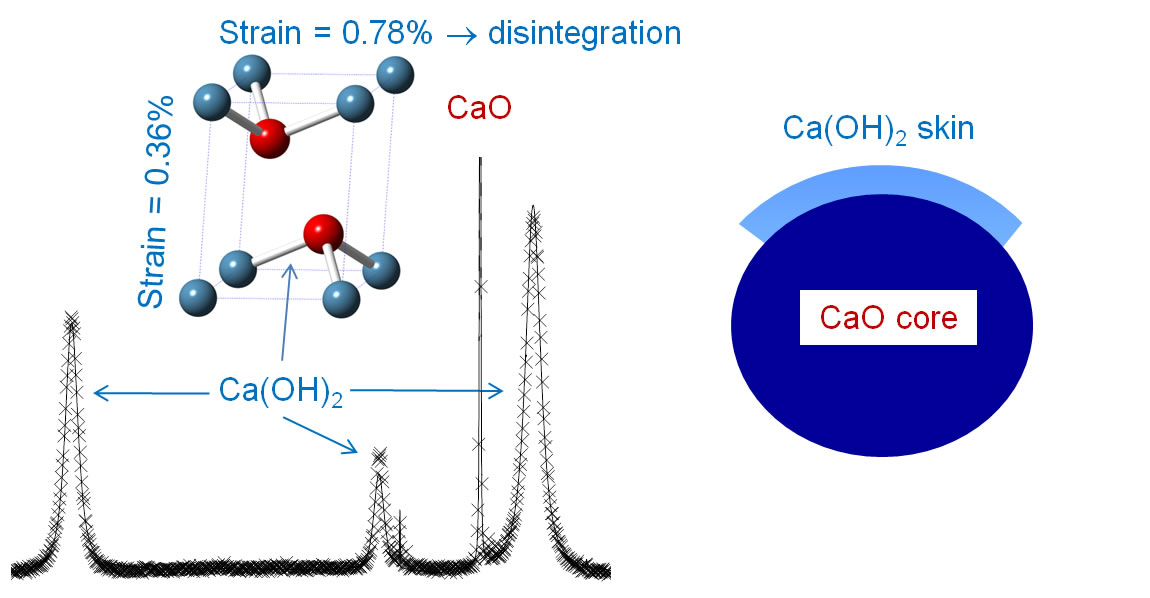
Diamond Light Source is being used to improve low cost methods for carbon capture. Scientists from the University of Leeds are using the UK’s national synchrotron to investigate the efficiency of calcium oxide (CaO) based materials as carbon dioxide (CO2) sorbents. Their results, published in the journal of Energy & Environmental Science, provide an explanation for one of the key mechanisms involved. This new knowledge will inform efforts to improve the efficiency of this economically viable ...
-
highlight
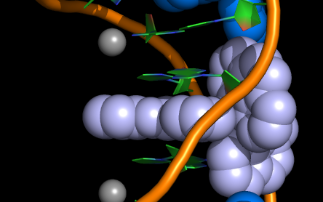
A collaboration of scientists from Diamond Light Source and the University of Reading has revealed the binding mechanism of a so-called ‘light-switch’ effect complex, a type of chemical compound that fluoresces on binding to DNA. There are two possible applications for these compounds – in sensitive diagnostic tests and as sensitizers for photodynamic therapy. The team used the Diamond synchrotron to determine exactly how the photoreactive metal complex binds to DNA, revealing that the ...
-
news

It was with great excitement and anticipation that almost 2,000 visitors arrived at Diamond Light Source, the UK’s national synchrotron science facility, to take part in a special series of Inside Diamond open days, held to mark the facility’s 10th Anniversary.