-
news
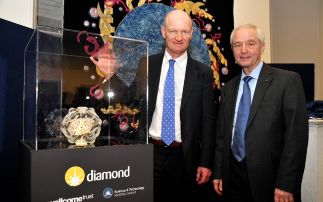
As 2012 draws to a close, Diamond Light Source reflects back on its tenth anniversary year.
In November top scientists, industrial researchers and funding agencies gathered at the Royal Society in London to gain insights into the scientific achievements that have been driven by Diamond Light Source, the UK’s national synchrotron science facility.
-
highlight
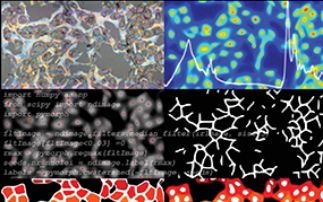
Recently published work from the Infrared beamline at the Diamond Light Source has the potential to speed up and simplify investigations in cell biology. The report, highlighted on the front cover of the 14th November 2012 issue of The Analyst, details a technique that has been developed to rapidly and effectively screen cell samples, replacing a key step in single cell analysis that is usually carried out by the human eye.
-
highlight
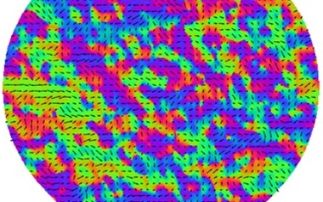
A European collaboration of scientists from the UK, Spain, Italy, France and the Ukraine has used interfacial strain to drive large temperature changes in thin magnetic films. Their results, published this week in Nature Materials, pave the way for further studies and R&D, with the potential to deliver environmentally friendly, energy-efficient refrigeration in both domestic and industrial appliances.
-
news

I just returned from leave to hear the sad news that former Life Sciences Director Professor Dame Louise Johnson has passed away.
-
news
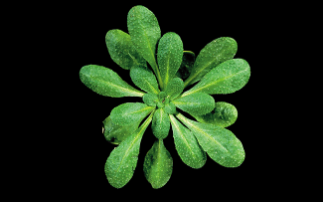
Arabidopsis thaliana, or thale cress as it is commonly known, made history back in 2000 by becoming the first plant to have its entire genetic code read by scientists, contributing to what is often referred to as biology's version of the book of life.
-
highlight
%20allowed%20new%20insights%20into%20host%20plant%20interactions%20%20%20Reprod.jpg)
In contrast to mammals, plants do not have mobile defender cells and an adaptive immune system; they defend themselves against attack from pathogens using an innate immune system. This immune system relies on the detection of foreign molecules and responds to these in different ways. One such way is the Hypersensitive Response (HR) where plant host cells undergo localised cell death. This makes it challenging for invading pathogens to establish a successful infection. HR is normally observed ...
-
Many of the experimental stations (beamlines) at Diamond are well suited to addressing environmental questions. With powerful X-rays you can see metal corrosion as it forms...
-
A wide variety of health related research takes place at Diamond and scientists here highlight how the synchrotron is helping them to bring new diagnosis techniques and better implant devices to the field of medicine.
-
See scientists and engineers talking about what fascinates them about science, what sparked their curiosity, how they were inspired to follow their chosen career path and why the Diamond synchrotron is important to them.
-
news

A collaboration of scientists from the University of Nottingham, STFC’s ISIS Neutron and Muon Source, Diamond Light Source, the University of Oxford and Peking University in China, have created a new low-cost material that can capture harmful gases, offering exciting prospects for combating atmospheric pollution.