-
highlight
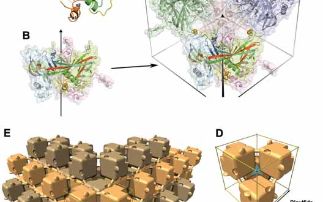
Virus infections in a number of insect families generally culminate in the occlusion of between one and several thousand virus particles within large proteinaceous crystalline occlusion bodies or polyhedra. Polyhedra are generally less than 7 μm in size, serve to protect the viruses from harsh environmental conditions and are made from a protein, polyhedrin, encoded by the viruses. Despite their small size, we solved the structure of polyhedra produced by the dsDNA baculovirus, Autographa ...
-
highlight
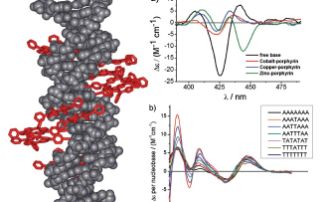
The structure determination of biomolecules, in particular of DNA and of proteins, is of utmost importance to understand their function in chemistry and biology. In recent years, DNA has become attractive as template for the creation of new materials in nano-biotechnology. The availability of synthetic DNA from automated synthesis has allowed using the sequence specific recognition of the complementary strand, together with a clever design of the DNA sequence, to form two and three ...
-
highlight
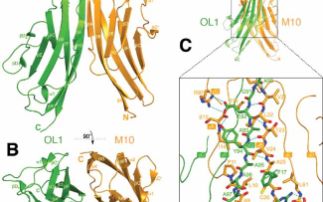
In muscle, assembly of ordered striated myofibrils requires the integration of hundreds of protein subunits in a sequential, regulated way by specific protein-protein interactions. The contractile filaments, composed of actin and myosin subunits, are crosslinked at the Z-disk and M-band, respectively, to give rise to a lateral assembly of molecular machines with nanometre precision. In the sarcomeric M-band, the giant ruler proteins titin and obscurin, its small homologue obscurin-like-1 ...
-
highlight
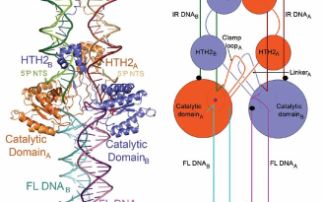
Transposons are pieces of DNA that can jump from one place to another in the genome of a cell and they make up a surprisingly large proportion of many genomes. In creating genetic diversity they have had a strong influence on the evolution of genomes. If they transpose they can directly affect gene expression, by inserting into genes or gene regulatory elements. However, their activity is more often suppressed by silencing mechanisms such as DNA methylation or RNAi. The mutational activity ...
-
highlight
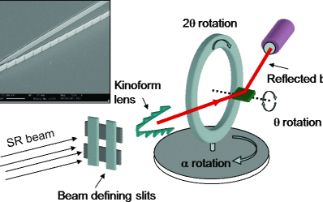
X-ray reflectivity (XRR) is a non-destructive technique widely used for thin layered materials characterization. The brilliance achieved by third generation synchrotron sources, such as Diamond, has opened new opportunities for the study of materials at the micro and nanoscales and has driven the development of new X-ray micro-focussing optical devices, such as kinoform lenses. We have demonstrated the first practical application of kinoform lenses for the X-ray reflectivity characterization ...
-
highlight
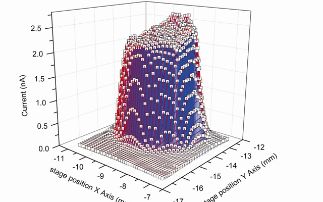
Monocrystalline diamond films with several metal contacts were characterized as radiation detectors in terms of responsivity as a function of X-ray energy, uniformity of response as a function of the position, speed of response, and stability with the time. The responsivity as a function of X-ray energy was found consistent with the physics of the metal to diamond interface and with the characteristic of the crystal in terms of lifetime of charge carriers The uniformity of response as a ...
-
highlight
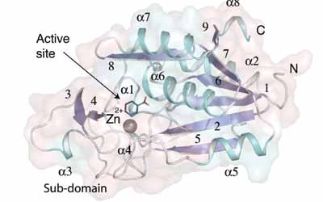
Nicotinamidase catalyzes hydrolysis of nicotinamide to nicotinic acid and ammonia, in the NAD(+) salvage pathway. This enzyme activity has a fortuitous medical benefit since in Mycobacterium tuberculosis it converts the prodrug pyrazinamide nto the bacteriostatic pyrazinoic acid. Pyrazinoic acid is active against semidormant tubercle bacilli and together with rifampicin and isoniazid, forms the front line tuberculosis treatment. Studies of the enzyme have revealed aspects of structure ...
-
highlight
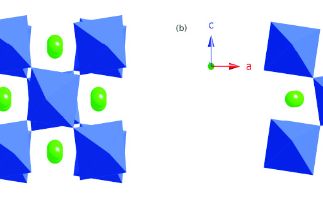
A polar phase of the perovskite NaNbO3 has been successfully synthesised using sol-gel techniques. Detailed characterisation of this phase has been undertaken using high-resolution powder diffraction (X-ray and neutron) and 23Na multiple-quantum (MQ) MAS NMR, supported by second harmonic generation (SHG) measurements and density functional theory (DFT) calculations. Samples of NaNbO3 were also synthesised using conventional solid-state methods and were observed to routinely comprise a ...
-
highlight
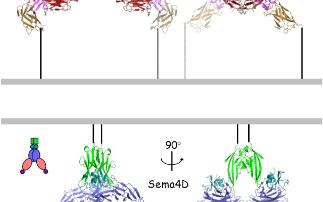
Axons are the communication channels of the body. Up to a metre in length, they connect parts of the body to the brain, carrying signals from muscles, organs and tissues. As the central nervous system develops these axons must follow very precise paths through the body. The route that they take is guided by proteins, which signal paths that the axon should and shouldn’t take. A group of proteins called semaphorins are known to be responsible for directing axons away from inappropriate areas. ...
-
highlight
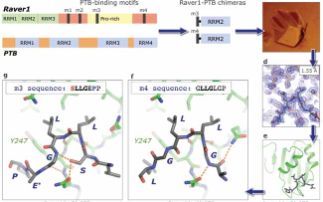
The regulation of the alternative splicing of messenger RNA allows mammals and other eukaryotic organisms to greatly enrich the diversity of the proteins coded by their genomes. Most eukaryotic genes are fragmented into introns that need to be joined up before the encoded protein is synthesised. But by combining the introns in different ways, the cell can make different proteins from the same genetic material.
-
highlight
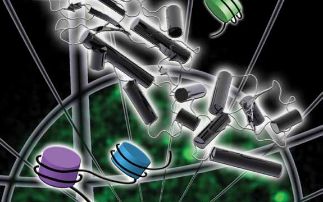
A protein complex called MRE11-RAD50-NBS1 (MRN) coordinates the detection and repair of one of the most hazardous forms of DNA damage, the double strand break (DSB), in which both strands of a DNA helix are cut. The nuclease and scaffolding components of MRN, MRE11 and RAD50 respectively, have been widely studied at the molecular level, however the molecular basis of NBS1 function remains undefined. Using beamline I04 at Diamond we have been able to solve a 2.3 Å crystal structure of the ...
-
highlight
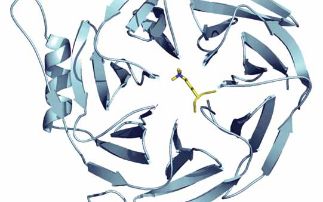
Polycomb group proteins have an essential role in maintaining repressive epigenetic states and silencing unwanted gene expression during development. Disregulation of polycomb proteins have also been implicated in many types of cancer. Polycomb Repressive Complex 2 (PRC2) is the key enzyme complex that marks repressive chromatin domains by methylating lysine 27 of histone H3. PRC2 is composed of four ubunits, EZH2, which contains the catalytic SET domain, EED, Suz12 and RbAp48. Using ...
-
highlight
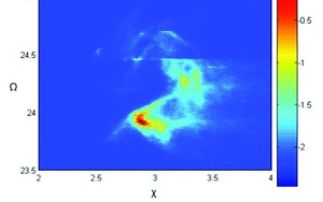
During the past 18 months, we have developed a novel micro-beam Laue diffraction setup on beamline B16 with a dedicated in situ loading capability. This setup has been used to study the evolution of lattice orientation and Laue diffraction spot shape during in situ loading of a large grained Ni polycrystalline sample. Lattice orientation could be successfully mapped up to 14% plastic strain. Individual grains were predicted to appear “hard” or “soft” depending on their lattice orientation ...
-
highlight
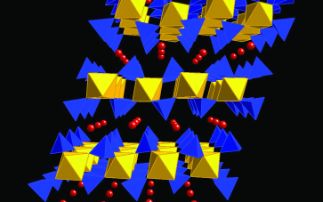
The search for new and improved ion-exchange materials for nuclear waste remediation continues to be an important topic, especially given the issues over cleaning up existing legacy waste sitting in storage ponds, dealing with the reactors due to be decommissioned shortly and being prepared in advance to deal with radionuclides created by the new build of reactors recently announced. One family of materials that shows promise is layered metal phosphates, where cations such as Sr, Cs and Co ...
-
highlight
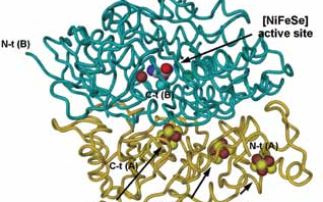
The three-dimensional structure of [NiFeSe] hydrogenase from D. vulgaris Hildenborough in its oxidised, “as isolated” state has been determined from a 3-wavelength MAD experiment at the Fe K-edge on Diamond Beamline I04. Crystals were obtained in space group P21 with cell parameters a = 60.6, b = 91.2, c = 66.7 Å, b = 101.7º and one hydrogenase molecule in the asymmetric unit. This work has recently been published [1]. Previously, only the structure of [NiFeSe] hydrogenase from Dm. baculatum ...
-
highlight

The structure of a protein complex between a bacterial and a human protein solved using data collected at Diamond Light Source (UK) and the ESRF (FRANCE) has revealed the way in which bacteria that cause bacterial meningitis mimic human cells to evade the body’s innate immune system. The study, published in Nature, could lead to the development of new vaccines that give better protection against meningitis B, the strain which accounts for the vast majority of cases of the disease in the UK.
-
highlight
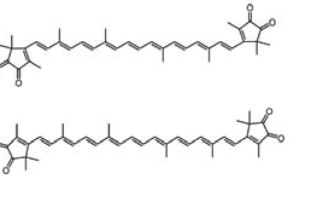
Violerythrin, a blue colored carotenoid, has been investigated by X-ray crystallography and by steady-state and ultrafast time-resolved absorption spectroscopy.
-
highlight
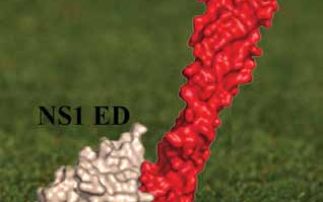
Seasonal epidemics and worldwide pandemics caused by influenza A viruses are of continuous public health concern. During infection, the viral nonstructural (NS1) protein stimulates phosphoinositide 3-kinase (PI3K) signaling, an essential cell survival pathway commonly mutated in human cancers. A structure of the NS1 effector domain in complex with the p85β inter-SH2 (coiled-coil) domain suggests that NS1 uses the coiled-coil as a structural tether to sterically prevent normal inhibitory ...
-
highlight
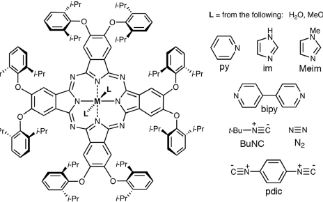
Crystal engineering of nanoporous structures has not yet exploited the heme motif so widely found in proteins. X-ray diffraction (XRD) analysis on Beamline I19 found that metal complexes of a phthalocyanine, a close analog of heme, forms molecular crystals that contain large interconnected voids (8 nm3), defined by a cubic assembly of six phthalocyanines. Rapid ligand exchange at the metal centres is achieved within these phthalocyanine nanoporous crystals (PNCs) by ...
-
highlight
Porous materials have wide ranging applications in areas such as hydrogen storage, catalysis and drug delivery. In rigid porous materials such as zeolites, the ability of the material to adsorb depends on the fixed size and shape of the pores. Until the mid 1990s most synthetic porous materials were either zeolites and their analogs or activated carbons. The discovery of metal-organic frameworks (MOFs) opened the possibility of more flexible frameworks, where the geometry of the pores can ...