-
highlight
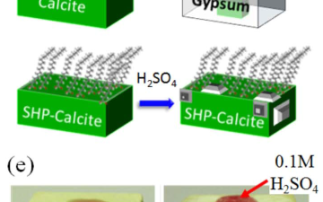
The impressive appearance of the second largest Gothic cathedral in Northern Europe, York Minster, has dominated the townscape since medieval times (Figure 1). Representing the architectural expression of developing Christianity during that period, its international historical significance is unquestioned, and the Minster has provided a source of inspiration for scholars through the ages. However, recent centuries have seen conservationists battling to preserve the authenticity of this ...
-
news
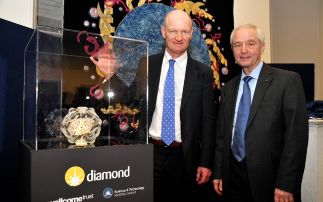
As 2012 draws to a close, Diamond Light Source reflects back on its tenth anniversary year.
In November top scientists, industrial researchers and funding agencies gathered at the Royal Society in London to gain insights into the scientific achievements that have been driven by Diamond Light Source, the UK’s national synchrotron science facility.
-
highlight
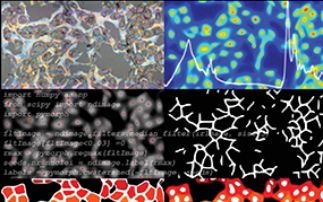
Recently published work from the Infrared beamline at the Diamond Light Source has the potential to speed up and simplify investigations in cell biology. The report, highlighted on the front cover of the 14th November 2012 issue of The Analyst, details a technique that has been developed to rapidly and effectively screen cell samples, replacing a key step in single cell analysis that is usually carried out by the human eye.
-
highlight
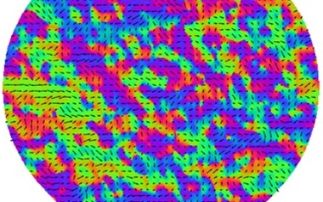
A European collaboration of scientists from the UK, Spain, Italy, France and the Ukraine has used interfacial strain to drive large temperature changes in thin magnetic films. Their results, published this week in Nature Materials, pave the way for further studies and R&D, with the potential to deliver environmentally friendly, energy-efficient refrigeration in both domestic and industrial appliances.
-
news

I just returned from leave to hear the sad news that former Life Sciences Director Professor Dame Louise Johnson has passed away.
-
news
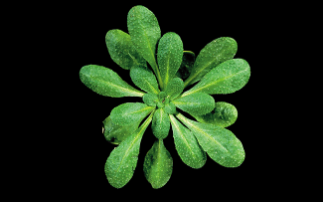
Arabidopsis thaliana, or thale cress as it is commonly known, made history back in 2000 by becoming the first plant to have its entire genetic code read by scientists, contributing to what is often referred to as biology's version of the book of life.
-
highlight
%20allowed%20new%20insights%20into%20host%20plant%20interactions%20%20%20Reprod.jpg)
In contrast to mammals, plants do not have mobile defender cells and an adaptive immune system; they defend themselves against attack from pathogens using an innate immune system. This immune system relies on the detection of foreign molecules and responds to these in different ways. One such way is the Hypersensitive Response (HR) where plant host cells undergo localised cell death. This makes it challenging for invading pathogens to establish a successful infection. HR is normally observed ...
-
Many of the experimental stations (beamlines) at Diamond are well suited to addressing environmental questions. With powerful X-rays you can see metal corrosion as it forms...
-
A wide variety of health related research takes place at Diamond and scientists here highlight how the synchrotron is helping them to bring new diagnosis techniques and better implant devices to the field of medicine.
-
See scientists and engineers talking about what fascinates them about science, what sparked their curiosity, how they were inspired to follow their chosen career path and why the Diamond synchrotron is important to them.
-
news

A collaboration of scientists from the University of Nottingham, STFC’s ISIS Neutron and Muon Source, Diamond Light Source, the University of Oxford and Peking University in China, have created a new low-cost material that can capture harmful gases, offering exciting prospects for combating atmospheric pollution.
-
highlight
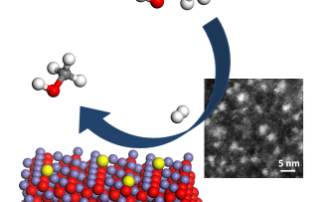
Scientists at the University of Oxford and Diamond Light Source have described a new chemical catalyst for producing methanol, a promising future biofuel. By reducing the energy needed to convert biomass to methanol, the new catalyst offers a more sustainable way to make the useful chemical and fuel.
At present, methanol is used primarily in industrial chemistry, including the manufacture of plastics and synthetic fibres, and as a fuel in fuel cells. It is manufactured from natural gas, ...
-
news

Diamond Light Source, the UK’s national synchrotron science facility, launched its first collection of fiction stories on Friday 7th September with the help of a 6ft leaking, inquisitive alien slug - the star of a witty and strangely credible story entitled The Sound of Science.
-
highlight

A collaboration of scientists from the University of Nottingham, STFC’s ISIS Neutron and Muon Source, Diamond Light Source, the University of Oxford and Peking University in China, have created a new low-cost material that can capture harmful gases, offering exciting prospects for combating atmospheric pollution.
-
highlight
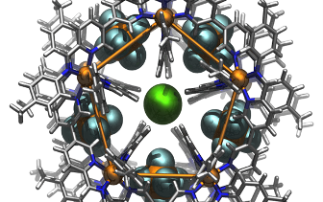
The discovery of a synthetic molecule made up of 60 simple components able to reorganise themselves to produce new functions will lead to better understanding of Nature’s processes.
The incredibly complex structure of the pentagonal prismatic molecule was discovered when researchers working at The University of Queensland, The University of Cambridge, and Randolph-Macon College in the USA, formed the structure by transforming a tetrahedral molecule into a second structure - a barrel-like ...
-
highlight
.%20CaB61%20(2).%20CaB61%20(2).%20CaB61%20(2).%20CaB61%20(2).%20CaB61%20(2).%20CaB61%20(2).%20CaB61%20(2).%20CaB61%20(2).%20CaB61%20(2).%20CaB61%20(2).%20CaB61%20(2).%20CaB61%20(2).%20CaB61%20(2).png)
Researchers from the University of Oxford and Diamond Light Source have discovered a new material, a Calcium hexaboride (CaB6) compound crystallising in a previously unknown crystal structure. Published in Physical Review Letters these findings can pave the way to customised boron-based intermetallics. The ordinary CaB6 is a semiconductor with an amazing hardness and high melting temperature governed by a high chemical stability. It has been investigated for a long time due to its relevance ...
-
news
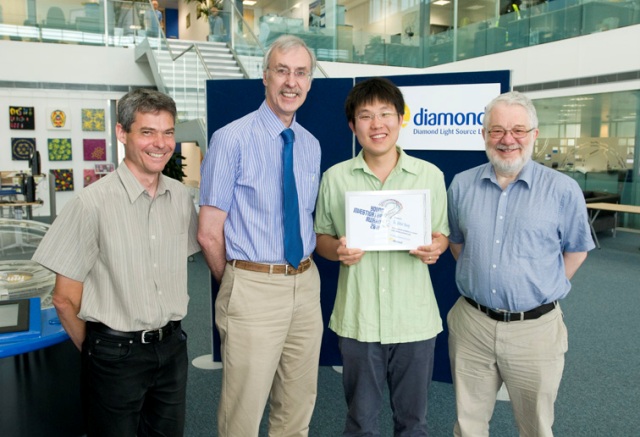
Dr Sihai Yang from the University of Nottingham is the winner of the 2011 Diamond PhD Investigator Award, a new initiative that rewards outstanding synchrotron research by Early Career Scientists.
-
news
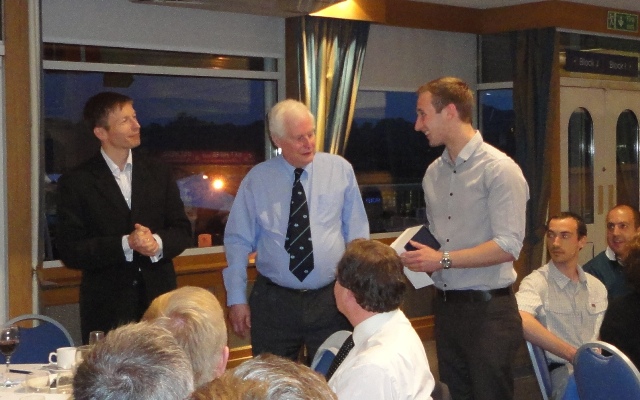
Tom Carey, a Diamond/University of Birmingham PhD student who has been working on the synchrotron's Powder Diffraction beamline (I11), has been presented with the British Zeolite Association's Founders' Award for the most promising postgraduate student of the year. Tom received his Founders' cup trophy and cash prize at the British Zeolite Association's 35th Annual Meeting in Chester on the 19th July.
-
news
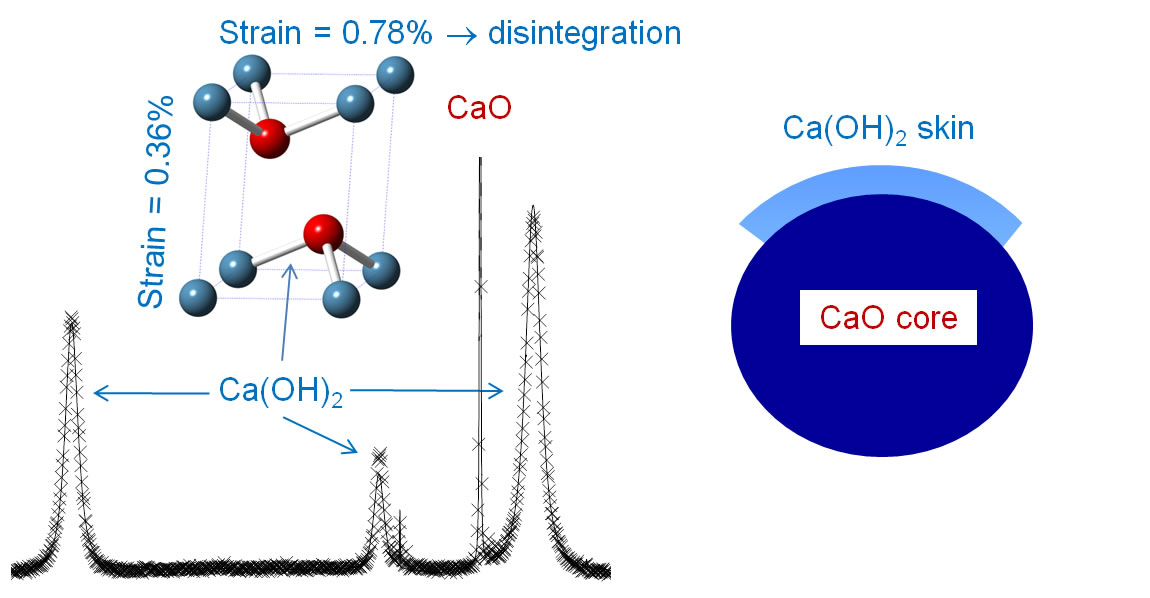
Diamond Light Source is being used to improve low cost methods for carbon capture. Scientists from the University of Leeds are using the UK’s national synchrotron to investigate the efficiency of calcium oxide (CaO) based materials as carbon dioxide (CO2) sorbents. Their results, published in the journal of Energy & Environmental Science, provide an explanation for one of the key mechanisms involved. This new knowledge will inform efforts to improve the efficiency of this economically viable ...
-
highlight
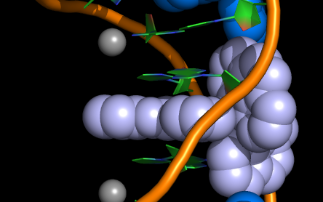
A collaboration of scientists from Diamond Light Source and the University of Reading has revealed the binding mechanism of a so-called ‘light-switch’ effect complex, a type of chemical compound that fluoresces on binding to DNA. There are two possible applications for these compounds – in sensitive diagnostic tests and as sensitizers for photodynamic therapy. The team used the Diamond synchrotron to determine exactly how the photoreactive metal complex binds to DNA, revealing that the ...