-
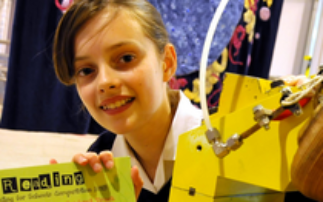
We think science is inspirational, and we ran Our Light Reading Short Story Competition to encourage creativity inspired by our science.
-
news

How the Braggs changed the world
-
news
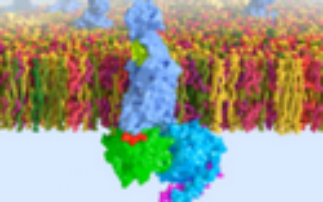
Potential new drug treatments for depression, diabetes and osteoporosis
-
Scientists unlock structure of elusive ‘stress’ protein
-
highlight
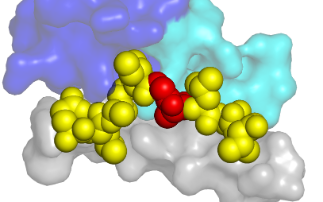
T-cells are a key component of our immune systems, patrolling the body, interacting with proteins on the surface of cells which display small fragments from the cell interior. Usually, these fragments are ‘self’ – small parts of our own proteins. Where infection occurs, the cell displays fragments of the infectious agent, alerting T-cells to the presence of a pathogen. This activates the immune system, and allows the body to act against the invader and destroy the infected cell without ...
-
news
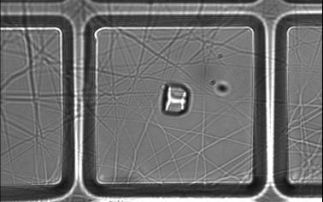
A novel process for selecting and examining protein microcrystals
-
highlight
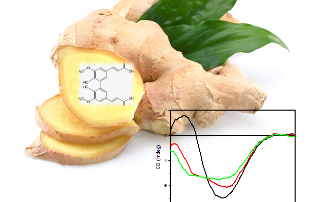
The mis-folding of proteins within our bodies has been linked to a number of wide ranging effects, from common allergies to neurodegenerative diseases. In particular, the protein α-synuclein has been linked to Parkinson's disease. Curcumin (the chemical that gives the Indian spice tumeric its bright yellow colour) has been shown to be a potentially useful treatment, as it is anti-oxidant, anti-inflammatory and has an ability to prevent the build-up of these mis-folded proteins. ...
-
news
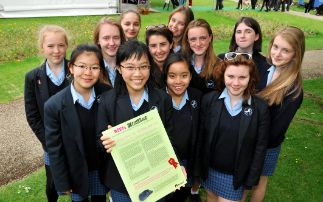
Light Reading for schools competition
-
highlight
.png)
Building bodies is a complicated business. Thousands of growing cell types, which all need to end up in the right place, doing the right job. Even when we are fully grown, our cells and tissues still need to communicate, and new cells grow and migrate to repair and renew our tissues. To assist with this huge task, the body uses signalling molecules and receptors to direct and guide cells, and to allow communication between different cells in the body. These signals act like traffic lights, ...
-
news
600 public visitors to Diamond in the summer open days
-
news
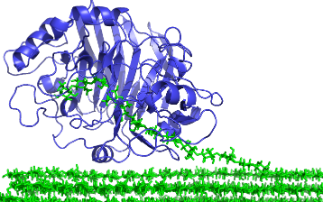
Water bug could provide key to greener energy
-
highlight
All cells have a cell membrane, made up of a lipid bilayer. Through this membrane sit the membrane proteins; a vital family of proteins which control how the cell interacts with its environment, and control passage of materials in and out of the cell. The family are challenging to study, as the process of crystallisation – the first step to determining a protein’s atomic structure – is incredibly difficult to perform with lipid soluble proteins. Researchers from Trinity College Dublin have ...
-
news

A school science student has been awarded.
-
highlight
Scientists have been using both I13 and ID17 at the ESRF, Grenoble, France to develop a new quantitative x-ray phase-contrast imaging method, based on the edge illumination principle, which achieves unprecedented nanoradian sensitivity. Using both very high and very low x-ray energies at the two facilities, the team showed that this highly sensitive technique can be efficiently exploited over a very broad range of experimental conditions. Not only that, it is simple, scalable, and relatively ...
-
highlight
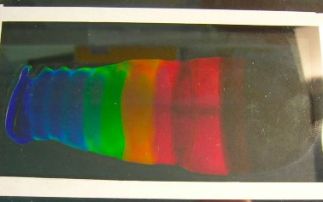
Scientists from the University of Sheffield have used Diamond's I22 beamline to develop intensely coloured iridescent materials by mixing block co-polymers in varying proportions.
-
highlight
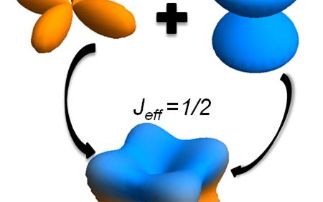
Transition metal oxides (TMO’s) containing a 5d element are increasingly attracting attention in the quest to discover and exploit novel electronic states. In the case of the 5d TMOs, these states arise from the strong spin-orbit interaction (SOI), which entangles spin and orbital moments. Iridium-based compounds have recently excited particular interest, including layered perovskite structures isostructural to the cuprate superconductors. Reporting in Physical Review Letters, an ...
-
news
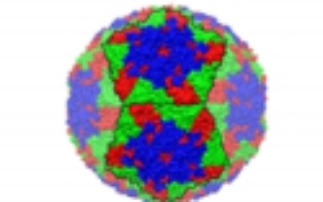
New foot-and-mouth vaccine signals huge advance in global disease control
-
highlight
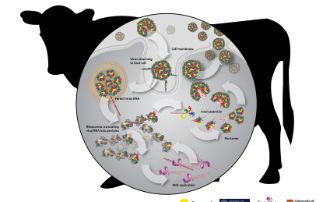
The 2001 Foot and Mouth disease virus (FMDV) outbreak in the UK caused the deaths of over 7 million livestock and cost the economy in the region of £2bn. Globally it remains one of the most economically important diseases in livestock worldwide, with approximately 3 to 4 billion doses of vaccine administered every year. A group of scientists have been using Diamond’s microfocus beamline I24 to help develop a new type of vaccine that is safer to produce, more stable and easier to transport ...
-
Scientists have developed a new methodology to produce a vaccine for foot-and-mouth disease virus (FMDV).
-
highlight
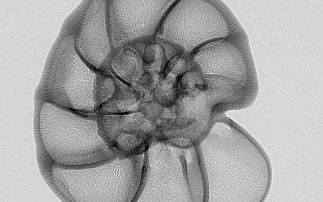
Chalk and other sediments found at the bottom of the ocean are largely made up of microscopic shells. These shells contain important chemical clues to the environment in which the animal lived, such as temperature, ocean pH, ocean productivity, ocean circulation, global ice volumes and much more. But there are questions as to how to interpret these clues, particularly in understanding how the shell chemistry changed after the animal dies, over the millions of years it lies in the sediments. ...