-
highlight
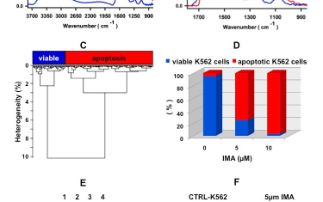
Since the middle of the 20th century, infrared (IR) spectroscopy coupled to microscopy has been used as a non destructive, label free, highly sensitive and specific analytical method to reveal molecular structure. Nowadays, synchrotron based IR microspectroscopy offers a signal-to-noise spectral quality unreachable by other broadband sources, and achieves the highest optically attainable IR spatial resolution on microscopic scale samples. This is particularly relevant in Life Sciences, with ...
-
highlight
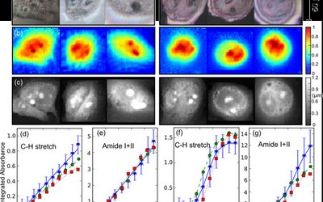
Accurate detection and classification of materials, such as diseased tissues or illicit substances, is critical and misclassification can sometimes have life threatening consequences. Infrared (IR) absorption spectroscopy has been widely adopted as a simple but powerful characterisation tool, effectively producing a fingerprint of the samples’ molecular composition and aiding classification. IR absorption spectroscopy is quantitative and highly sensitive, but some measurement configurations, ...
-
highlight
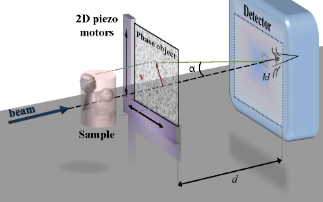
The high energy and short wavelength of X-rays make them ideal for imaging inner features of samples at the sub-micrometer scale. Over the past twenty years, imaging techniques exploiting the phase of X-rays have progressively developed, pushed by the desire of achieving higher resolution, and to image light materials such as biological soft tissue. X-ray grating interferometry (XGI) is one such successful technique that has seen its user community growing both at synchrotrons and lab-based ...
-
news
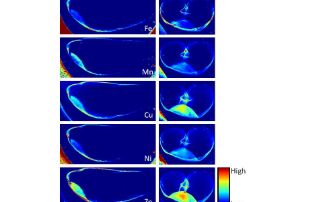
Whole grains fundamental to prevention of chronic disease
-

This new video from Diamond Light Source tells the behind the scenes story of the installation of a key component in our 562m accelerator. Meet our engineers as they bring our giant machine to life.
-
highlight
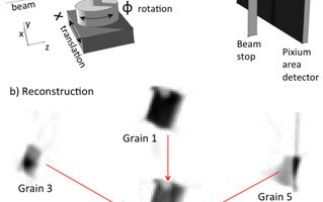
Micro-beam Laue diffraction is a versatile probe for orientation and elastic strain in individual grains of metallic polycrystals. It can help elucidate the dependence of macroscopic material behaviour (deformation response, fatigue, fracture etc.) on microstructure, defect population, macro- to microscopic load redistribution, etc. Furthermore, it can provide quantitative validation for the crystal plasticity models used to study structural engineering alloys. The application of micro-beam ...
-
highlight
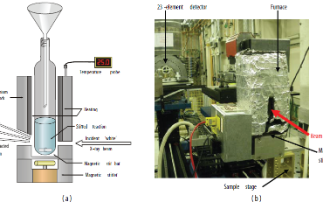
Aluminium hydroxide, Al(OH)3, is a lamellar material with octahedral vacancies in its layers. It has long been known that it can ‘imbibe’ LiX salts to form layered double hydroxides (LDHs) of the form [LiAl2(OH)6]X·H2O, where X is a generic anion. LDHs are important ion-exchangers, with applications in catalysis, biomedicine, and polymer science. Although size considerations should not be problematic, the incorporation of other metal ions into the octahedral vacancies in Al(OH)3 is ...
-
highlight

To date, the development of inert anode materials has relied on the characterisation of samples which have been removed from their operational environment at various pre-defined points of interest1. This ex situ approach can be problematic, as conventional analysis techniques typically require some form of sample preparation, ranging from simply allowing the sample to cool, to more invasive procedures such as cutting and polishing. While any material studied outside of its operational ...
-
highlight
Orthopaedic implants improve the quality of life of thousands of people every year, reducing pain and increasing mobility and function. In the past implants have been made of metal alloys and polyethylene, but these implants can fail, causing discomfort and, could ultimately mean further surgery. Recently implants have been developed made from irradiated and annealed ultra high molecular weight polyethylene (UHMWPE) that should have better performance. However, the molecular processes that ...
-
news
New Diamond research facility will help scientists tackle diseases like AIDS, Hepatitis and Flu
-
news

The Invisible Revealing the Dangerously Beautiful
-
highlight
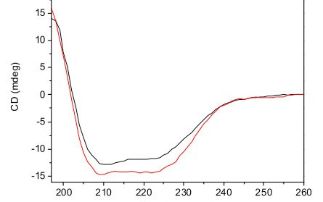
Nanoparticles (NP) are used in different applications such as cosmetics and medicine. To assess potential toxic effects and to design NP-based drug delivery systems it is critical to understand what happens to proteins upon interaction with these special particles. This information is difficult to obtain, but for the first time we have shown that using the B23 beamline, it is possible to detect and analyze structural changes of proteins in protein-metallic nanoparticle complexes1. By using ...
-
highlight
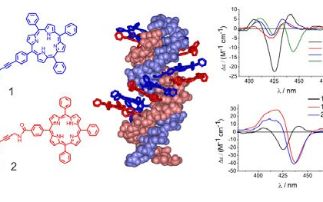
DNA is, besides displaying its central biological role as bearer of the genetic material, an extremely versatile construction material. DNA has become very attractive for the creation of novel nanosized objects. We are studying the influence of modifications of DNA with the aim to create functional DNA based nano-materials. Our modifications generally consist of large chromophores, which show specific light-induced activity such as energy or electron transfer. We are using modifications ...
-
highlight
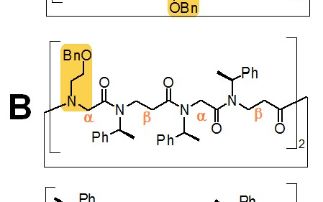
The three dimensional structure (i.e. conformation) of natural proteins and peptides plays an important role in their biological activity and has led to the development of non-natural backbones which mimic such conformations and offers therapeutic advantages. Peptoids are peptidomimetics where the chemical modification is responsible for desirable chemical, physical and biological properties. The presence of tertiary amides in the peptoid backbone results in complex NMR spectra due to ...
-
news
Diamond welcomes today’s news that the Engineering and Physical Sciences Research Council (EPSRC) is investing £12.9 million in the UK Catalysis Hub. Catalysis science is critical for the country’s chemical, energy, pharmaceutical, food, personal care and materials sectors.
-
highlight
The coupled magnetic and electronic properties of rare-earth doped GaN semiconductors have attracted a lot of interest by researchers from industry and academia in recent years. Researchers from University of Strathclyde, Osaka University (Japan) and Diamond Light Source have investigated Eu-doped GaN at Diamond beamlines B18 and I06. Their results have been published in Nature’s Scientific Reports.
-
highlight
The coupled magnetic and electronic properties of rare-earth doped GaN semiconductors have attracted a lot of interest by researchers from industry and academia in recent years. Researchers from University of Strathclyde, Osaka University (Japan) and Diamond Light Source have investigated Eu-doped GaN at Diamond beamlines B18 and I06. Their results have been published in Nature’s Scientific Reports.
-
highlight
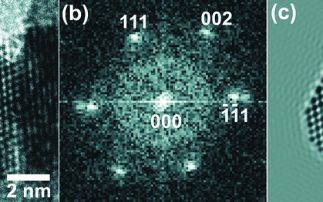
The properties of nanocrystalline materials, where crystallinity is limited to particles of a few nanometres in dimension, are heavily researched in a number of contemporary areas. This is because once the crystal is reduced to such a small size, the properties may change dramatically from the bulk material. The structure of the surface atomic arrangement also becomes a significant proportion of the total structure, which may change the reactivity of the material in a nanocrystalline form. ...
-
news
STFC have just announced the next Public Engagement Fellowships Scheme. For researchers with good communication skills who have demonstrated a track record in public engagement with research or communication work.
-
news
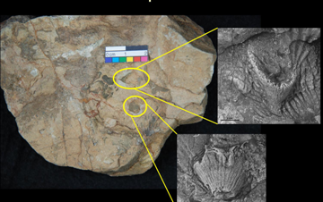
High-energy X-rays produced by Diamond Light Source, the UK's national synchrotron science facility, have revealed the earliest rugose coral recorded to date. Using high-resolution tomography enabled by the Diamond synchrotron, researchers from Amgueddfa Cymru – National Museum Wales and Golestan University (Iran) were able to create 3D images of the rare fossil, without having to sample it destructively.