Recommended viewing

Want to learn more about one of science's heroes from history, Henry Moseley? Moseley solved one of chemistry's greatest puzzles - determining what distinguishes elements from one another and developed a means of identifying elements based on their atomic characteristics. Sadly he lost his life fighting at Gallipoli in WWI.
Learn more about his life and legacy by watching our online film here.
Reactive Non-Metals
Non-metals tend to have relatively low melting and boiling points and low densities. They are usually poor conductors of heat and electricity, and the solid elements are mostly brittle. They can be divided into two categories - the noble gases and reactive non-metals. Metalloids are also sometimes counted as non-metals.
There are five times as many metal element as non-metals, but the noble gases hydrogen and helium make up more than 99% of the observable universe, and oxygen makes up nearly half of Earth’s crust, oceans and atmosphere. Non-metals form many more compounds than metals, and living organisms are mostly made of non-metals.
Featured Element: Carbon
 Carbon is the fourth most abundant element in the universe, and a common element in all known forms of life. Its name come from the Latin word carbo, for charcoal. Carbon has an unusual ability to form polymers at temperatures found on our planet and forms a unique range of organic compounds, and is sometimes referred to as the "King of the Elements".
Carbon's physical properties depend on its form. Diamond is the hardest naturally occurring material, but graphite is one of the softest. Although graphite is an electrical conductor, diamond is an insulator. And of course, there's amorphous carbon: soot.
The isotope carbon-14 forms in the atmosphere when neutrons interact with nitrogen-14. (The neutrons come from cosmic rays interacting with the atmosphere.) Carbon-14 is radioactive, with a half-life of around 5730 years, and is used in radiocarbon dating.
We all learn about the carbon cycle - nature's way of recycling carbon atoms - at school. And we're becoming more conscious of our carbon emissions and the way that they're affecting the global climate. It's so important that NASA's OCO-3, together with other carbon-sniffing satellites, monitors the places on Earth that emit or store carbon.
From dust to diamonds - studying the geological carbon cycle
 The global carbon cycle is key to Earth's habitability, giving our planet a stable and hospitable climate, and an atmosphere relatively low in carbon dioxide. Diagrams of the carbon cycle typically show carbon repositories in the atmosphere, the oceans, and the soil, but not what's going on deeper underground. Earth's mantle potentially holds more carbon than all of the other reservoirs combined. However, investigating the mantle is not easy. It extends from about 35 to 2,890 km below the surface, with temperatures which rise from 200 °C at the upper boundary with the crust to approximately 4,000 °C at the core.
Using diamond anvil cells (DAC) and laser heating to recreate the extreme conditions in Earth's mantle, a team of experimental geoscientists from the University of Bristol investigated what happens to carbonate minerals subducted from the oceanic crust into the mantle. They found that decarbonation reactions prevent subduction of carbonate deeper than around 1500 km and that the mantle stores carbon as diamonds. Read more here.
Novel materials for renewable energy storage technologies
 Recent years have seen a global move towards renewable energy, to reduce carbon dioxide emissions from burning fossil fuels. One problem with renewable energy sources is that they tend to produce more energy than we can store during periods of low user consumption (during the day) and not enough during periods of high demand (in the evening). One solution is electrochemical energy conversion technologies, which can use chemical waste products such as carbon dioxide to fuel the chemical reactions. However, converting carbon dioxide directly and selectively to the desired chemicals and fuels is one of the biggest challenges of modern chemistry.
A collaboration led by Diamond's Rosa Arrigo researched innovative ways to store energy in chemical energy vectors (to produce valuable chemicals and fuels), while also using carbon dioxide. The team developed materials active in the synthesis of acetic acid, commonly used in adhesives and sealants, dyes and herbicides, and formic acid, a substance most notably used in food preservatives and as an antibacterial agent.
The results of this research provide a better understanding of catalytic processes at a molecular level. By using carbon dioxide as a raw material, we not only reduce our carbon footprint but also produce the chemicals we need in a more environmentally-friendly way. Read more here.
Storing sodium in carbon: the secret of sodium-ion batteries
 The Nobel Prize in Chemistry 2019 was awarded to three scientists for their contribution to the development of the lithium-ion battery. We now use these lightweight, rechargeable and powerful batteries in everything from mobile phones and laptops to electric vehicles. They can also store significant amounts of energy from solar and wind power, bringing us much closer to a fossil fuel-free society. However, lithium is a limited and expensive resource.
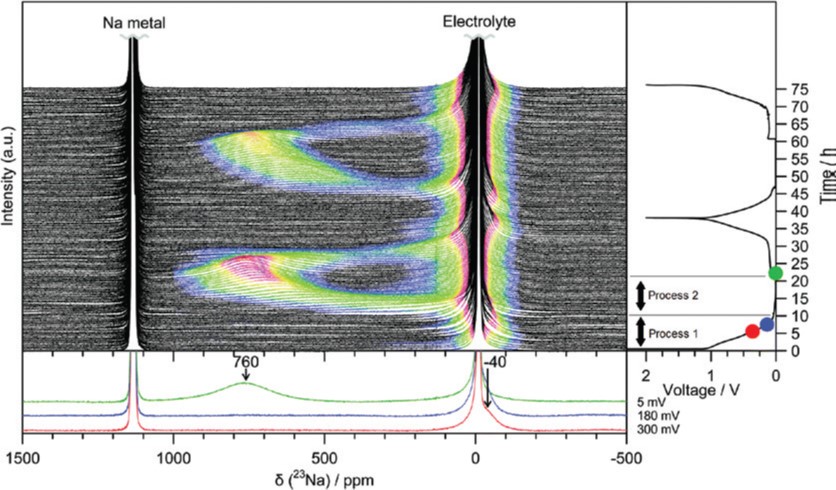
 Sodium is a cost-effective and abundant alternative to lithium. However, the development of sodium-ion batteries is hampered by the poor performance of current electrodes. 'Hard carbon' is one of the most promising materials to use for sodium-ion anodes, but we don't know much about how the carbon stores sodium.
As conventional diffraction techniques give limited information about hard carbon, researchers turned to Diamond's I15-1, the beamline for X-ray Pair Distribution Function (XPDF) measurements. Using XPDF, they were able to study the structure of hard carbon electrodes as sodium was inserted. Their results showed that optimising the synthesis conditions could allow the production of 'designer' carbons that will make much more efficient electrode. Read more here.
Moving towards renewable raw material sources
 The world currently relies on coal, oil and gas, not only for fuel but also as raw materials for the production of chemicals. With reserves of these fossil fuels running out, and a growing awareness of the carbon dioxide pollution their use causes, it is becoming increasingly important to develop sustainable carbon sources.
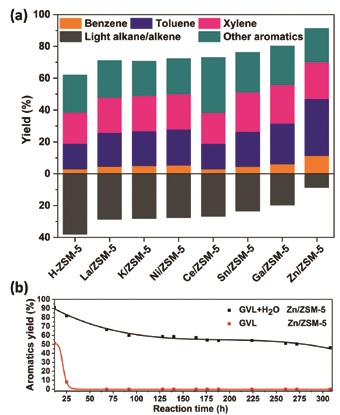
One option is to use dry plant matter - biomass - and a team of researchers have demonstrated a new method for converting biomass into butene gas, which can be processed into the chemicals used in the production of polymers and resins. Their work focused on Gamma-valerolactone (GVL), a chemical processed from biomass raw material, and the catalyst Zn/ZSM-15. They used high-resolution X-ray powder diffraction (SRXD) on Ill to examine the structure of their samples, which yielded valuable information about the reaction mechanism.
This was the first time that SXRD had been used to investigate the structures of adsorbed structures of the Gamma-valerolactone GVL and immobilised Zn-species used in the research. Their results demonstrated that it is possible to use a renewable source material to produce benzene, toluene and xylene, and are a step towards affordable, sustainable chemical production. Read more here.
Experimental measurements shed new light on icy moons
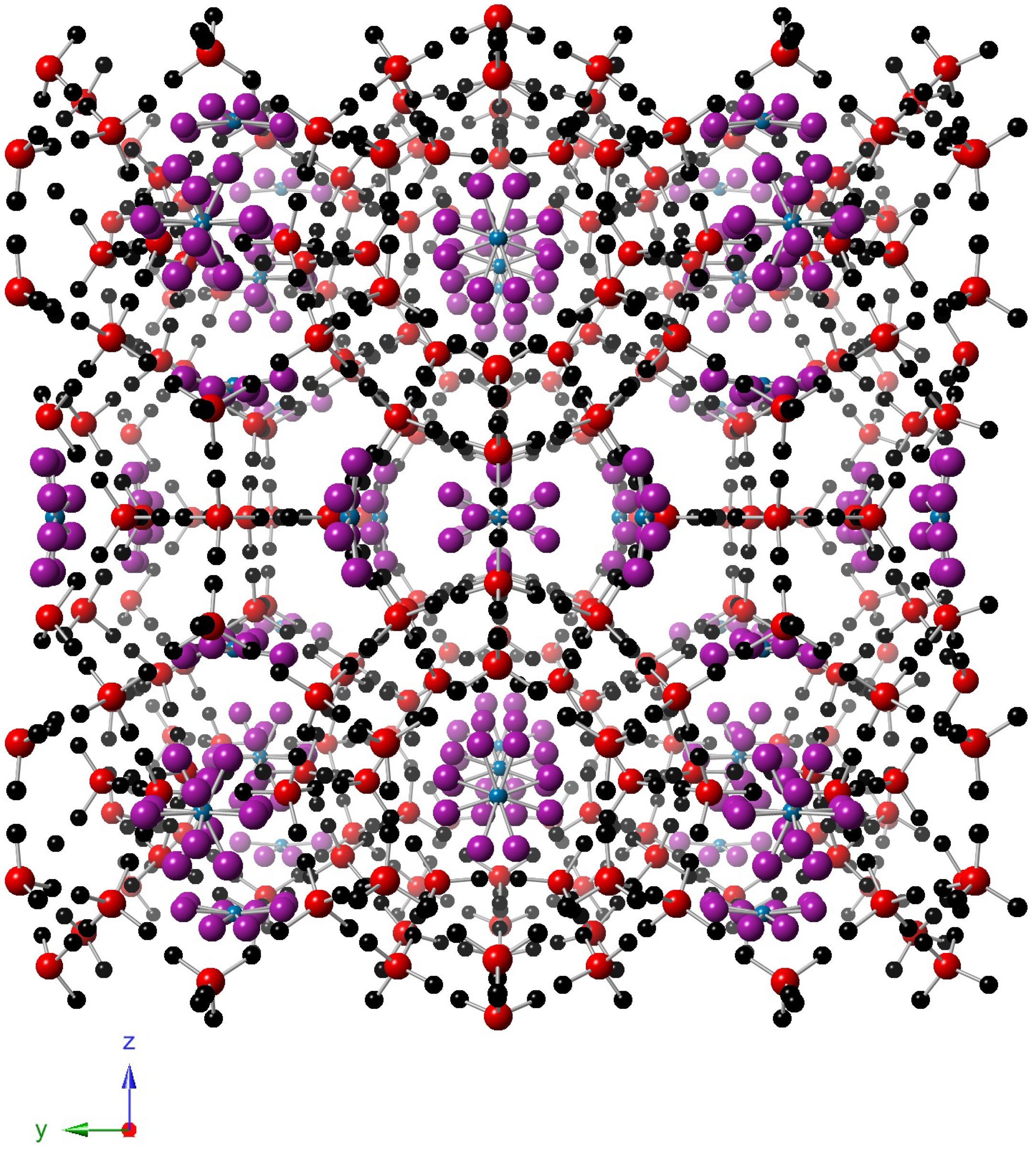 Remote probes tell us that Saturn's moon Enceladus has both water ice and carbon dioxide on its surface, so it is a potential habitat for extraterrestrial microbial life. Conditions on Enceladus - and other icy satellites - may promote the formation of clathrates, cage-like structures of water molecules that house guest gas species. Clathrates form when the gas interacts with ice under high-pressure and low-temperature conditions, and are thought to influence the surface geology and composition of icy bodies in the Solar System. Research suggests that the release of gases (e.g. carbon dioxide) from clathrates is the source of gas plumes emanating from the surface of Enceladus.
Studies of the formation and physical properties of clathrates have mostly involved theoretical thermodynamic calculations for structures produced from pure water solutions. A team of researchers used the High Resolution Powder Diffraction beamline (I11) to conduct an in situ study of clathrates that are more relevant to those produced in the salty oceans of icy moons. Their results indicated substantial differences in the formation characteristics and physical properties of CO2 clathrates produced from weak saline solutions compared with those that form from pure water. These new findings can be used to help calibrate and inform models of clathrate formation on Earth, and other planetary bodies. Read more here.
A helpful note for ambitious scientists: working with carbon is the element most likely to win you a Nobel Prize!
And did you know?
The first tattoos were rendered in carbon black (soot), and are still visible more than 5000 years later. Ötzi, the Tyrolean iceman who died and was buried beneath an Alpine glacier, had 61 tattoos across his body.
There was some debate as to whether the oldest tattoos were on Ötzi or a mummy from the Chinchorro culture of South America, but radiocarbon dating provided a definitive answer. Research suggests that Ötzi's tattoos may have been therapeutic, as they are in places where he suffered from joint and spinal degeneration.

Diamond Light Source is the UK's national synchrotron science facility, located at the Harwell Science and Innovation Campus in Oxfordshire.
Diamond Light Source Ltd
Diamond House
Harwell Science & Innovation Campus
Didcot
Oxfordshire
OX11 0DE
Copyright © Diamond Light Source. Diamond Light Source® and the Diamond logo are registered trademarks of Diamond Light Source Ltd
Registered in England and Wales at Diamond House, Harwell Science and Innovation Campus, Didcot, Oxfordshire, OX11 0DE, United Kingdom. Company number: 4375679. VAT number: 287 461 957. Economic Operators Registration and Identification (EORI) number: GB287461957003.