-
highlight
The impressive appearance of the second largest Gothic cathedral in Northern Europe, York Minster, has dominated the townscape since medieval times (Figure 1). Representing the architectural expression of developing Christianity during that period, its international historical significance is unquestioned, and the Minster has provided a source of inspiration for scholars through the ages. However, recent centuries have seen conservationists battling to preserve the authenticity of this ...
-
highlight
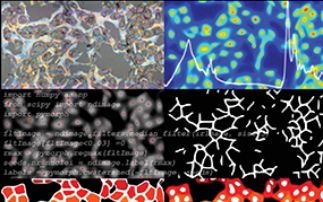
Recently published work from the Infrared beamline at the Diamond Light Source has the potential to speed up and simplify investigations in cell biology. The report, highlighted on the front cover of the 14th November 2012 issue of The Analyst, details a technique that has been developed to rapidly and effectively screen cell samples, replacing a key step in single cell analysis that is usually carried out by the human eye.
-
highlight
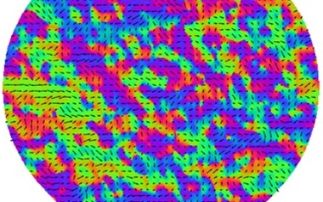
A European collaboration of scientists from the UK, Spain, Italy, France and the Ukraine has used interfacial strain to drive large temperature changes in thin magnetic films. Their results, published this week in Nature Materials, pave the way for further studies and R&D, with the potential to deliver environmentally friendly, energy-efficient refrigeration in both domestic and industrial appliances.
-
highlight
%20allowed%20new%20insights%20into%20host%20plant%20interactions%20%20%20Reprod.jpg)
In contrast to mammals, plants do not have mobile defender cells and an adaptive immune system; they defend themselves against attack from pathogens using an innate immune system. This immune system relies on the detection of foreign molecules and responds to these in different ways. One such way is the Hypersensitive Response (HR) where plant host cells undergo localised cell death. This makes it challenging for invading pathogens to establish a successful infection. HR is normally observed ...
-
highlight
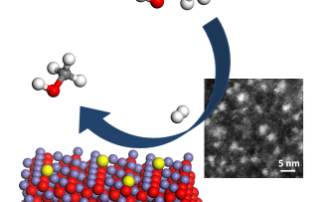
Scientists at the University of Oxford and Diamond Light Source have described a new chemical catalyst for producing methanol, a promising future biofuel. By reducing the energy needed to convert biomass to methanol, the new catalyst offers a more sustainable way to make the useful chemical and fuel.
At present, methanol is used primarily in industrial chemistry, including the manufacture of plastics and synthetic fibres, and as a fuel in fuel cells. It is manufactured from natural gas, ...
-
highlight

A collaboration of scientists from the University of Nottingham, STFC’s ISIS Neutron and Muon Source, Diamond Light Source, the University of Oxford and Peking University in China, have created a new low-cost material that can capture harmful gases, offering exciting prospects for combating atmospheric pollution.
-
highlight
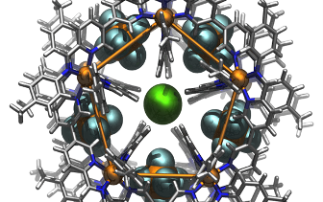
The discovery of a synthetic molecule made up of 60 simple components able to reorganise themselves to produce new functions will lead to better understanding of Nature’s processes.
The incredibly complex structure of the pentagonal prismatic molecule was discovered when researchers working at The University of Queensland, The University of Cambridge, and Randolph-Macon College in the USA, formed the structure by transforming a tetrahedral molecule into a second structure - a barrel-like ...
-
highlight
.%20CaB61%20(2).%20CaB61%20(2).%20CaB61%20(2).%20CaB61%20(2).%20CaB61%20(2).%20CaB61%20(2).%20CaB61%20(2).%20CaB61%20(2).%20CaB61%20(2).%20CaB61%20(2).%20CaB61%20(2).%20CaB61%20(2).%20CaB61%20(2).png)
Researchers from the University of Oxford and Diamond Light Source have discovered a new material, a Calcium hexaboride (CaB6) compound crystallising in a previously unknown crystal structure. Published in Physical Review Letters these findings can pave the way to customised boron-based intermetallics. The ordinary CaB6 is a semiconductor with an amazing hardness and high melting temperature governed by a high chemical stability. It has been investigated for a long time due to its relevance ...
-
highlight
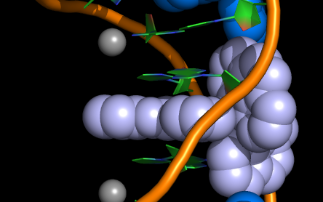
A collaboration of scientists from Diamond Light Source and the University of Reading has revealed the binding mechanism of a so-called ‘light-switch’ effect complex, a type of chemical compound that fluoresces on binding to DNA. There are two possible applications for these compounds – in sensitive diagnostic tests and as sensitizers for photodynamic therapy. The team used the Diamond synchrotron to determine exactly how the photoreactive metal complex binds to DNA, revealing that the ...
-
highlight

Water, essential to life… or is it?
Proteins are large biological molecules that are synonymous with living things. They allow us to convert food into energy, supply oxygen to our blood and muscles, and drive our immune systems.
It is the general understanding that since proteins have evolved in a water-rich environment, they are dependent on water to survive and function. Researchers at the University of Bristol have used the Circular Dichroism beamline (B23) at Diamond Light Source to ...
-
highlight

In October 2010, a dam failure at an aluminium producing plant in western Hungary released around one million cubic metres of toxic red sludge into nearby towns and villages and across agricultural land. The sludge was a mixture of water and mining waste containing heavy metals and was deemed a threat to the environment by Hungarian officials. A large cleanup operation ensued. A team from the University of Leeds has used Diamond’s Microfocus Spectroscopy beamline, I18, to study samples of ...
-
highlight
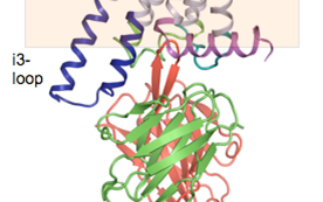
G-protein-coupled receptors (GPCRs) are the single most important drug target in the body because they are central to so many biological processes. Gaining a better understanding of how GPCRs operate will help scientists develop novel strategies to modulate their activity, potentially affecting their role in diseases such as Parkinson’s or conditions such as insomnia.