-
highlight
All cells have a cell membrane, made up of a lipid bilayer. Through this membrane sit the membrane proteins; a vital family of proteins which control how the cell interacts with its environment, and control passage of materials in and out of the cell. The family are challenging to study, as the process of crystallisation – the first step to determining a protein’s atomic structure – is incredibly difficult to perform with lipid soluble proteins. Researchers from Trinity College Dublin have ...
-
news

A school science student has been awarded.
-
highlight
Scientists have been using both I13 and ID17 at the ESRF, Grenoble, France to develop a new quantitative x-ray phase-contrast imaging method, based on the edge illumination principle, which achieves unprecedented nanoradian sensitivity. Using both very high and very low x-ray energies at the two facilities, the team showed that this highly sensitive technique can be efficiently exploited over a very broad range of experimental conditions. Not only that, it is simple, scalable, and relatively ...
-
highlight
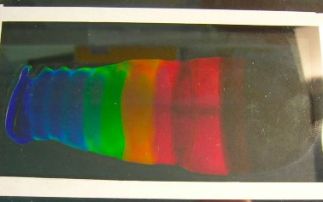
Scientists from the University of Sheffield have used Diamond's I22 beamline to develop intensely coloured iridescent materials by mixing block co-polymers in varying proportions.
-
highlight

Transition metal oxides (TMO’s) containing a 5d element are increasingly attracting attention in the quest to discover and exploit novel electronic states. In the case of the 5d TMOs, these states arise from the strong spin-orbit interaction (SOI), which entangles spin and orbital moments. Iridium-based compounds have recently excited particular interest, including layered perovskite structures isostructural to the cuprate superconductors. Reporting in Physical Review Letters, an ...
-
news
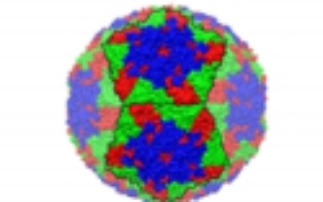
New foot-and-mouth vaccine signals huge advance in global disease control
-
highlight
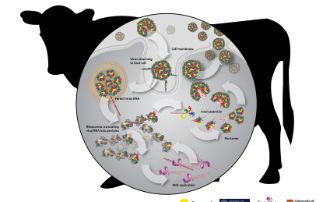
The 2001 Foot and Mouth disease virus (FMDV) outbreak in the UK caused the deaths of over 7 million livestock and cost the economy in the region of £2bn. Globally it remains one of the most economically important diseases in livestock worldwide, with approximately 3 to 4 billion doses of vaccine administered every year. A group of scientists have been using Diamond’s microfocus beamline I24 to help develop a new type of vaccine that is safer to produce, more stable and easier to transport ...
-

Scientists have developed a new methodology to produce a vaccine for foot-and-mouth disease virus (FMDV).
-
highlight
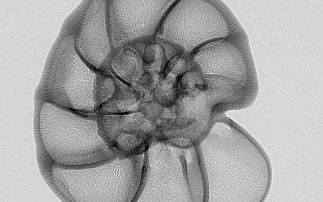
Chalk and other sediments found at the bottom of the ocean are largely made up of microscopic shells. These shells contain important chemical clues to the environment in which the animal lived, such as temperature, ocean pH, ocean productivity, ocean circulation, global ice volumes and much more. But there are questions as to how to interpret these clues, particularly in understanding how the shell chemistry changed after the animal dies, over the millions of years it lies in the sediments. ...
-
highlight
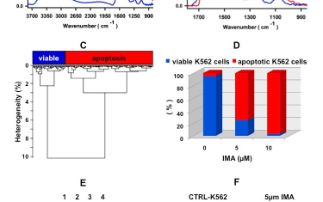
Since the middle of the 20th century, infrared (IR) spectroscopy coupled to microscopy has been used as a non destructive, label free, highly sensitive and specific analytical method to reveal molecular structure. Nowadays, synchrotron based IR microspectroscopy offers a signal-to-noise spectral quality unreachable by other broadband sources, and achieves the highest optically attainable IR spatial resolution on microscopic scale samples. This is particularly relevant in Life Sciences, with ...