-
highlight
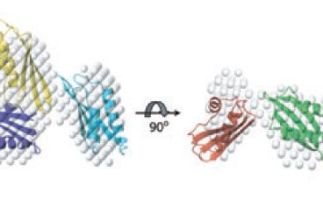
Membrane proteins are essential for many biological processes in organisms ranging from bacteria to humans. In the bacterium Escherichia coli (E. coli), a protein called YaeT selects and folds other proteins before inserting them into the outer membrane of the cell. Tim Knowles and his colleagues at the University of Birmingham have been using Diamond Light Source to study protein solution structures in order to understand the processes by which they are targeted in the cell, and how they ...
-
highlight
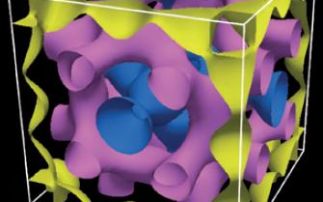
Liquid crystals are a state of matter that possesses some properties of liquids and some of solids. Their use in display screens is familiar, where the optical properties of the substance change in response to applied electric field. However, liquid crystals can form a wide range of very complex phases, and scientists have been using Diamond to study perhaps the most complex liquid crystal structure so far observed. This work has been published in the Journal of Materials Chemistry.
-
highlight
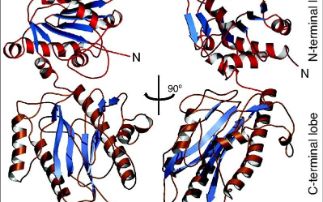
All living things propagate through the process of cell division. Histone proteins play a vital role in this complex process, but the exact molecular mechanisms that make it possible are not well understood. Histones act as spools for DNA, allowing it to wind around them to make compact packages that fit neatly into cells. Scientists from the European Molecular Biology Laboratory in Heidelberg, Germany, have been studying how histones interact with a chaperone protein to answer the ...
-
news
The new Diamond Light Source synchrotron was the star of the show at the prestigious Royal Academy of Engineering Soirée in Didcot last night (26 June). More than 150 distinguished guests including His Royal Highness the Duke of Kent, the Academy’s Royal Fellow, attended the dinner at the Rutherford Appleton Laboratory.
-
highlight
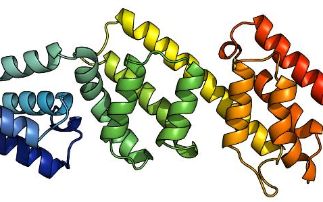
Shigella flexneri is a bacterium which causes dysentery, resulting in a million deaths worldwide every year. To infect humans, it uses a complex molecular machine which attaches itself to a host cell and uses a needle to pierce the cell membrane and deliver proteins that hijack cellular processes to facilitate infection. Scientists from the University of Oxford have been using Diamond to study how the machine identifies a host cell and triggers the transfer of proteins. This work is ...
-
highlight
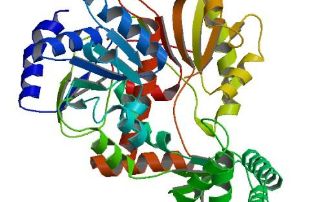
DNA is constantly under attack. Within the human body there is an army of proteins which can detect when DNA has been damaged and attempt to repair it. One such protein is Helicase XPD.
-
news
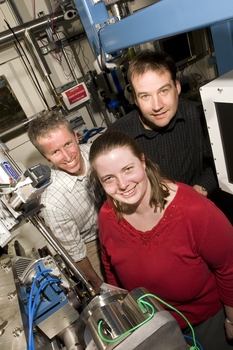
Diamond has announced that USA-based global biotechnology company Vertex Pharmaceuticals Incorporated is the first industrial user at the UK's world class new research facility, Diamond Light Source.
-
highlight
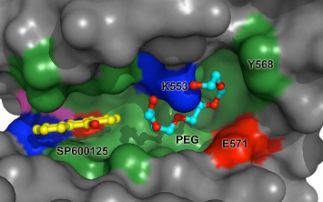
During normal healthy cell division, the cell goes through a series of checkpoints to prevent abnormal or damaged cells from proceeding with division. But if one of these checkpoints is defective, chromosomal instability can result, leading to the growth of malignant cells. Scientists from the University of Manchester have been using Diamond to study a protein called Mps1, which regulates the number of chromosomes during the cell cycle, making it a potential target for new cancer treatments.
-
highlight
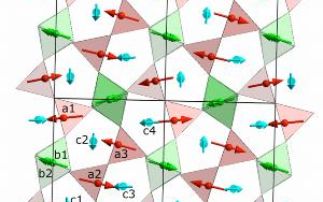
Multiferroics are materials in which ferroelectric and magnetic orders are closely related, opening the possibility for tuning the first one with the other and vice versa. This class of material has attracted recent interest for their potential applications in memory devices and other electronic components. In addition there is a drive from a more fundamental perspective - to understand the fundamental physics that give rise to these exotic properties. By combining x-ray diffraction studies ...
-
news

Diamond Light Source the UK's new synchrotron, this month announces the appointments of Professor David Stuart and Professor Trevor Rayment as Directors of Life Sciences and Physical Sciences respectively.
-
highlight
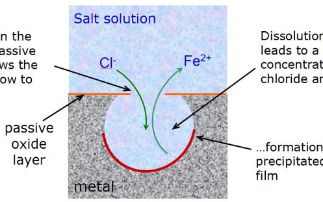
Professor Trevor Rayment and Dr Alison Davenport from the University of Birmingham have used the Microfocus Spectroscopy beamline I18 to carry out X-ray studies of corrosion that may help corrosion scientists understand the phenomenon of pit corrosion.
-
highlight
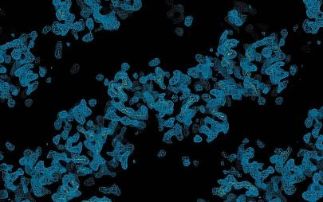
Scientists from Newcastle University have solved the first de novo crystal structure of a protein using diffraction data from Diamond Light Source. The researchers successfully crystallised a protein called RsbS from the bacterium Moorella thermoacetica, and solved the crystal structure to 2.5 Å resolution.
-
news
What does the future look like for UK Light Sources? Diamond may only just have gone into operation, but experts are already looking at the next generation of light sources. Following an independent review, a consultation project is now underway to develop a clear strategic vision for light sources that defines the needs of the scientific community in the decades to come.
-
news
In alignment with the themes set by the national body Science Learning Centres, and in response to the Public Attitudes to Science 2008 government report (PAS report) published on 11th March, Diamond plans to engage with the public by building a programme around three areas.
-
news

Construction has begun on the latest addition to the UK’s world class new research facility, Diamond Light Source. The Joint Engineering, Environmental and Processing (JEEP) beamline will be the first experimental station to extend outside of the main building to enable large engineering components to be placed under Diamond’s powerful X-ray beam.
-
news
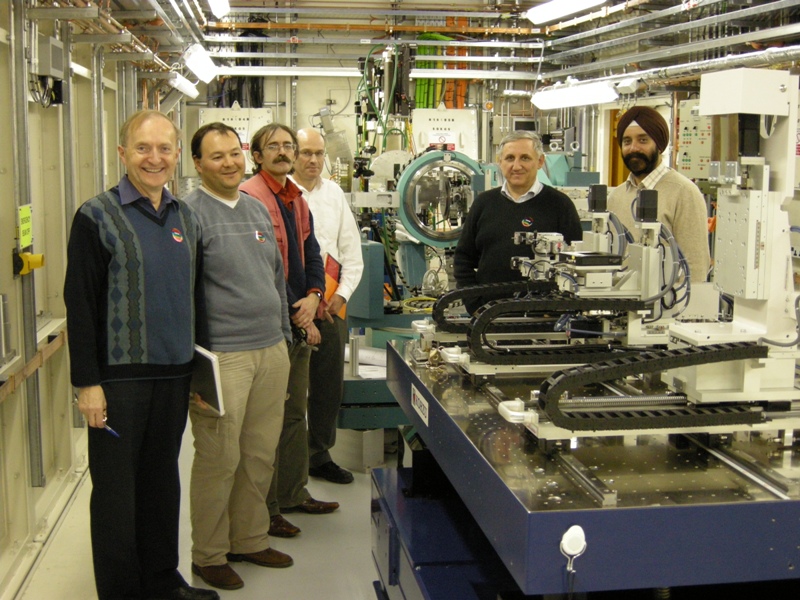
On 30th January 2008, Beamline B16 was pleased to welcome its first users: Professor Moreton Moore, Professor Victor Petrashov and Dr Rais Shaikhaidarov from Royal Holloway, University of London. B16 is a flexible and versatile beamline for testing new developments in X-ray optics and detector technology and for trialling new experimental techniques. It is the ninth Diamond beamline to welcome users.
-
highlight

Metal oxyhydroxide nanoparticles form in many natural (e.g. rivers) and contaminated land environments. These mineral particles are an important part of the global iron cycle and, due to their high surface reactivity, adsorb large amounts of dissolved species onto their surfaces and into their structures during formation. These processes significantly influence the distribution, speciation and bioavailability of trace elements in many natural systems. This is particularly relevant in ...
-
news
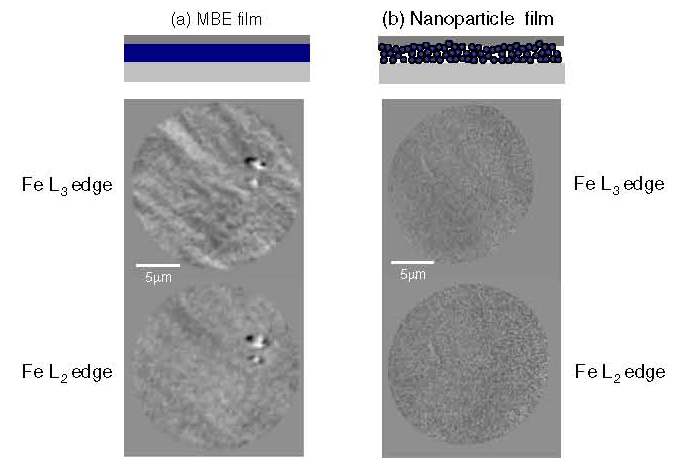
Thin films produced by depositing pre-formed size-selected gas-phase nanoparticles are an important class of materials, particularly because of their application in magnetic memory.
-
highlight
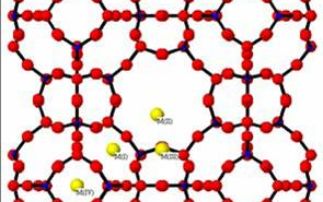
Zeolites are important nanoporous materials with many applications, including use in laundry detergents, as industrial catalysts and for cleaning up nuclear waste. Zeolites have a cage-like structure which enables them to trap charged particles called cations. Scientists from the University of Birmingham have been using Diamond to investigate new ways of locating cations and nanoparticles within different types of zeolites, this is important in order to understand and improve their use.
-
news
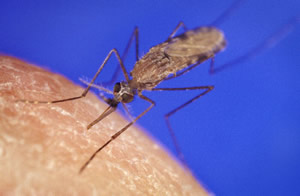
In the UK, a parliamentary House of Lords Select Committee is undertaking an inquiry into the effectiveness of action by intergovernmental organisations to control the spread of infectious diseases.