-
highlight
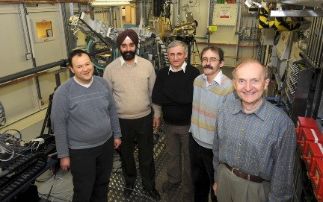
Diamond Light Source, the UK's world-class synchrotron facility, has welcomed the first users to its new Test beamline. Researchers from Royal Holloway, University of London, have used the Diamond synchrotron to take a closer look at industrial diamonds as a means to test their latest collimator technology.
-
news
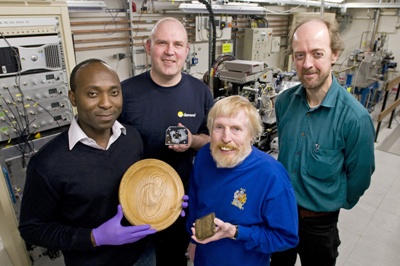
Scientists from the Mary Rose Trust are using cutting edge synchrotron technology at Diamond Light Source to provide 21st century solutions to enhance the conservation of Henry VIII’s Tudor warship.
-
highlight
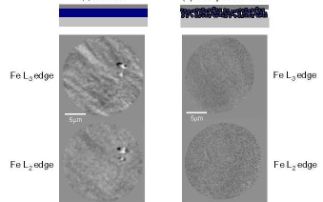
Thin films produced by depositing pre-formed size-selected gas-phase nanoparticles are an important class of materials, particularly because of their application in magnetic memory. A team led by Chris Binns at the University of Leicester worked with the team on the Nanoscience beamline to study the magnetic properties of Fe thin films produced by this technique and compared them to Fe thin films produced by conventional techniques. Their results have been published in the Journal of ...
-
highlight
Tuberculosis is a major cause of death worldwide, killing over 1.5 million people each year. Understanding how the bacterium Mycobacterium tuberculosis causes disease in humans and how it survives in the body could provide the key to combating this killer disease. Scientists from the Universities of Oxford and British Columbia have used Diamond to determine the structure of a protein called HsaD, which enables the tuberculosis bacteria to survive in the human body. Knowing the structure of ...
-
news
Tuberculosis is a major cause of death worldwide, killing over 1.5 million people each year. Understanding how the bacterium Mycobacterium tuberculosis causes disease in humans and how it survives in the body could provide the key to combating this killer disease. Scientists from the Universities of Oxford and British Columbia have used Diamond to determine the structure of a protein called HsaD, which enables the tuberculosis bacteria to survive in the human body.
-
news
Following recent factually inaccurate media reports, we would like to provide clarification regarding expenditure relating to Diamond’s construction and operational budgets.
Diamond’s Phase I construction concluded at the end of December 2006 and was delivered within the approved budget of £263.2m including contingency.
-
news
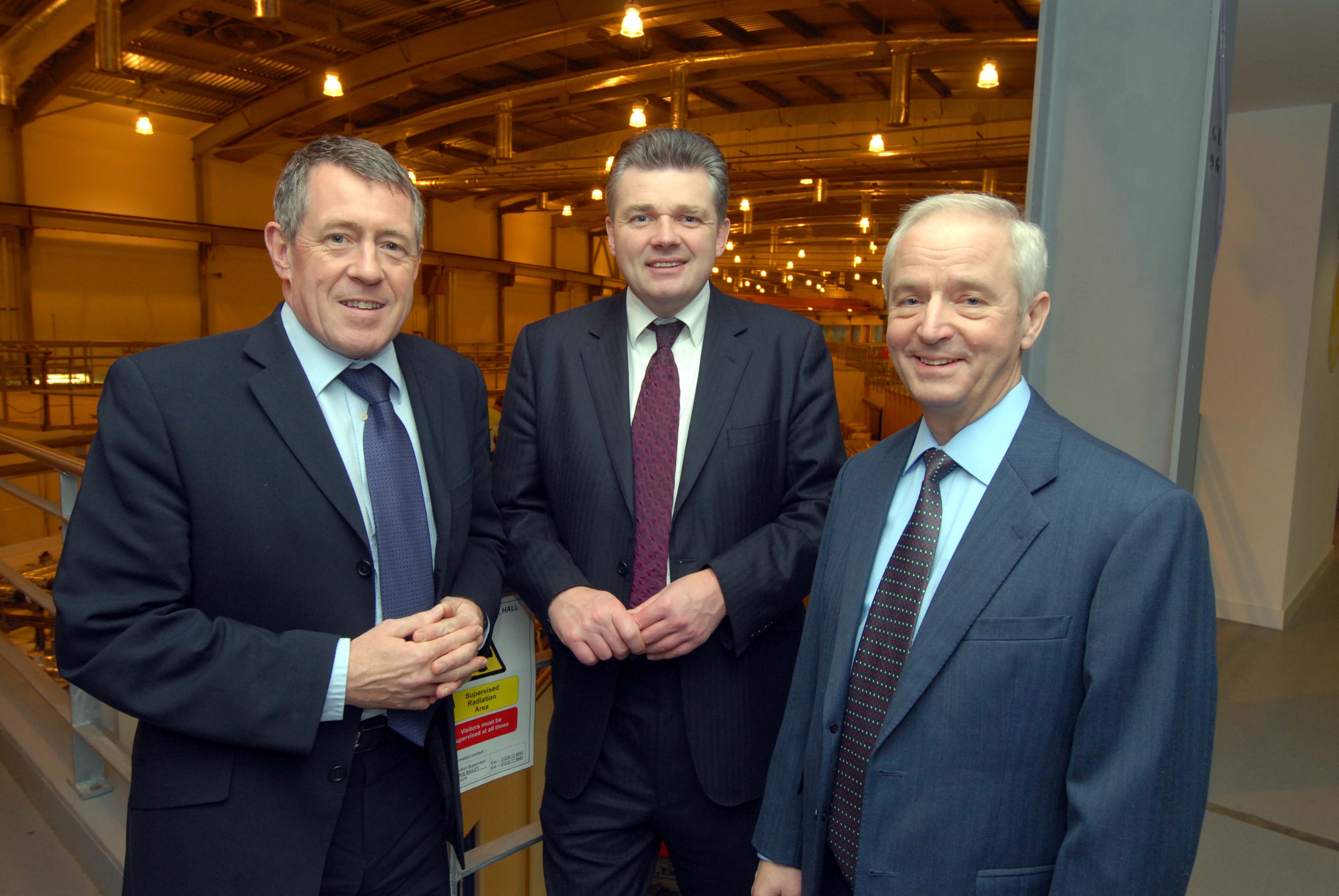
The The Rt. Hon, John Denham (Secretary of State for Innovation, Universities and Skills) and Mr Ian Pearson (Minister for Science and Innovation) visited the UK's new synchrotron facility as part of a visit to the Harwell Science and Innovation Campus, where Diamond Light Source is part of the growing research community.
-
news
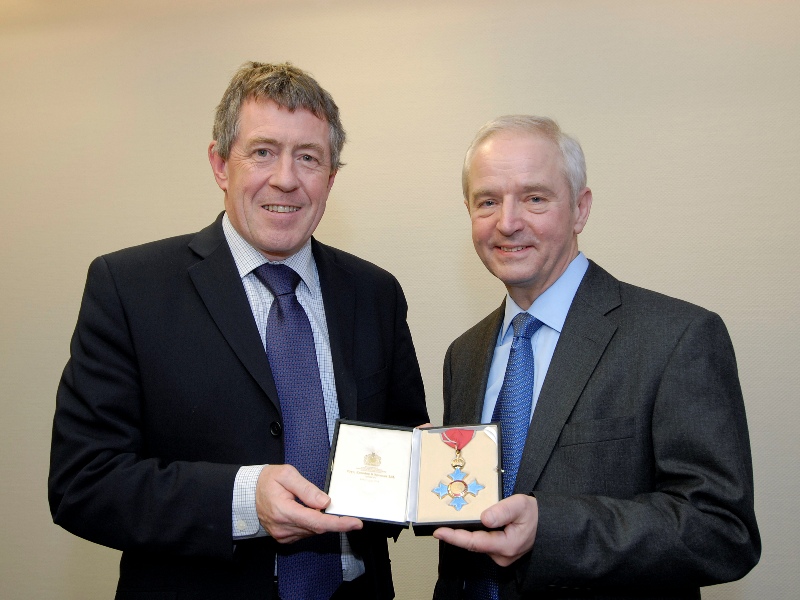
John Denham, Secretary of State for Innovation, Universities and Skills, will today present an honorary CBE to Professor Gerhard Materlik, Chief Executive of Diamond Light Source Ltd for services to science.
-
highlight
Nerves and blood vessels grow to the right places because they receive instructions to keep them on the correct path. These instructions come from pairs of molecules: receptors and ligands on the surface of different cells. When a matched pair makes contact in a specific ‘handshake’ it directs the cell carrying the receptor right or left, just like SatNav. If we understand what different handshakes look like, we can design drugs that to strengthen them – to help nerve regeneration, or stop ...
-
highlight
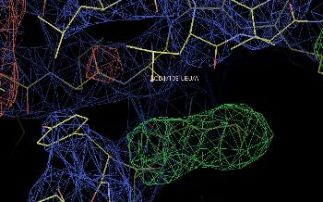
Aurora-A is an essential enzyme which is required for human cells to multiply. Aurora-A has higher activity than normal in many human cancers and is a target for the development of anti-cancer drugs, some of which are in clinical trials. X-ray crystallography is used to characterise how these small molecules interact with Aurora-A, and these data provide information on how they work and allow the production of a new generation of more potent inhibitors.
-
news

Over one hundred members of the Oxfordshire Federation of Woman’s Institutes (WI) gathered together at Diamond Light Source this week to mark the finale of one of the largest art/science projects in the UK.
-
news
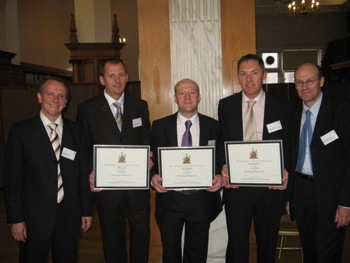
The Institution of Mechanical Engineers (IMechE) has joined forces with 100 of the UK’s leading engineering companies, universities and colleges, including Diamond Light Source, in a drive to crack a skills shortage in the profession.
-
news
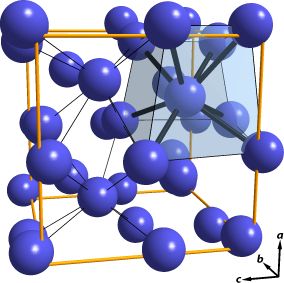
The first paper to be published on research carried out at Diamond has appeared in the Proceedings of the National Academy of Sciences.
-
news
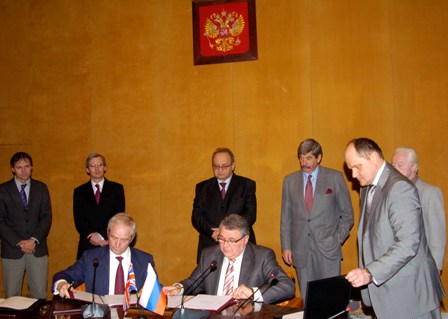
Scientific links between Diamond Light Source Ltd, the UK's new synchrotron science facility, and two Russian science institutes – the Kurchatov Institute and the Shubnikov Institute of Crystallography - were strengthened this week when these partners signed a Memorandum of Understanding (MoU) on collaborative research.
-
news
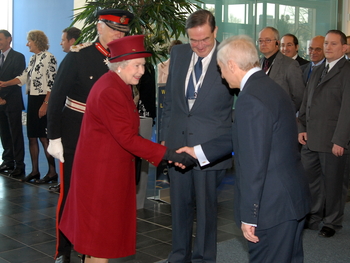
Her Majesty The Queen, accompanied by His Royal Highness The Duke of Edinburgh, officially opened Diamond Light Source, the UK’s new national synchrotron facility today (Friday 19 October 2007). Diamond is the largest science facility to be built in the UK for 40 years and is set to play a major role in facilitating ground breaking science that is carried out in this country over the coming decades.
-
highlight
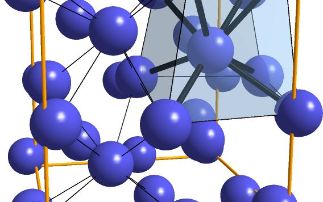
The first publication from Diamond Light Source utilised the synchrotron’s high intensity x-rays and a diamond-anvil cell on the Extreme Conditions beamline I15, to study the unique behaviour of sodium at high pressures. This research was carried out by a team from the Centre for Science at Extreme Conditions at the University of Edinburgh, working in collaboration with the I15 beamline team.1
-
highlight
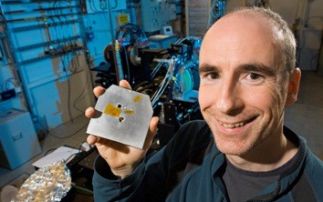
Dr Paul Schofield is a researcher in mineral sciences in the Department of Mineralogy at the Natural History Museum (NHM). Paul used I18 to study a range of earth and life science specimens from the collections at the NHM. The spectroscopic data he obtained should provide an insight into natural processes, environmental systems and Earth and planetary history.
-
highlight
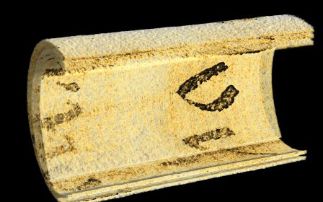
The first users on the I22 Non-Crystalline Diffraction beamline, Professor Tim Wess and his team at the University of Cardiff, have been able to analyse the state of the collagen within parchment and its degenerative change to gelatine. Understanding the deterioration process will allow them how to preserve parchment for future generations. In cases where precious parchments may be too damaged or at risk, they have developed techniques to image written work without unrolling the fragile ...
-
highlight
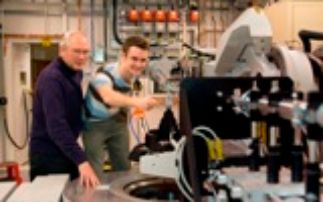
David Eastwood is a post-graduate student working with Professor Brian Tanner at the University of Durham. David used I16 to carry out detailed examinations of new sensors to be used in computer components that ‘read’ the magnetic information stored in its memory.
-
news
Synchrotron-based Earth and Environmental Science Research Initiative (Enirosynch2): Travel and Subsistence Funding
Applications are invited for travel and subsistence awards to fund research trips to international synchrotron radiation facilities. This small initiative is jointly funded by the NERC and Diamond Light Source (DLS) and aims to build and develop the use of synchrotron radiation techniques in all fields of Earth and Environmental sciences research.