-
highlight
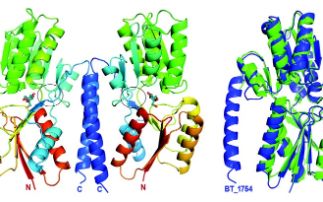
Our indigenous gut microbiota play an important role in maintaining normal health and nutrition. They provide us with traits that the human genome does not encode, such as the degradation of otherwise indigestible dietary polysaccharides. Survival in the gastrointestinal (GI) tract depends on the ability of these microorganisms to rapidly respond to changes in their dynamic nutrient environment. Here we show that a dominant member of the normal gut microbiota, Bacteroides thetaiotaomicron, ...
-
highlight
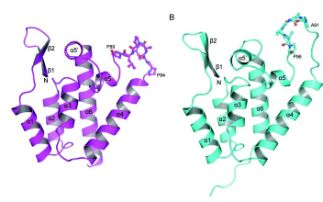
Lentiviruses are associated with chronic disease states in a variety of mammals. However, until recently it was thought that these pathogens had no capacity for germ-line integration, and were only spread horizontally in an exogenous fashion. The discovery of the prehistoric endogenous lentiviruses in rabbits (RELIK)1 and lemurs (PSIV)2 refuted these ideas revealing lentiviruses to be present in a range of mammals, capable of germ-line integration and far more ancient than previously ...
-
highlight
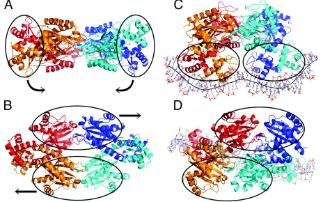
The majority of bacterial gene regulators bind as symmetric dimers to palindromic DNA operators. Multimeric forms of proteins, including tetramers, are able to recognize longer operator sequences in a cooperative manner, although how this is achieved is not well understood due to the lack of complete structural information. Using data collected at Diamond Light Source beamline I04, we solved the crystal structures of the multidrug binding protein TtgV, a gene repressor that controls efflux ...
-
highlight
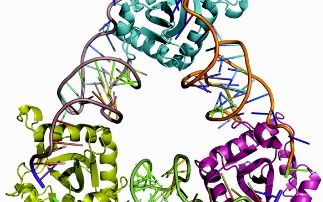
There are literally astronomical numbers of bacteriophages on Earth. These are viral parasites of bacteria and as such generate an immense selective pressure, driving adaptive co-evolution between predator and prey. Bacterial hosts are forced to evolve protective mechanisms1 whilst the predating phages must respond to subvert these new counter-measures. One broad class of phage-resistance mechanisms takes an extreme approach, causing the suicide of phage-infected bacteria before the ...
-
highlight
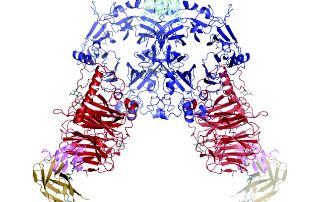
The intricate wiring of the human brain requires cell surface signalling systems to guide the growing neurites to their correct locations. Indeed, the development and homeostasis of tissues throughout the body is founded on cell guidance systems. The semaphorins constitute one of the major families of cell guidance cues and with their cognate receptors, the plexins play central roles in diverse physiological processes ranging from cell migration, angiogenesis and neural connectivity to ...
-
highlight
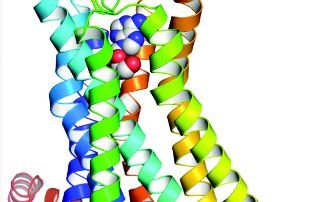
G protein coupled receptors (GPCRs) are a large family of proteins that span the cell membrane of eukaryotes and consist of seven transmembrane helices. GPCRs respond to molecules outside the cell and activate signal transduction pathways inside the cell. The adenosine receptor and β-adrenoceptors (βARs) are GPCRs that activate intracellular G proteins in response to the binding of agonists like adenosine or noradrenaline, respectively. The importance of agonist-induced activation of ...
-
highlight
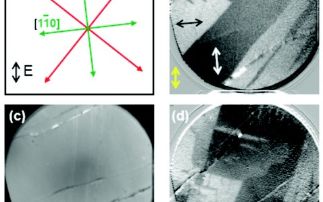
Optimizing the electronic and magnetic properties of layered magnetic heterostructures for specific applications remains a challenging task for materials engineering. Characterization techniques employing the absorption and scattering of soft X-rays have emerged as important and powerful tools for the study of heterostructures and their interfaces. In fact, magnetic dichroism in X-ray absorption (XA) i.e., the difference in absorption based on the relative orientation of the X-ray ...
-
highlight
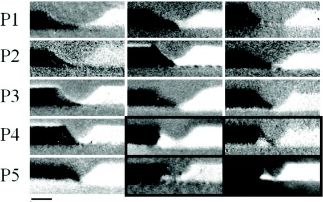
The spin-torque resonance effect on domain walls is an exciting new line of research for spintronic devices such as race-track memory and magnetic logic as it allows depinning of domain walls from pinning sites at lower threshold current densities. Following the initial observation of domain wall resonance using an oscillating current in a semicircular Ni80Fe20 (Py) wire 1 where the restoring force was provided by an applied magnetic field perpendicular to the wire, further work has shown an ...
-
highlight
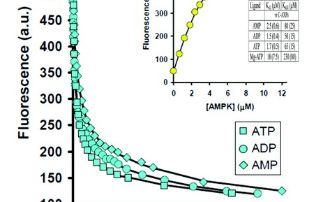
All living cells require energy, usually provided in the form of ATP, to carry out fundamental processes like movement and growth. Therefore, cells have to balance energy supply with the demand. AMP-activated protein kinase (AMPK) has emerged as a central component of a signalling pathway involved in regulating intracellular energy homeostasis. When ADP and AMP levels increase, concomitant with a fall in ATP levels, AMPK is activated by phosphorylation on threonine-172 within the catalytic a ...
-
highlight
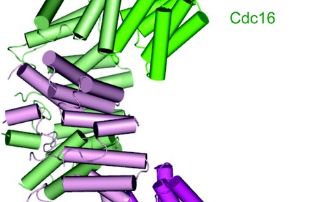
The anaphase promoting complex or cyclosome (APC/C) is a multi-subunit cullin-RING E3 ubiquitin ligase that functions to regulate progression through the mitotic phase of the cell cycle and controls entry into S phase 1. APC/C-mediated coordination of cell cycle progression is achieved through the temporal regulation of APC/C activity and substrate specificity. The core APC/C is assembled from 13 different proteins, mostly highly conserved and essential for function, generating a ...