

-
news
More than 130 delegates from around the world, including leading experts in the field of circular dichroism (CD) spectroscopy, gathered in Oxford on 24-28 July for the 13th International Conference on Chiroptical Spectroscopy
-
highlight
The cornea is the external lens of the eye, responsible for refracting incoming light onto the crystalline lens behind, which in turn focuses it on to the retina. It also plays a protective role, shielding the rest of the eye from dust and infection. To function, the cornea must be transparent to visible light, possess high mechanical strength, and have precisely defined curvature to focus.
-
highlight
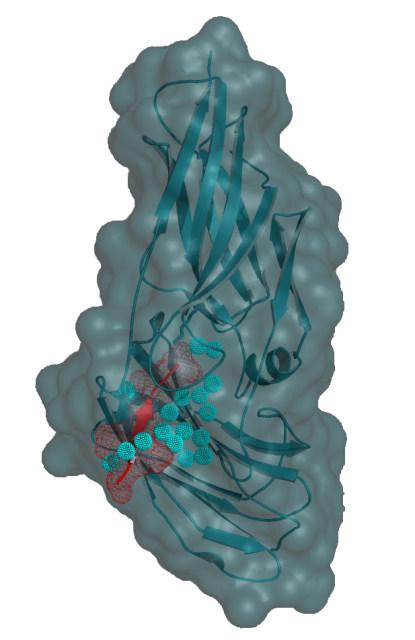
Just as humans have an ancestry, so too do viruses. But whereas we can use fossils to help identify the creatures that roamed the earth before us, viruses are much harder to classify and have left no fossilised remains for us to study. A group of researchers from Diamond Light Source and the Wellcome Trust Centre for Human Genetics are currently working on piecing together a complete history of viruses, mapping out their evolutionary lineage by solving the 3D structures of the organism’s ...
-
news
Researchers using Diamond and ISIS have highlighted new manufacturing techniques that could lead to a revolution in renewable energy. A new study published in the Journal Advanced Energy Materials this week (Monday 4 July) shows how an efficient solar cell structure spontaneously forms using very simple and inexpensive manufacturing methods similar to flexible layers of material being deposited over large areas like cling-film.
-
news
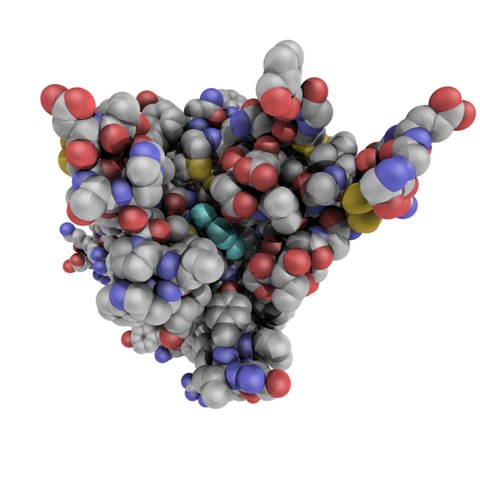
New 3D picture of human membrane protein enables development of targeted anti-histamines without side-effects.
-
highlight
Elastin is the most abundant protein in mammalian elastic tissues and is responsible for their elastic recoil and resilience. Elastin dominates the mass of the aorta where it encounters the peaks and troughs of systole and diastole over the course of two billion heartbeats in a lifetime. Tropoelastin is the soluble precursor to elastin, which is constructed by the hierarchical assembly and cross-linking of many tropoelastin monomers that accumulate on a microfibrillar scaffold.1 Tropoelastin ...
-
highlight
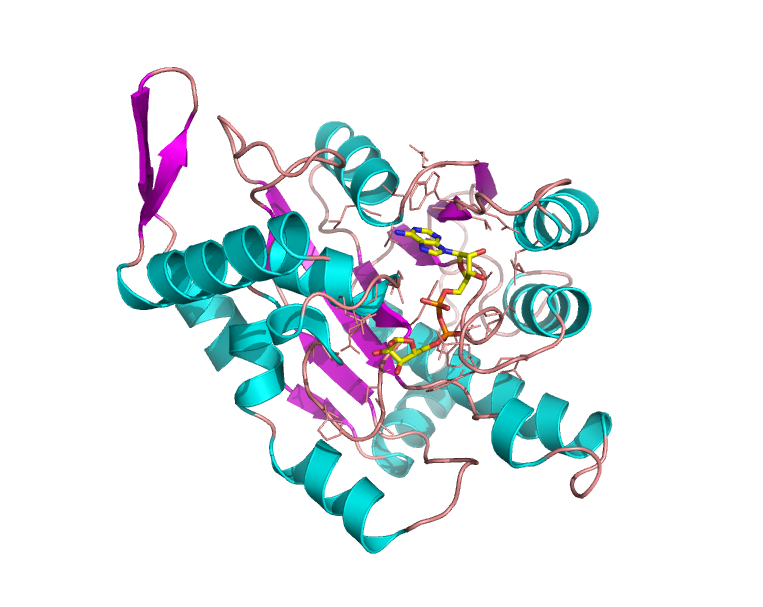
Flavopiridol was discovered to have anti-cancer properties in 19921, specifically by binding to cyclin-dependant kinases (CDKs) and inhibiting ATP binding. Since then it has been involved in a number of phase I and II clinical studies, on its own and in combination with other drugs. Although it binds to specific CDKs with nanomolar affinity, flavopiridol has been given intravenously in higher than expected concentrations to reach a therapeutic concentration at the cancer site. The high ...
-
highlight
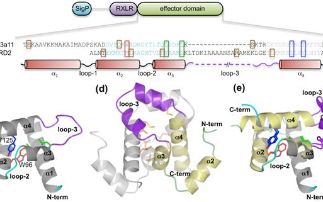
Transcriptional repression in eukaryotes requires the recruitment of large protein complexes to gene promoters and enhancers. These complexes contain histone deacetylases, and other enzymes, that facilitate chromatin remodelling so as to repress gene transcription. SMRT and NCoR are homologous co-repressor proteins that are recruited to multiple repressive transcription factors. When isolated from HeLa cells, SMRT and NCoR purify as large complexes of between 1 and 2 megadaltons containing ...
-
highlight
Our indigenous gut microbiota play an important role in maintaining normal health and nutrition. They provide us with traits that the human genome does not encode, such as the degradation of otherwise indigestible dietary polysaccharides. Survival in the gastrointestinal (GI) tract depends on the ability of these microorganisms to rapidly respond to changes in their dynamic nutrient environment. Here we show that a dominant member of the normal gut microbiota, Bacteroides thetaiotaomicron, ...
-
highlight
Lentiviruses are associated with chronic disease states in a variety of mammals. However, until recently it was thought that these pathogens had no capacity for germ-line integration, and were only spread horizontally in an exogenous fashion. The discovery of the prehistoric endogenous lentiviruses in rabbits (RELIK)1 and lemurs (PSIV)2 refuted these ideas revealing lentiviruses to be present in a range of mammals, capable of germ-line integration and far more ancient than previously ...