-
highlight
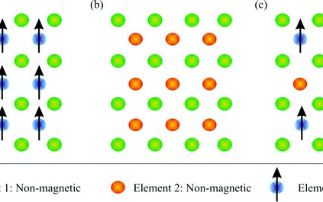
The relentless drive for greater information storage capacity in physically smaller devices has pushed the size of components to scales where quantum mechanical effects become important. To aid such an increase in information density, both the electron spin and charge are exploited in the field of spin transport electronics; hence the portmanteau spintronics. The idea is to combine the characteristics of existing magnetic devices with semiconductor devices in order to realise a new ...
-
highlight
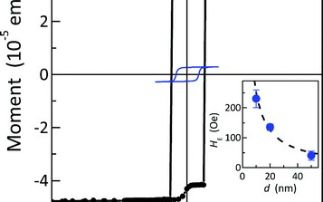
Spintronic devices make use of the electron spin to store, recall and process data. Examples include the spin-valve read head, which has produced orders-of-magnitude improvements in magnetic data storage densities, and cutting-edge nonvolatile magnetic random access memory. Over the past decade, ferromagnetic (FM) semiconductors have emerged as new candidates for spintronic applications, offering the prospect of combining high density storage and gate-controlled logic in a single material.1 ...
-
highlight
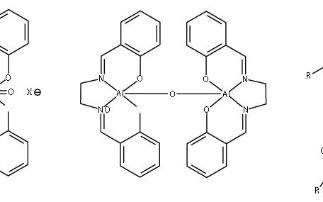
2011 is the International Year of Chemistry and also sees the launch of Sustainability as a University-wide societal engagement theme at Newcastle, so it is appropriate for significant progress to be made in structural characterisation at Diamond Light Source as part of a Newcastle School of Chemistry project developing carbon capture technology and its application in making ‘green’ solvents that, in turn, can be used for environmentally friendly processes to synthesise useful chemicals. ...
-
highlight
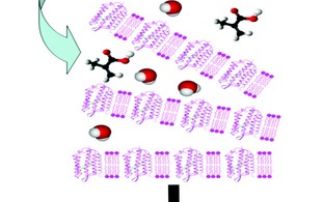
Thin films comprising ordered stacks of purple membrane (PM) sheets containing the light-driven proton pump bacteriorhodopsin, were infiltrated with methacrylic acid monomers to produce intercalated lamellar bionanocomposites with expanded interlayer spacing. Subsequent in situ polymerization and crosslinking of the guest methacrylic acid molecules resulted in intercalated poly(acrylate)/PM free-standing films, which showed increased stability in water, structural integrity and enhanced ...
-
highlight
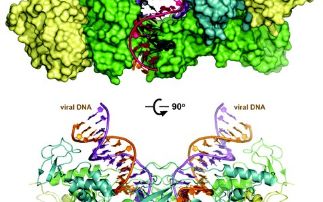
To establish successful infection, a retrovirus must insert a DNA replica of its genome into host cell chromosomal DNA. This process is orchestrated by integrase, a viral enzyme that belongs to the DDE(D) nucleotidyltransferase/transposase superfamily. A tetramer of integrase assembles on viral DNA ends forming a highly stable nucleoprotein complex termed intasome 1,2. The intasome engages chromosomal DNA within a target capture complex to carry out strand transfer, irreversibly joining the ...
-
highlight
Lassa fever virus kills more than five thousand people in West Africa every year, with many survivors having hearing and neurological problems.1 As no vaccine or effective drugs are available, and the infection can transmit from person to person, the Lassa fever virus is classed as a hazard group four virus and is regarded as a potential biological weapon. The nucleoprotein of Lassa fever is the most abundant protein in the virus and plays essential roles in virus translation, transcription, ...
-
highlight
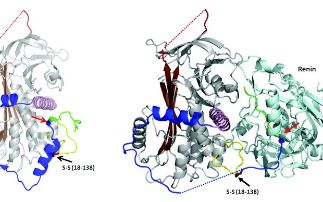
The serpins are a family of proteins of special interest to structural biologists because of their ability to spontaneously undergo a profound change in conformation.1 This conformational transition reflects the prime role of the serpins as protease inhibitors but it has also been adapted in individual serpins to allow the modulation of their function.2 A series of structures over the last 20 years has shown how this flexibility enables the serpins to act as controlling factors in key ...
-
highlight
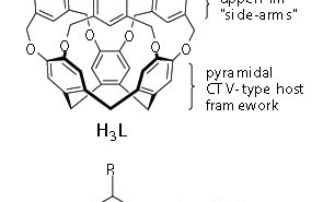
In metallo-supramolecular chemistry small molecules are organised into larger, more complex assemblies through the use of reversible metal-ligand coordination interactions. These assemblies are highly complicated and are often polyhedral or prismatic in shape and of nanometre scale. Given the right conditions they effectively make themselves in a process called self-assembly. They may have significant internal space where other molecules can be trapped or even react, acting like nano-sized ...
-
highlight
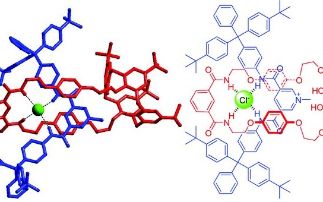
Anions are of central importance in natural, medical, and industrial systems: mis-regulation of chloride channels is known to be a cause of cystic fibrosis; use of nitrates and phosphates in fertilisers has caused enormous environmental damage through eutrophication; and pertechnetate is a radioactive bi-product of the nuclear industry. Stimulated by the fundamental roles negatively charged species play in these areas, there has been enormous interest in the field of supramolecular anion ...
-
news
Making the power of synchrotron light available to more businesses, building new experimental equipment and developing new capabilities are three of the areas of collaboration in a trans-Atlantic memorandum of understanding (MOU) signed between Diamond Light Source and Canadian Light Source Inc. (CLS) in Saskatoon.