-
highlight
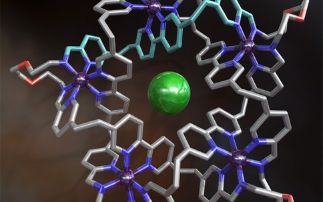
Diamond Light Source has recently played a key role in helping to reveal the exact structure of the most complex non-DNA molecular knot prepared to date.
-
highlight
Ice cores drilled from the frozen Antarctic landscape are made up of layer upon layer of frozen snow, dating back hundreds of thousands of years. Trapped within the ice are minute dust particles which can yield valuable information on temperature, precipitation, atmospheric composition and volcanic activity, frozen at the time of the snowfall. A group of Italian scientists have been using one of Diamond’s spectroscopy beamlines, B18, and the Stanford Synchrotron Radiation Lightsource to ...
-
highlight
.jpg)
Artificial heart valves have been used since the 1960s to replace natural heart valves damaged through disease. Each of four valves enables unimpeded blood flow through the heart itself and from the heart to the major arteries. As the heart beats the valve opens and closes, subjecting it to pressure loading and unloading. Artificial heart valves must be able to withstand repeated cycles of tensile loading and unloading in realistic conditions. Scientists from the University of Cambridge and ...
-
highlight
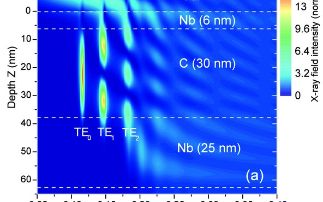
Thin multilayer structures comprising of thin layers of alternating elements or compounds find widespread technological applications – be it the anti-reflection coating in the visible range or the waveguide structures for X-rays. In the X-ray regime they are also used in many technological applications such as X-ray astronomy, microscopy, spectroscopy, and as filters and monochromators for synchrotron radiation and free electron X-ray lasers. It is important to correlate the measured optical ...
-
highlight
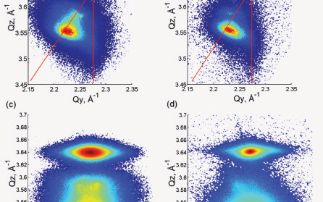
With the phase-out of incandescent light bulbs becoming more common around the world, there is a need to investigate more efficient and robust alternatives. Thanks to their low energy consumption, prolonged lifetime, small size and reliability, Light-emitting diodes (LEDs) are seen as an attractive option. But they are not quite ready to take over from the light bulb yet. A bright white LED powerful enough to light up a room is currently very expensive. Research is underway to make white ...
-
highlight
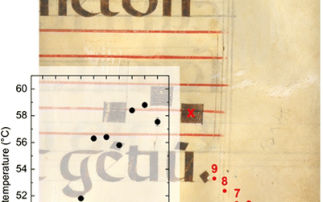
Parchment has been used for recording historical information since at least the 2nd century BC and makes an important contribution to our nation’s cultural heritage. Parchments are routinely assessed for degradation, but techniques with higher spatial resolution are needed to assess what is happening on the microscopic/nanoscopic scale. A group of scientists from Slovenia, Germany and the UK have been using I22, Diamond’s Small Angle Scattering and Diffraction beamline along with infrared ...
-
highlight
Nanoparticles have been incorporated in many consumer products, however their safety and toxicity have not been clearly identified. This is made worse by difficulty in measuring how biological systems interact with nanoparticles.
-
highlight
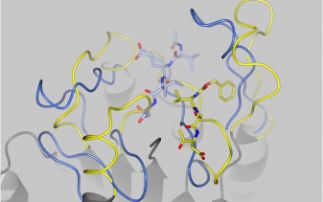
Huntington’s disease (HD) is a dominantly-inherited neuropsychiatric disorder. Typically the symptoms begin in adulthood, slowly progressing from movement disorder to behavioural and cognitive disturbances, often manifested in depression and dementia. It has been known since 1993 that the disease is due to mutation of a single gene coding for huntingtin (HTT) that extends the poly-glutamine (poly-Q) repeats in the protein. Aggregation of poly-Q repeat fragments is considered to be the ...
-
highlight
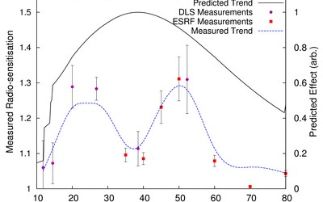
During the course of their treatment, around half of cancer patients receive some type of radiation therapy. This therapy is widely used to target tumours and modern techniques aim to avoid dose to healthy tissue as much as possible. However, toxicity developing within healthy tissue is still a problem and, as a result, scientists are looking for new techniques that can make cancer cells more sensitive to radiation.
-
highlight
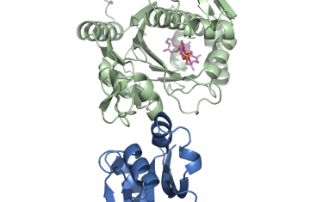
Bacteria are single-celled organisms that inhabit almost every environment on the planet, including the bodies of humans and animals. The cell wall maintains the structural integrity of the cell, and enables the bacteria to survive in its chosen environment. In disease-causing bacteria (pathogens) it also plays a role in the progression of the disease. A group of scientists from Newcastle University and the Nara Institute of Science and Technology in Japan have used Diamond to identify a ...
-
highlight
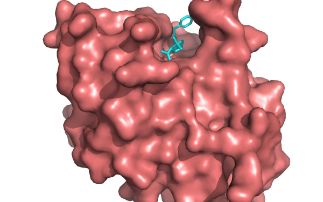
A breakthrough in the fight against drug-resistant infections is one step closer following the discovery of the structure of NDM-1: a vicious form of bacteria that is currently resistant to the most powerful antibiotics available. The structure was determined by crystallography carried out at Diamond Light Source.
-
highlight
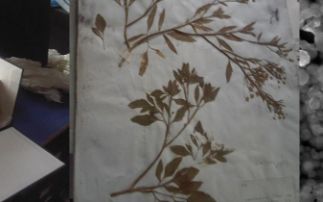
The University of Manchester museum herbarium was founded in 1860 and contains over a million specimens from all over the world, with collections spanning hundreds of years. The challenge of how to preserve botanical specimens is centuries old, and a wide range of techniques have been used to prevent decay by bacteria, fungi, insects and rodents. The effectiveness of the treatments is demonstrated in the excellent preservation of many museum specimens, but could the pesticides used present a ...
-
highlight
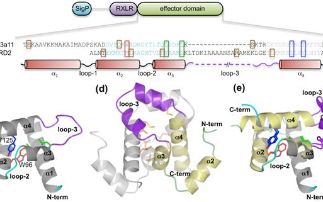
Fungus-like eukaryotic plant pathogens of the genus Phytophthora are devastating to root crops and vegetables because the effector proteins they produce can evolve rapidly to evade recognition by the host’s immune system.
Until now the molecular mechanisms underlying this evolutionary arms race have been poorly understood. New research by a team from the BBSRC’s John Innes Centre, Sainsbury Laboratory and the University of East Anglia, have used Diamond’s MX beamlines to shed light on the ...
-
highlight
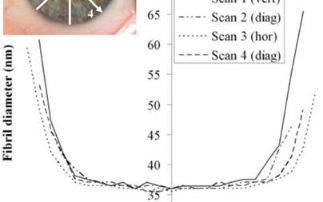
The cornea is the external lens of the eye, responsible for refracting incoming light onto the crystalline lens behind, which in turn focuses it on to the retina. It also plays a protective role, shielding the rest of the eye from dust and infection. To function, the cornea must be transparent to visible light, possess high mechanical strength, and have precisely defined curvature to focus.
-
highlight
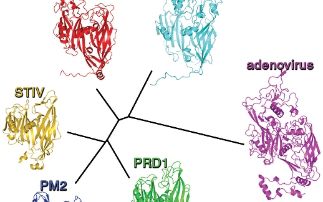
Just as humans have an ancestry, so too do viruses. But whereas we can use fossils to help identify the creatures that roamed the earth before us, viruses are much harder to classify and have left no fossilised remains for us to study. A group of researchers from Diamond Light Source and the Wellcome Trust Centre for Human Genetics are currently working on piecing together a complete history of viruses, mapping out their evolutionary lineage by solving the 3D structures of the organism’s ...
-
highlight
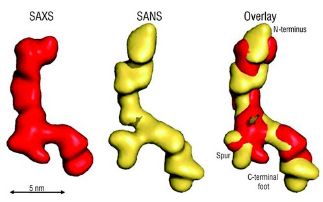
Elastin is the most abundant protein in mammalian elastic tissues and is responsible for their elastic recoil and resilience. Elastin dominates the mass of the aorta where it encounters the peaks and troughs of systole and diastole over the course of two billion heartbeats in a lifetime. Tropoelastin is the soluble precursor to elastin, which is constructed by the hierarchical assembly and cross-linking of many tropoelastin monomers that accumulate on a microfibrillar scaffold.1 Tropoelastin ...
-
highlight
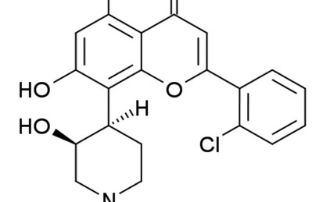
Flavopiridol was discovered to have anti-cancer properties in 19921, specifically by binding to cyclin-dependant kinases (CDKs) and inhibiting ATP binding. Since then it has been involved in a number of phase I and II clinical studies, on its own and in combination with other drugs. Although it binds to specific CDKs with nanomolar affinity, flavopiridol has been given intravenously in higher than expected concentrations to reach a therapeutic concentration at the cancer site. The high ...
-
highlight
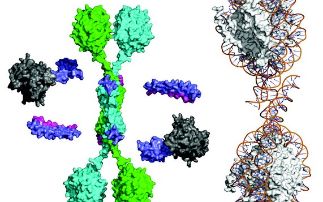
Transcriptional repression in eukaryotes requires the recruitment of large protein complexes to gene promoters and enhancers. These complexes contain histone deacetylases, and other enzymes, that facilitate chromatin remodelling so as to repress gene transcription. SMRT and NCoR are homologous co-repressor proteins that are recruited to multiple repressive transcription factors. When isolated from HeLa cells, SMRT and NCoR purify as large complexes of between 1 and 2 megadaltons containing ...
-
highlight
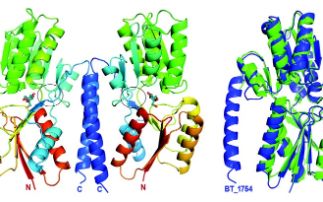
Our indigenous gut microbiota play an important role in maintaining normal health and nutrition. They provide us with traits that the human genome does not encode, such as the degradation of otherwise indigestible dietary polysaccharides. Survival in the gastrointestinal (GI) tract depends on the ability of these microorganisms to rapidly respond to changes in their dynamic nutrient environment. Here we show that a dominant member of the normal gut microbiota, Bacteroides thetaiotaomicron, ...
-
highlight
Lentiviruses are associated with chronic disease states in a variety of mammals. However, until recently it was thought that these pathogens had no capacity for germ-line integration, and were only spread horizontally in an exogenous fashion. The discovery of the prehistoric endogenous lentiviruses in rabbits (RELIK)1 and lemurs (PSIV)2 refuted these ideas revealing lentiviruses to be present in a range of mammals, capable of germ-line integration and far more ancient than previously ...