• Diamond Home page
  • About
  • For Users
  • Public
  • Industry
  • Instruments
  • Careers
  • More Show more menu items
Search

About

  • About Diamond
  • About Synchrotrons
  • News and Features
  • Events
  • Contact Us
  • FAQ

For Users

  • Apply for beamtime
  • User guide
  • Diamond Users Commitee
  • FAQ
  • User Administration System
  • iSpyB

Industry

  • Techniques Available
  • Industry Research
  • Industry Case Studies
  • News
  • Meet the Industry Team

Science

  • Research
  • Computing
  • The Machine
  • Publications
  • Research Expertise
  • Membrane Protein Laboratory
  • Additional Facilities
  • Publications Database

Instruments

  • Biological Cryo-Imaging
  • Crystallography
  • Imaging and Microscopy
  • Macromolecular Crystallography
  • Magnetic Materials
  • Soft Condensed Matter
  • Spectroscopy
  • Structures and Surfaces

Diamond-II

  • Science
  • Machine
  • Beamlines
  • Software, Control and Computing
  • Infrastructure

Public

  • Public open days
  • School visits
  • Partner with Diamond
  • Explore Diamond

Procurement

  • Non-OJEU Tender Notices
  • OJEU PINs
  • OJEU Tender Notices
  • Registration Form

Careers

  • Vacancies
  • Info for applicants
  • Company Benefits
  • Apprenticeships
  • PhD Studentships
  • Work Placement

Main Content

Science
Sub-navigation
  • Science
  • Research
  • Machine
  • Computing
  • Publications
  • Research Expertise
  • Integrated Facilities
  • Collaborations

In This Section

Sub Navigation
  • Science Advisory Committee
  • Science Highlights
    • 2026
    • 2025
    • 2024
    • 2023
    • 2022
    • 2021
    • 2020
    • 2019
    • 2018
    • 2017
    • 2016
    • 2015
    • 2014
    • Audio Highlights
  • Technological Updates
  • Research Areas
  • Research Techniques
  • Detectors
  • Optics and Metrology
  • HR Excellence in Research Award
  1. Science
  2. Research
  3. Science Highlights
  4. 2007

  • highlight
    SatNav for Cells

    SatNav for Cells Nov 16, 2007

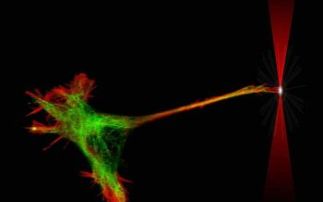
    Nerves and blood vessels grow to the right places because they receive instructions to keep them on the correct path. These instructions come from pairs of molecules: receptors and ligands on the surface of different cells. When a matched pair makes contact in a specific ‘handshake’ it directs the cell carrying the receptor right or left, just like SatNav. If we understand what different handshakes look like, we can design drugs that to strengthen them – to help nerve regeneration, or stop ...

  • highlight
    Inhibitors of Aurora-A Protein Kinase for the Treatment of Cancer

    Inhibitors of Aurora-A Protein Kinase for the Treatment of Cancer Nov 7, 2007

    Aurora-A is an essential enzyme which is required for human cells to multiply. Aurora-A has higher activity than normal in many human cancers and is a target for the development of anti-cancer drugs, some of which are in clinical trials. X-ray crystallography is used to characterise how these small molecules interact with Aurora-A, and these data provide information on how they work and allow the production of a new generation of more potent inhibitors.

  • highlight
    Studying Sodium at Pressures Beyond a Megabar

    Studying Sodium at Pressures Beyond a Megabar Oct 18, 2007

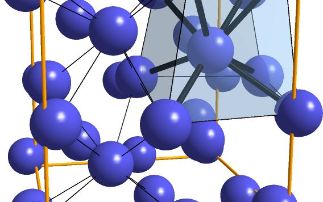
    The first publication from Diamond Light Source utilised the synchrotron’s high intensity x-rays and a diamond-anvil cell on the Extreme Conditions beamline I15, to study the unique behaviour of sodium at high pressures. This research was carried out by a team from the Centre for Science at Extreme Conditions at the University of Edinburgh, working in collaboration with the I15 beamline team.1

  • highlight
    Examining the Santa Catharina meteorite

    Examining the Santa Catharina meteorite Sep 18, 2007

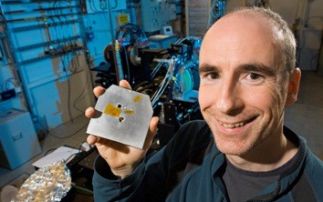
    Dr Paul Schofield is a researcher in mineral sciences in the Department of Mineralogy at the Natural History Museum (NHM). Paul used I18 to study a range of earth and life science specimens from the collections at the NHM. The spectroscopic data he obtained should provide an insight into natural processes, environmental systems and Earth and planetary history.

  • highlight
    Unravelling the secrets of ancient parchments

    Unravelling the secrets of ancient parchments Sep 13, 2007

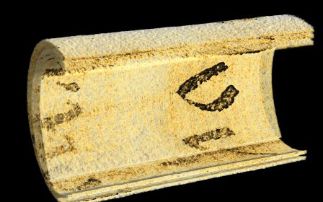
    The first users on the I22 Non-Crystalline Diffraction beamline, Professor Tim Wess and his team at the University of Cardiff, have been able to analyse the state of the collagen within parchment and its degenerative change to gelatine. Understanding the deterioration process will allow them how to preserve parchment for future generations. In cases where precious parchments may be too damaged or at risk, they have developed techniques to image written work without unrolling the fragile ...

  • highlight
    Reading Magnetic Memory

    Reading Magnetic Memory Sep 4, 2007

    David Eastwood is a post-graduate student working with Professor Brian Tanner at the University of Durham. David used I16 to carry out detailed examinations of new sensors to be used in computer components that ‘read’ the magnetic information stored in its memory.

  • highlight
    Crystal structure determination of Superoxide Dismutase from C. elegans.

    Crystal structure determination of Superoxide Dismutase from C. elegans. May 16, 2007

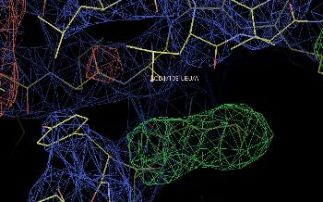
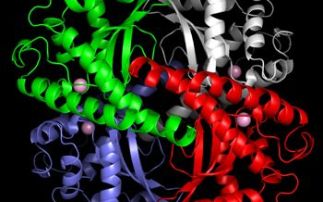
    Superoxide Dismutase (SOD) is a key enzyme that is responsible for removing harmful oxygen radicals from cells by catalysing their breakdown into hydrogen peroxide and water. The synchrotron radiation at Diamond was used to determine the molecular structure of a SOD which contains the metal manganese from the parasitic worm C. elegans. The structure will help us understand how the enzyme works and how it chooses manganese over other metals. The picture shows the four protein chains in ...

  • Contact Us
  • About Diamond Light Source
  • Procurement
  • Supply Chain Transparency
  • Cookie Policy
  • Website Terms of Use
  • Privacy Notice

Diamond Light Source

Diamond Light Source is the UK's national synchrotron science facility, located at the Harwell Science and Innovation Campus in Oxfordshire.

Follow us on Facebook Follow us on Linkedin Follow us on Instagram Follow us on Bluesky

Diamond Light Source Ltd
Diamond House
Harwell Science & Innovation Campus
Didcot
Oxfordshire
OX11 0DE

See on Google Maps

Copyright © Diamond Light Source. Diamond Light Source® and the Diamond logo are registered trademarks of Diamond Light Source Ltd

Registered in England and Wales at Diamond House, Harwell Science and Innovation Campus, Didcot, Oxfordshire, OX11 0DE, United Kingdom. Company number: 4375679. VAT number: 287 461 957. Economic Operators Registration and Identification (EORI) number: GB287461957003.

feedback