-
highlight
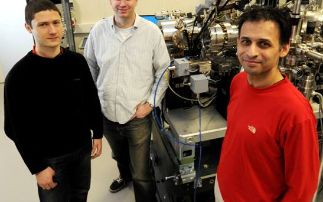
Extending our knowledge of how magnetic materials behave on an atomic scale has led to considerable technological advances, particularly in the area of information storage. University of Leeds scientists have been working with the Nanoscience beamline team at Diamond to study the properties of magnetic domain walls, which are areas where the sample magnetisation rapidly changes direction. The ability to manipulate domain walls using an electric current has recently generated a great deal of ...
-
highlight
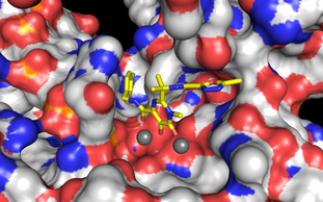
Researchers into from Imperial College London and Harvard University have used Diamond to solve a 20-year-old puzzle about how HIV establishes itself in the human body. They have used the synchrotron to determine the structure of an enzyme called integrase, used by the HIV and similar viruses to copy their genetic information into the DNA of their hosts. Antiretroviral drugs have already been developed which work by blocking integrase, but the mechanism behind this was not fully understood ...
-
highlight
MX beamlines are extremely powerful instruments for solving the structure of proteins. There are nearly 100 operational Macromolecular Crystallography (MX) beamlines around the world, and being able to accurately calibrate them is vital to ensuring the accuracy of the data they collect. Scientists from Diamond have shown that an unusual calibration standard – beeswax – may be able to help this happen. This work has been published in the Journal of Synchrotron Radiation.
-
highlight

Breaks in DNA cause a cascade of intercellular responses including the activation of the Mre11/Rad50/Nbs1 (MRN) complex. This complex attaches itself to the strand break point and holds the broken ends in close proximity to one another ready for rejoining.
-
highlight
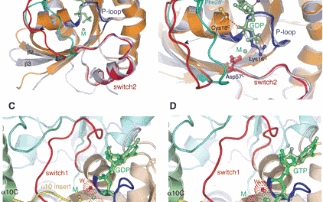
A critical step involved in regulating the cytoskeleton and cell signalling is the activation of Rho guanosine triphosphatases (GTPases), initiated by the exchange of guanine diphosphate (GDP) for guanosine triphosphate (GTP), a process catalysed by guanine nucleotide exchange factors (GEFs). Here structural research provides us with evidence that a nucleotide sensor on the GEF DOCK9 is intrinsic to the release of guanine diphosphate (GDP) from the Rho-family GTPase Cdc42. This nucleotide ...
-
highlight
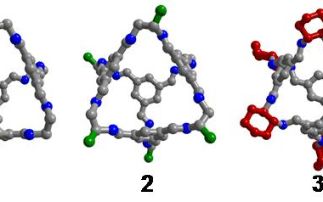
Porous materials are important in a wide range of applications including catalysis and storage of gases such as carbon dioxide, a major contributor to climate change. Finding new ways to synthesise these materials will enable more control over their properties and performance. A group from the University of Liverpool has developed a technique for assembling prefabricated organic cage structures into crystalline materials where controlling how the cages connect determines whether the material ...
-
highlight
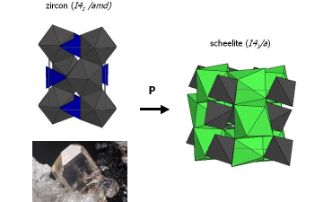
Orthovanadates have recently emerged as promising optical materials for birefringent solid-state laser applications. They can be also used in a number of applications including cathodoluminescent materials, thermophosphors, scintillators, and nuclear waste storage. Given the technological importance of zircon-type orthovanadates, their electronic and optical properties have been extensively studied but their mechanical properties, which are of interest in several areas of materials research, ...
-
highlight
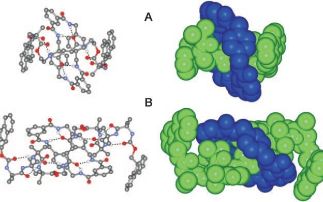
Rotaxanes are tiny molecular structures where a central straight molecule passes through a macrocycle, making a molecular machine in the shape of an axle inside a wheel. Bulky stoppers at either end of the straight molecules keep the wheel on the axle. These molecular machines have the potential to be used as molecular shuttles by moving the wheel along the axle, which is of interest for nanoscale electronic components and also in biology, where many biochemical functions are based on ...
-
highlight

How can a disease that affects one species such as birds transfer to another such as humans? In the case of influenza, the answer could lie in a protein called hemagglutinin – the part of the flu virus that binds it to human cells when a person is infected. In the twentieth century there were three flu pandemics in 1918, 1957 and 1968. Scientists from the Medical Research Council have been using Diamond to study the structure of hemagglutinin from the virus strain that caused the 1957 ...
-
highlight

EphA4 is a protein which is attached to the surfaces of many types of human cells and plays a role in a wide range of biological processes. EphA4 functions by binding to ephrin ligands, cell surface proteins which sit on opposing cells. The signalling cascades which result from this contact direct cells to move in a particular direction, to the right place in the body. This is critical in the development of the nervous system, and has also been linked with the suppression of melanoma tumours.
-
highlight
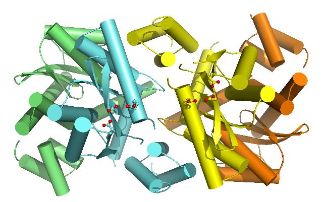
Understanding how viruses such as HIV function is vital in the search for more effective antiviral medicines, as well as opening up novel possibilities in gene therapy. A collaborative study involving researchers from Imperial College London, Yale University, and Dana-Farber Cancer Institute, led by Dr. Peter Cherepanov from the Division of Medicine at Imperial took advantage of Diamond’s I02 and I04 macromolecular crystallography beamlines to reveal important mechanistic aspects of ...
-
highlight
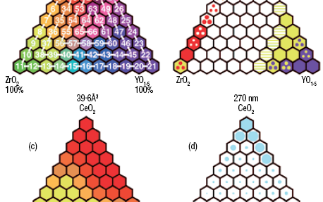
Since the Stone Age humans have been adept at selecting materials for specific tasks based on the material’s properties. With the discovery of smelting man learned to manipulate materials to improve performance. Now new materials can be “built” on a nm scale with properties that are required for a host of applications, from solar cells to catalysts in industrial process.
-
highlight
The self-assembly of peptides into fibrils is commonly observed. Such fibrils may have biological roles and may also be useful in nanotechnology applications, as scaffolds to create metal nanowires or to template the self-assembly of other inorganic materials, for biosensors or as supports for cell adhesion. The misfolding of proteins into so-called amyloid fibrils is also implicated in amyloid diseases such as Alzheimer’s and type II diabetes. It has been suggested that amyloid fibrils are ...
-
highlight
%20hydrogen.jpg)
Hydrogen is difficult to store or transport with current technology. Hydrogen gas has good energy density by weight, but poor energy density by volume compared to the hydrocarbons used currently to power cars. In principle, hydrogen requires a larger tank than petrol to store the same energy, making it a less practical alternative in volumetric terms. One approach to improve the energy density of gaseous hydrogen is by storing the gas at higher pressures. This requires material and design ...
-
highlight
Many nanotechnology and biotechnology applications rely on how tiny metal particles arrange themselves on flat surfaces. These patterned structures on the nanometre scale are of great importance in making novel electronic, magnetic and photonic devices. Therefore being able to accurately characterise them is vital. However, this can be very challenging and sometimes requires several different techniques to find the detailed shape and chemical composition of the nanoparticles. A group of ...
-
highlight
Understanding the deformation of polycrystalline structural materials is the key to improving performance and reliability of complex engineering components and systems. The interaction between grains in the metal and how they behave under stress is vital to determining the strength of a component and how it will deform. However capturing full details of polycrystalline deformation is a significant challenge, partly because of the sheer volume of information involved, and partly due to the ...
-
highlight
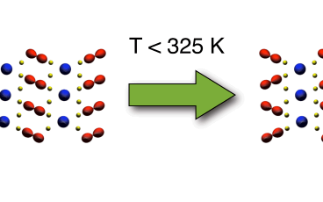
Transition metal oxides are an intriguing class of materials since it is possible to drastically modify their properties by changing their temperature, applying a magnetic field or simply by irradiating them with light. Of particular interest are the manganites that exhibit complex interactions bewteen the spin and and orbital degrees of freedom. To fully understand the nature of this delicate balance between the different phases of the same material it is crucial to exploit the versatility ...
-
highlight
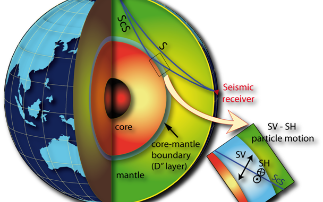
The impact earthquakes have on the planet’s surface is well documented. However, much less is known about what happens deep in the planet’s interior. An international group of researchers have been using the Extreme Conditions beamline at Diamond Light Source to study the mineral ferropericlase, thought to be the second most abundant mineral in the Earth’s lower mantle, over 300 miles (670 km) below the surface of the planet. Understanding what happens to ferropericlase in the high ...
-
highlight
%20diamond-ltas%20-%20R%20Lewis.png)
Researchers at Newcastle University’s Institute for Cell and Molecular Biosciences are regular users of Diamond’s MX beamlines. One of the complications of crystallography is that part of the information required to determine structures is lost in the diffraction experiment. This information can be inferred in special circumstances in a ‘SAD’ (single-wavelength anomalous dispersion) experiment. In common with other MX users, the Newcastle group have been utilising these SAD experiments to ...
-
highlight

Before we are born, each and every one of us is enveloped by membranes and fluid that ensure our safe development and protect us from the external environment at a time when we are at our most vulnerable. Foetal membranes are split into two layers and the protective sac, the amniotic membrane that surrounds the developing baby, is currently the focus
of studies being carried out by researchers from the University of Reading’s School of Pharmacy and the Institute for Women’s Health at ...