-
highlight
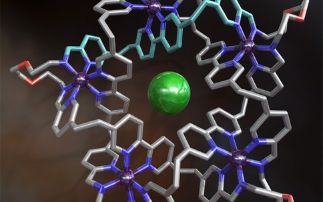
Diamond Light Source has recently played a key role in helping to reveal the exact structure of the most complex non-DNA molecular knot prepared to date.
-
highlight
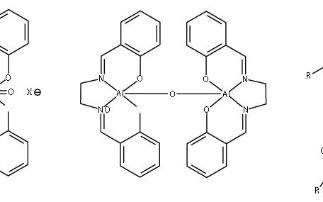
2011 is the International Year of Chemistry and also sees the launch of Sustainability as a University-wide societal engagement theme at Newcastle, so it is appropriate for significant progress to be made in structural characterisation at Diamond Light Source as part of a Newcastle School of Chemistry project developing carbon capture technology and its application in making ‘green’ solvents that, in turn, can be used for environmentally friendly processes to synthesise useful chemicals. ...
-
highlight
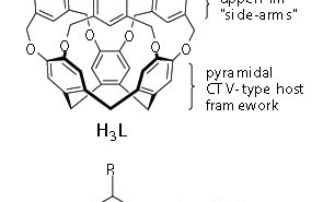
In metallo-supramolecular chemistry small molecules are organised into larger, more complex assemblies through the use of reversible metal-ligand coordination interactions. These assemblies are highly complicated and are often polyhedral or prismatic in shape and of nanometre scale. Given the right conditions they effectively make themselves in a process called self-assembly. They may have significant internal space where other molecules can be trapped or even react, acting like nano-sized ...
-
highlight
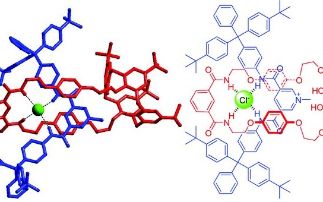
Anions are of central importance in natural, medical, and industrial systems: mis-regulation of chloride channels is known to be a cause of cystic fibrosis; use of nitrates and phosphates in fertilisers has caused enormous environmental damage through eutrophication; and pertechnetate is a radioactive bi-product of the nuclear industry. Stimulated by the fundamental roles negatively charged species play in these areas, there has been enormous interest in the field of supramolecular anion ...
-
highlight
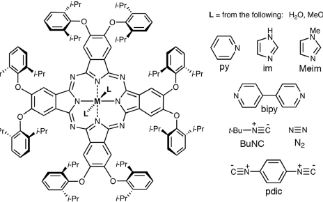
Crystal engineering of nanoporous structures has not yet exploited the heme motif so widely found in proteins. X-ray diffraction (XRD) analysis on Beamline I19 found that metal complexes of a phthalocyanine, a close analog of heme, forms molecular crystals that contain large interconnected voids (8 nm3), defined by a cubic assembly of six phthalocyanines. Rapid ligand exchange at the metal centres is achieved within these phthalocyanine nanoporous crystals (PNCs) by ...
-
highlight
Porous materials have wide ranging applications in areas such as hydrogen storage, catalysis and drug delivery. In rigid porous materials such as zeolites, the ability of the material to adsorb depends on the fixed size and shape of the pores. Until the mid 1990s most synthetic porous materials were either zeolites and their analogs or activated carbons. The discovery of metal-organic frameworks (MOFs) opened the possibility of more flexible frameworks, where the geometry of the pores can ...
-
highlight
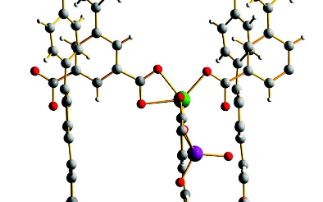
A major programme of research into metal-organic frameworks (MOFs) as materials for hydrogen and fuel gas storage is underway at the University of Nottingham. Safe, efficient hydrogen storage is a pre-condition for powering cars using this clean fuel, which has no carbon emissions at the point of use. In order to understand how our MOFs can store hydrogen, we need to determine their three-dimensional crystal structures. This is often not possible to achieve in-house because the crystals are ...
-
highlight
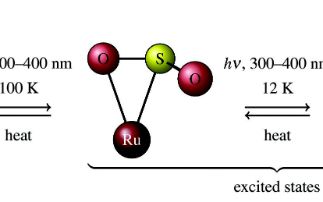
Materials with metastable excited states hold great potential for optical data storage applications. Their functionality arises directly from their ability to act as binary switches: if the ground state is taken to signify a ‘0’ and the metastable state a ‘1’, data can be written and re-read using suitable wavelengths of light. However, only a handful of such materials have been reported and little is known about the correlation between their structure and optical properties. As part of an ...
-
highlight
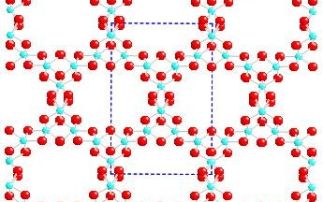
Framework structures are molecular cages which are capable of selectively trapping atoms, ions and molecules within the cage. Materials that adopt framework structures have attracted significant attention recently as they have potential applications in a wide range of areas, including catalysis and the pharmaceutical industry. Currently almost all existing framework structures are neutral or negatively charged, but a group led by researchers from the University of Liverpool in collaboration ...
-
highlight
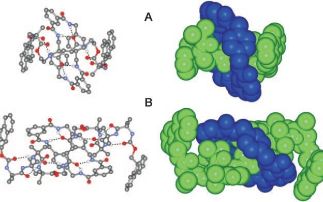
Rotaxanes are tiny molecular structures where a central straight molecule passes through a macrocycle, making a molecular machine in the shape of an axle inside a wheel. Bulky stoppers at either end of the straight molecules keep the wheel on the axle. These molecular machines have the potential to be used as molecular shuttles by moving the wheel along the axle, which is of interest for nanoscale electronic components and also in biology, where many biochemical functions are based on ...
 Macromolecular
 Soft Condensed
  Imaging and
 Biological
 Magnetic
 Structures and
 Crystallography
  Spectroscopy