-
annual review
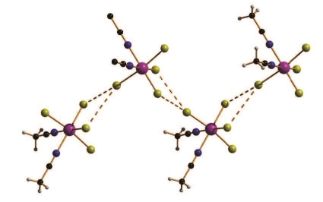
Materials that have long range magnetic order are fundamental to modern technologies, including data storage devices, space
research, cancer therapy and biomedical imaging techniques. Future miniaturisation of these components depends on designing
molecules that behave in the same way as larger magnets, and to do this we need an improved understanding of the connection
between molecular structures and their resulting properties.
Although high-temperature- and high-magnetic-field-based ...
-
annual review
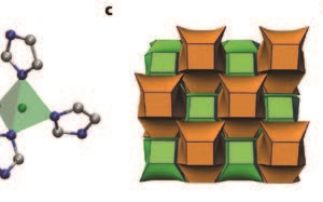
Building on previous work conducted at Diamond, researchers have used X-ray Pair Distribution Function (XPDF) on the I15-1 beamline
to probe the structure of a Metal Organic Framework (MOF) in its glassy state, from which they inferred the structure of its liquid form.
MOFs are crystalline materials, which are receiving a lot of interest due to their porous nature, which allows them to accommodate
guest molecules within their structure. Potential applications include drug delivery, ...
-
annual review
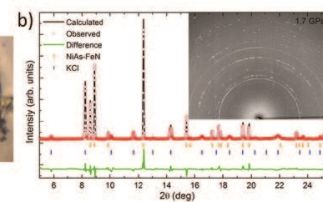
Chemistry drastically changes at very high pressures, allowing exotic types of chemical interactions leading to the formation of
novel materials. For mixtures of iron (Fe) with a significant amount of nitrogen (N), theoretical calculations suggested that new
Fe-N compounds could be synthesised at high pressures, and are expected to have enhanced properties such as increased hardness,
superconductivity, or the ability to act as a catalyst.
A team of researchers used I15 to carry out this ...
-
annual review
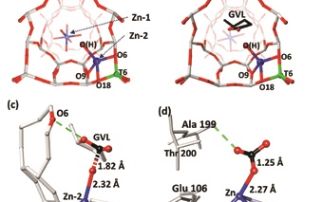
The world currently relies on coal, oil and gas, not only for fuel but also as raw materials for the production of chemicals. With reserves of these fossil fuels running out, and a growing awareness of the CO2 pollution their use causes, it is becoming increasingly important to develop sustainable carbon sources.
-
annual review

Aerosols – tiny particles in the air – are key to the formation of clouds, as all cloud droplets form when water droplets condense around aerosols.
-
annual review
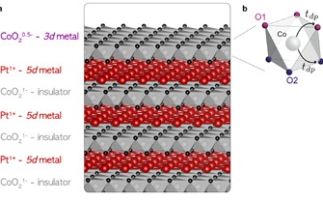
The surfaces of materials can host unique electronic properties, where the electrons behave very differently from the interior. All electrons possess a magnetic moment, their spin, but in most non-magnetic materials electrons with different spins behave in the same way.
-
annual review
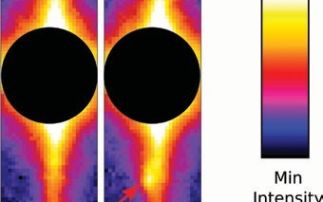
Synchrotron light sources produce a strong and stable pulsed beam, for which the pulse sequence is dependent on the circumference of the storage ring. Many experiments only require some of the pulses, including ‘pump and probe’ experiments that activate a process and then measure it.
-
annual review
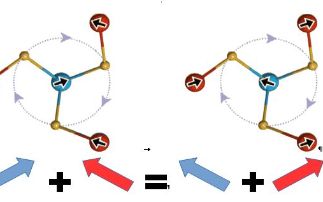
The Dzyloshinskii-Moriya interaction (DMI) was first introduced in 1957 to explain ‘weak ferromagnetism’.
-
annual review
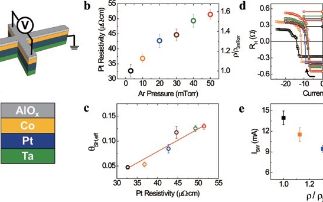
Spin-orbit torque (SOT) arises from spin-orbit coupling in heavy metal/ferromagnet bilayers, and can be used to control the magnetisation direction. It is of considerable interest as a way to efficiently switch the magnetisation of spintronic devices, which have advantages over traditional electronic devices, including non-volatile memory and logic applications. In order to engineer materials with enhanced SOT, for lower power consumption, scientists are investigating the microscopic origin ...
-
annual review
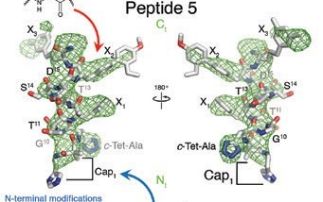
To design such small molecules, a detailed map of the interactions between GLP-1 and its receptor was needed.
-
annual review
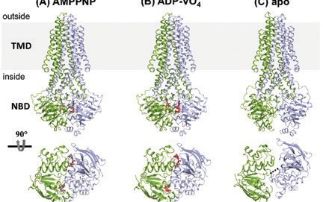
Bacteria utilise ATP-binding cassette (ABC) transporters to import nutrients and detoxify themselves. These transporters have been shown to exist in wide open conformations that permit the access of many substrates in the binding pocket.
-
annual review

Many types of single-celled microorganisms such as bacteria are covered with a protective outer layer of proteins known as the S-layer.
-
annual review
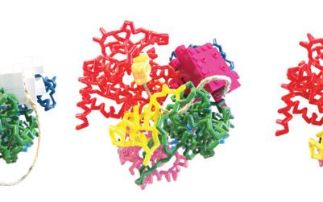
In all cells derived from animals, plants, fungi and protozoa a single protein called UGGT acts as a quality control checkpoint that inspects secreted glycoproteins.
-
annual review

Gram-negative bacteria that are extensively resistant to multiple antibiotics are an ever-increasing global threat. Colistin is an antibiotic used as the last line of defence against highly resistant Gram-negative bacteria. However, in recent years bacteria have emerged with resistance to this crucial antibiotic.
-
annual review

Endoglin (ENG)/CD105 is a mammalian glycoprotein that is found in the membranes of cells that line blood vessels. It is essential for healthy heart development and blood vessel growth, but conversely it is also involved in preeclampsia and can help tumours establish their blood supply.
-
annual review
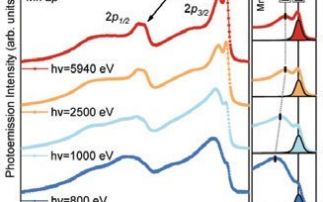
As the interface between magnetic and non-magnetic materials is a key feature of spintronic devices, it is crucial to characterise and understand both the surface and bulk electronic and magnetic properties of the materials used in their production.
-
annual review

The data storage on which out smartphones, tablets and computers rely works via electrical fields (e.g. flash drives) or magnetic fields (e.g. hard drives), but research into magnetoelectric materials could lead to a new generation of multifunctional devices that use a combination of the two.
-
annual review
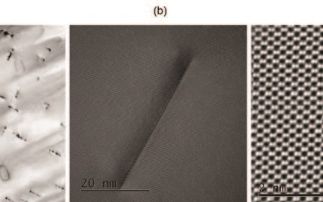
Flawless diamonds are extremely rare and expensive. Most diamonds contain defects, and for scientific and industrial applications, the defects are very important. In a naturally-formed diamond, the presence and structure of defects can be used to accurately determine the geological environment in which it was formed. The defects also shape the electronic and optical properties of diamonds, and exploiting these properties in synthetic diamonds could lead to next-generation optical storage ...
-
annual review

Knowing how fluids move through micron-sized voids (or ‘pores’) in rock kilometres below the Earth’s surface is crucial information to help understand and optimise underground carbon dioxide (CO2) sequestration, oil recovery from reservoir rocks, and a host of other processes.
-
annual review
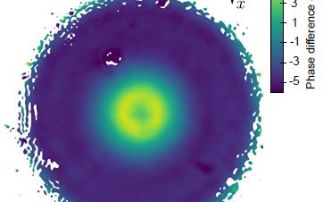
The intense X-ray light produced by modern synchrotron radiation sources and X-ray free-electron lasers (XFELs) allows the fine structure and dynamics of matter to be studied in exquisite detail. In principle, beams should be able to be focused to a few nanometres and below.