-
news
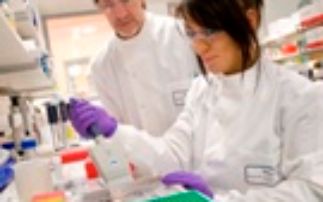
A new PhD student has been appointed to a joint programme with Diamond Light Source, the University of Oxford and Chroma Therapeutics. Victoria Arena will be based at the multi-disciplinary Research Complex at Harwell (RCaH), where she will undertake a three year PhD project in the area of structure-based drug design.
-
news
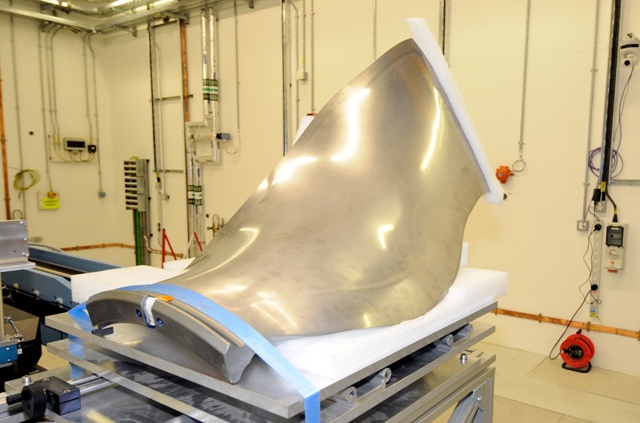
On Thursday 2nd December 2010, leading scientists and policy makers gathered at Diamond Light Source for the official opening of a unique new research station that can create molecular-scale 3D images of large objects such as aerospace and engineering components, and explore their structures in atomic-scale detail.
-
news
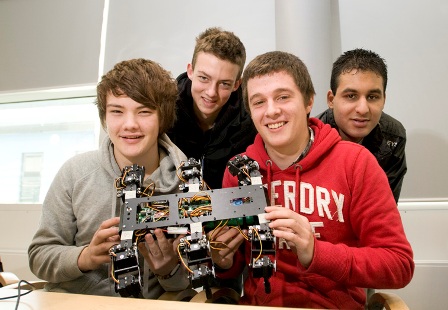
On Friday 19th November, over 100 students from across Oxfordshire and beyond attended a careers day that focused on the wide range of exciting opportunities that exist for engineers in the UK.
-
news
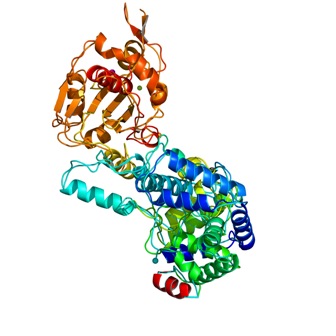
Scientists from the University of St Andrews in Scotland, and their international collaborators from Emory University, USA, and Sun Yat-sen University, China, have discovered how the Lassa virus, which causes Lassa fever, remains invisible to the human defence system and causes thousands of deaths each year.
-
news
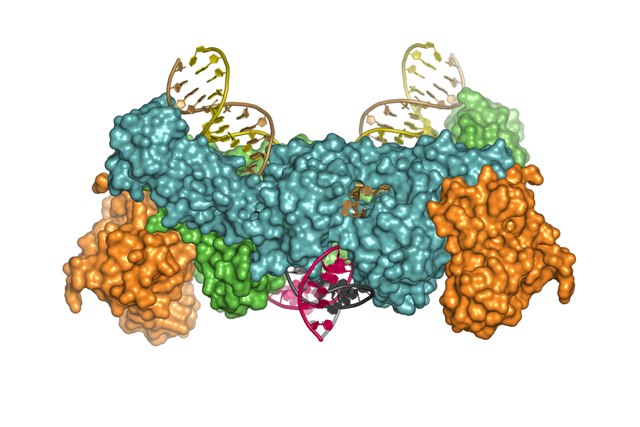
Scientists from Imperial College London have used data collected at Diamond Light Source to advance the understanding of how HIV and other retroviruses infect human or animal cells. The research, which is funded by the Medical Research Council, was published in Nature this week.
-
news
Chancellor George Osborne has confirmed that Diamond Light Source will receive funding for Phase III expansion in the Government’s spending review, part of a strategy to support world-class science and invest in infrastructure projects that contribute to economic growth.
-
news
Work by researchers at Diamond Light Source, the UK’s national synchrotron facility, has resulted in over 1,000 publications, just three years after its formal opening.
-
news
The Membrane Protein Laboratory (MPL) at Diamond Light Source in Oxfordshire (UK) is pleased to announce that our call for proposals is now open.
-
news

Prof. Ian Robinson, who holds a joint appointment with University College London (UCL) and Diamond Light Source, has been awarded funding by the Biotechnology and Biological Sciences Research Council (BBSRC) for a 5-year BBSRC ‘Diamond Fellowship'.
-
news
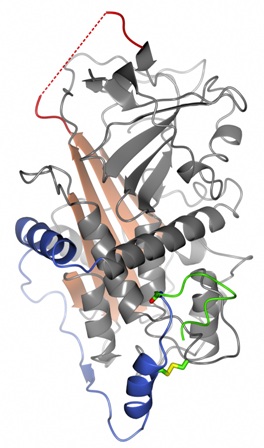
Researchers from the University of Cambridge have used Diamond Light Source to solve the 3D structure of a protein that plays a major role in hypertension in pre-eclampsia.
-
news
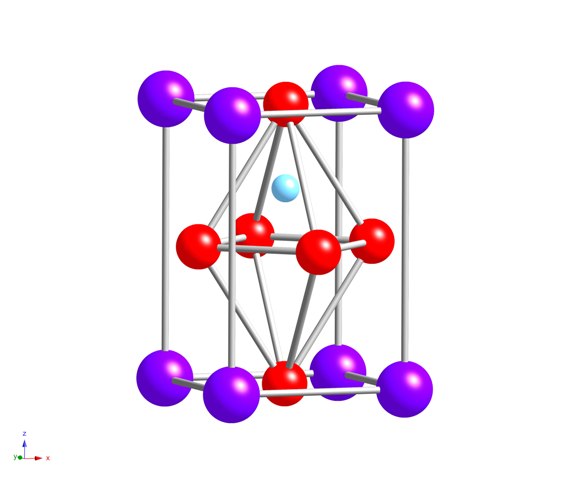
Scientists are using Diamond Light Source, the UK’s national synchrotron facility, to discover how we can detoxify our electronic gadgets. Results published in the journal Applied Physics Letters on 1st October reveal the potential for new artificial materials that could replace lead-based components in everyday products from inkjet printers to digital cameras.
-
news
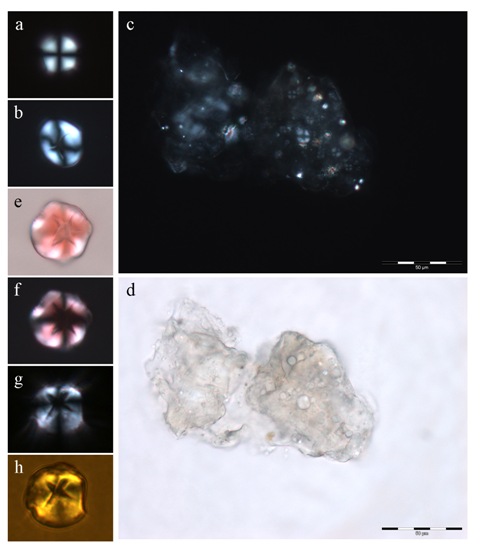
With the arrival of World Alzheimer’s Day (21st September), Diamond Light Source takes a closer look at the research taking place at the synchrotron into the disease that is the most common cause of dementia and affects over 400,000 people in the UK.
-
news
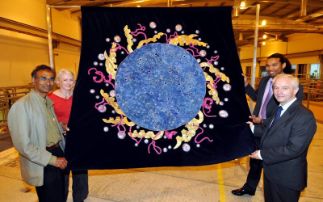
During a visit to Diamond Light Source, the UK’s national synchrotron science facility, on Friday 9th July, Prof. Venki Ramakrishnan, winner of the 2009 Nobel Prize for Chemistry, unveiled the World’s largest diffraction pattern – an innovative textile project which has had stitches added to it by over 5000 people in the UK, Europe and America.
-
news
Diamond is taking part in the 350th Anniversary of the Royal Society and their special Science Exhibition at the Southbank Centre in London.
-
news
%2520False%2520colour%2520map%2520of%2520a%2520single%2520cancer%2520cell.jpg)
Diamond Light Source, the UK’s synchrotron science facility, is being used by a Stoke-on-Trent based clinician to develop new ways to detect cancer.
-
news
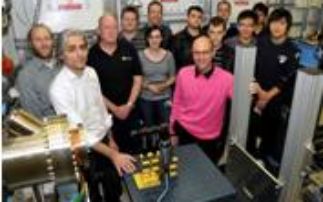
Diamond Light Source, the UK’s national synchrotron science facility, is being used to look inside aero-engine materials and components, right down to the scale of atoms.
-
news
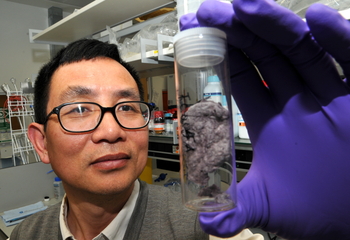
On Wednesday 27th April, the first researchers arrived on the latest experimental station to become operational at Diamond.
-
news
A team of researchers from the Universities of Leeds, Oxford and Imperial College London have captured the 3D atomic models of a single transporter protein in each of its three main structural states, a goal of researchers from around the world for over 25 years.
-
news
Business secretary Lord Mandelson today announced almost £100m investment in Diamond so that a further 10 beamlines can be added to fully maximise the scientific discovery potential of the machine.
-
news
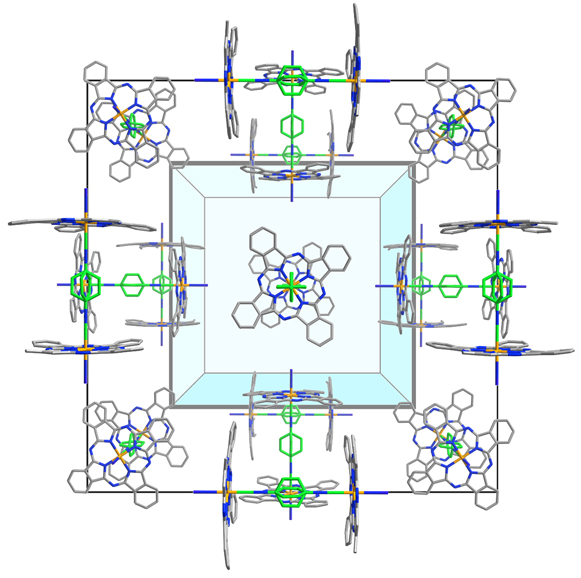
It is a long-held ambition of scientists to prepare porous solids within which they are able to mimic the sophisticated chemistry performed by nature.