-
highlight
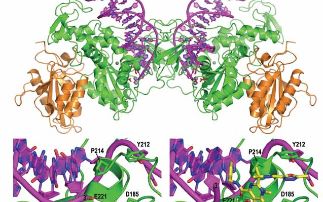
To establish successful infection, a retrovirus must insert DNA replica of its genome into a host cell chromosome. This process is catalysed by integrase (IN), the viral enzyme that synapses ends of viral DNA forming a highly stable nucleoprotein complex, intasome. The structure of full-length IN, either separately or in complex with viral DNA, has been lacking. Furthermore, although clinically useful inhibitors of HIV IN have been developed, their mechanism of action remained speculative. ...
-
news
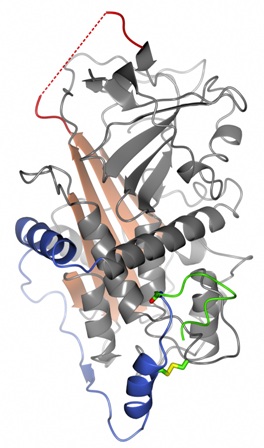
Researchers from the University of Cambridge have used Diamond Light Source to solve the 3D structure of a protein that plays a major role in hypertension in pre-eclampsia.
-
highlight
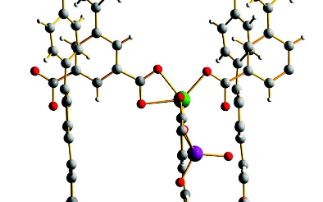
A major programme of research into metal-organic frameworks (MOFs) as materials for hydrogen and fuel gas storage is underway at the University of Nottingham. Safe, efficient hydrogen storage is a pre-condition for powering cars using this clean fuel, which has no carbon emissions at the point of use. In order to understand how our MOFs can store hydrogen, we need to determine their three-dimensional crystal structures. This is often not possible to achieve in-house because the crystals are ...
-
highlight
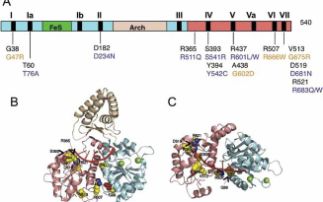
DNA repair is found in all branches of life, it is the natural response to an environment which damages DNA. Defects in repair, structure of the archaeal protein XPD provides a model to interpret genetic mutations of the human homologue. These mutations lead to three related diseases: xeroderma pigmentosum (XP), trichothiodystrophy (TTD), and combined XP with Cockayne’s syndrome (XP/CS). The sequence homology allows us to use an orthologue from the organism Sulfolobus sulfataricus which we ...
-
highlight
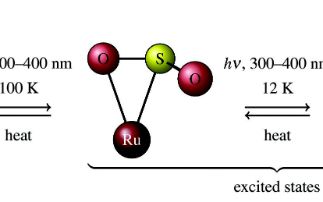
Materials with metastable excited states hold great potential for optical data storage applications. Their functionality arises directly from their ability to act as binary switches: if the ground state is taken to signify a ‘0’ and the metastable state a ‘1’, data can be written and re-read using suitable wavelengths of light. However, only a handful of such materials have been reported and little is known about the correlation between their structure and optical properties. As part of an ...
-
highlight
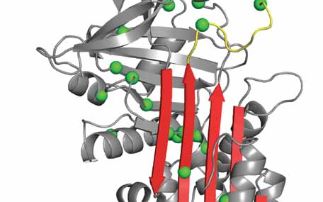
Ordered protein aggregation is thought to be the cause of several diseases including Alzheimer’s, Huntington’s, Parkinson’s, the prion encephalopathies, and many more. However, the molecular basis of the intermolecular linkage of the underlying protein (Aβ1-42, huntingtin, α-synuclein, and prions) is not known for any of these ‘conformational diseases’ [1]. The SERPIN family of proteins also cause disease when mutations lead to their intracellular aggregation. The process has become known as ...
-
highlight
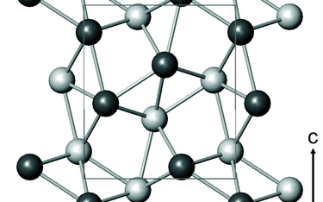
We have used the high intensity x-ray beam on beamline I15 to examine the crystal structures of the alkali metals Na and K to above 100 GPa (1 million atmospheres). In Na, we have utilised the low melting temperature near 100 GPa to grow a single crystal of sodium at 108 GPa, and have investigated the complex crystal structure at this pressure using single-crystal diffraction. We confirm that at this pressure sodium is isostructural with the cI16 phase of lithium, and we have refined the ...
-
highlight
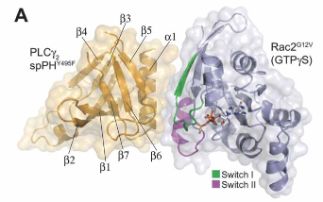
Rho family GTPases are important cellular switches and control a number of physiological functions. Understanding the molecular basis of interaction of these GTPases with their effectors is crucial in understanding their functions in the cell. Here we present the crystal structure of he complex of Rac2 bound to the split pleckstrin homology (spPH) domain of phospholipase C-γ2 (PLCγ2). Based on this structure, we illustrate distinct requirements for PLCγ2 activation by Rac and EGF and ...
-
highlight
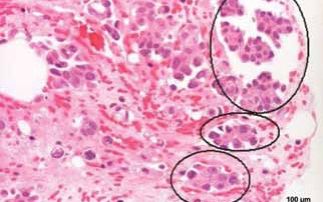
Over the last few years, IR absorption spectroscopy has grown up as a potential analytical method in tissue and cell studies for cancer diagnosis. The application could be twofold: as a tool to assess the presence or absence of malignant cells in biopsies; and as an aid to help pathologists to classify those cells that are suspicious but not diagnostic for cancer. The last application has the problem that in order to assess these cells pathologists would have already dealt with stained ...
-
highlight

The crystal structure of the high-pressure ζ-form of the explosive CL-20 has been determined using a combination of x-ray single crystal and powder diffraction techniques. Conformational changes in the orientation of the nitro groups of the CL-20 molecule were observed in the γ→ζ transition, such that molecules in the ζ-form adopt the conformation in which all of the nitro groups are exo with respect to the five- and six-membered rings. The level of complexity of this crystal structure ...