-
news

It was with great excitement and anticipation that almost 2,000 visitors arrived at Diamond Light Source, the UK’s national synchrotron science facility, to take part in a special series of Inside Diamond open days, held to mark the facility’s 10th Anniversary.
-
news
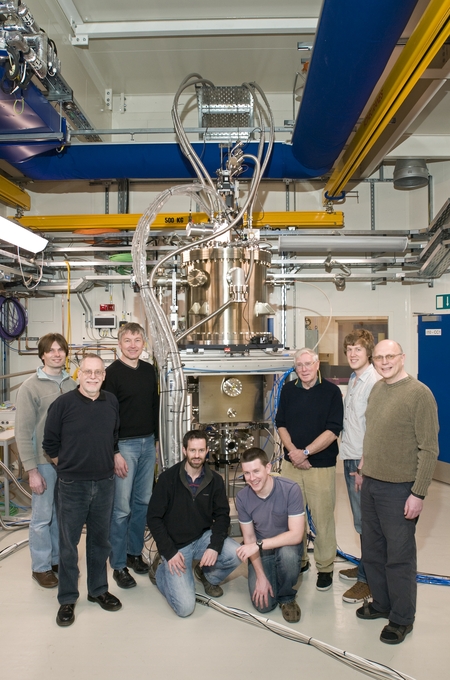
The first researchers to use the new Oxford Instruments high-field superconducting magnet at Diamond Light Source, the UK’s national synchrotron facility, are searching for “hidden magnetic states”. If found, they will provide important confirmation of a theoretical model which could have important applications in magnetic data storage. Diamond’s BLADE beamline is providing them with the tools for the search.
-
news
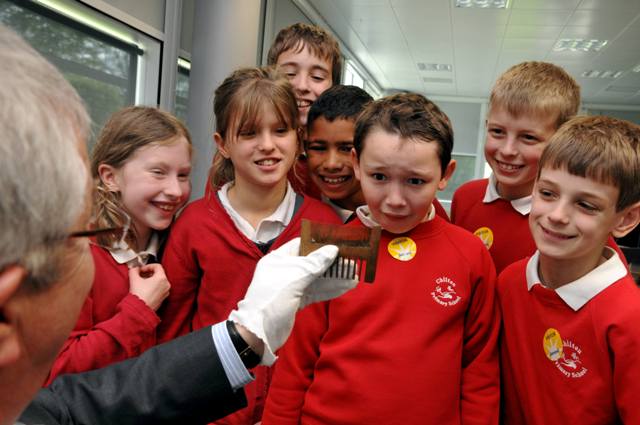
Stitching, sculpture and slug-like aliens all formed part of a special 10th Anniversary event that was on Friday 11th May at Diamond Light Source, the UK’s national synchrotron science facility, on the Harwell Science & Innovation Campus in Oxfordshire.
-
news

For our tenth anniversary celebrations we will be holding open days for the public on the 16th, 17th and 19th June 2012.
Inside Diamond is a series of public events, welcoming visitors to Diamond to meet our scientists, find out about the exciting work taking place here, and have a tour of the synchrotron itself.
-
highlight

Water, essential to life… or is it?
Proteins are large biological molecules that are synonymous with living things. They allow us to convert food into energy, supply oxygen to our blood and muscles, and drive our immune systems.
It is the general understanding that since proteins have evolved in a water-rich environment, they are dependent on water to survive and function. Researchers at the University of Bristol have used the Circular Dichroism beamline (B23) at Diamond Light Source to ...
-
news
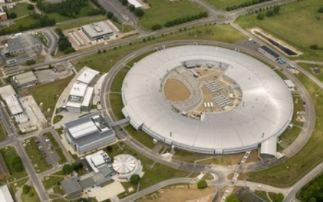
The traditional picture of comets as cold, icy, unchanging bodies throughout their history is being reappraised in the light of analyses of dust grains from Comet Wild2. A team led by the University of Leicester has detected the presence of iron in a dust grain, evidence of space weathering that could explain the rusty reddish colour of Wild2’s outer surface. The results were presented by Dr John Bridges at the National Astronomy Meeting in Manchester on Tuesday 27th March
-
news
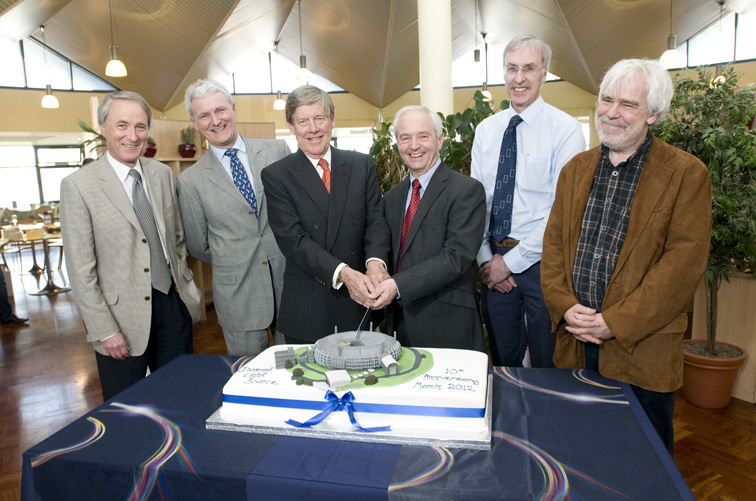
Diamond, the UK’s national synchrotron science facility and one of Oxfordshire’s flagship science institutes, was formed a decade ago, on the 27th March 2002, when the Wellcome Trust and the UK Government signed the Joint Venture Agreement and Diamond Light Source Ltd was born.
-
news

A doughnut-shaped scientific building in the Oxfordshire countryside provided the unusual inspiration for a new international science fiction prize as the names of the winners are revealed this week by its organisers Diamond Light Source, the UK’s national synchrotron facility.
-
highlight
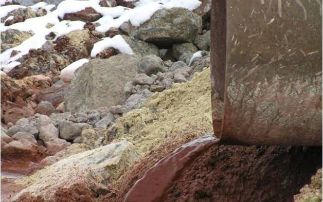
In October 2010, a dam failure at an aluminium producing plant in western Hungary released around one million cubic metres of toxic red sludge into nearby towns and villages and across agricultural land. The sludge was a mixture of water and mining waste containing heavy metals and was deemed a threat to the environment by Hungarian officials. A large cleanup operation ensued. A team from the University of Leeds has used Diamond’s Microfocus Spectroscopy beamline, I18, to study samples of ...
-
news
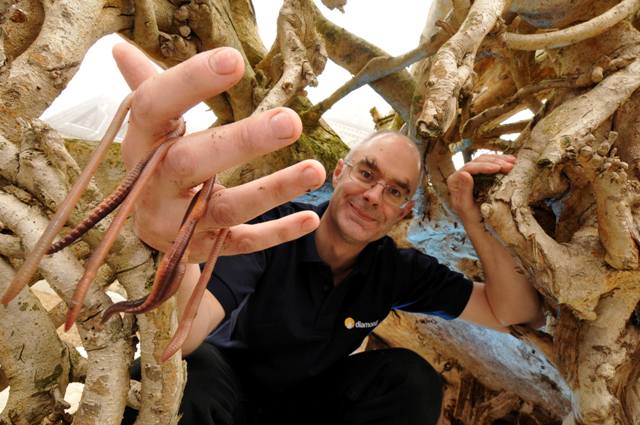
Diamond Light Source, the UK’s national synchrotron science facility and one of Oxfordshire’s flagship science institutes, is celebrating its 10th Anniversary in 2012. A special programme of events are planned to mark this milestone and a number of them took place as part of the 2012 Oxfordshire Science Festival, which ran from the 3rd-18th March.