Expanding X-ray mirror metrology with speckle-based curvature optical metrology
Jul 6, 2026
Jul 6, 2026
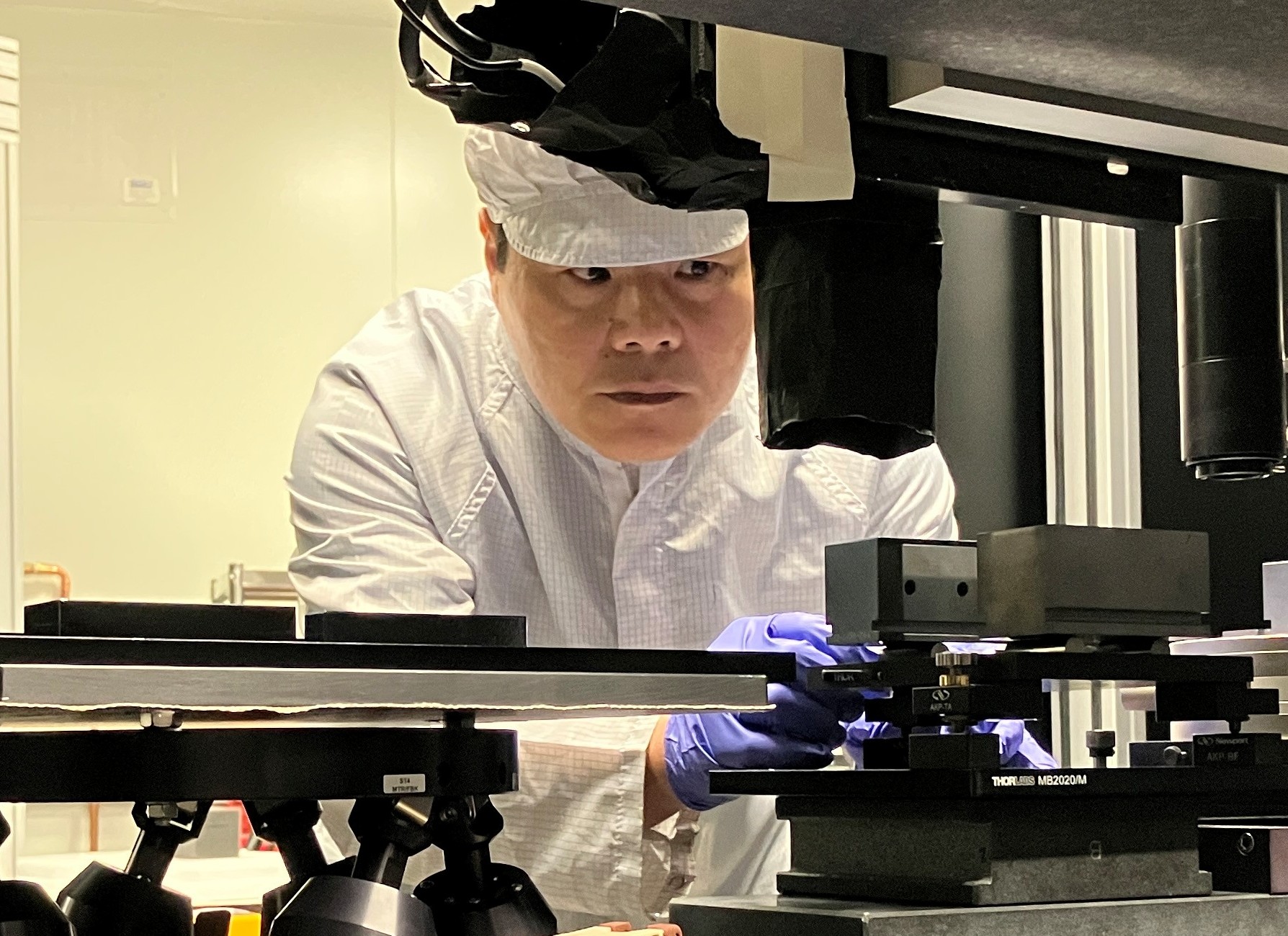
High-performance X-ray mirrors are fundamental to the operation of synchrotrons like Diamond Light Source, where their surface accuracy directly influences beam quality, focus and experimental performance. As beamline optics become increasingly sophisticated, with larger apertures, steeper curvatures and freeform geometries, new metrology approaches are needed to characterise these challenging optical surfaces.
A team of researchers at Diamond's Optics and Metrology group have developed a laser Speckle-based Curvature Optical Metrology (SCOM) instrument that directly measures two-dimensional surface curvature. Instead of measuring the mirror’s height directly, SCOM measures it curvature using laser speckle patterns- tiny random patterns created when laser light is scattered on a surface. By tracking how these patterns move, the instrument can build up a detailed picture of the mirror’s shape.
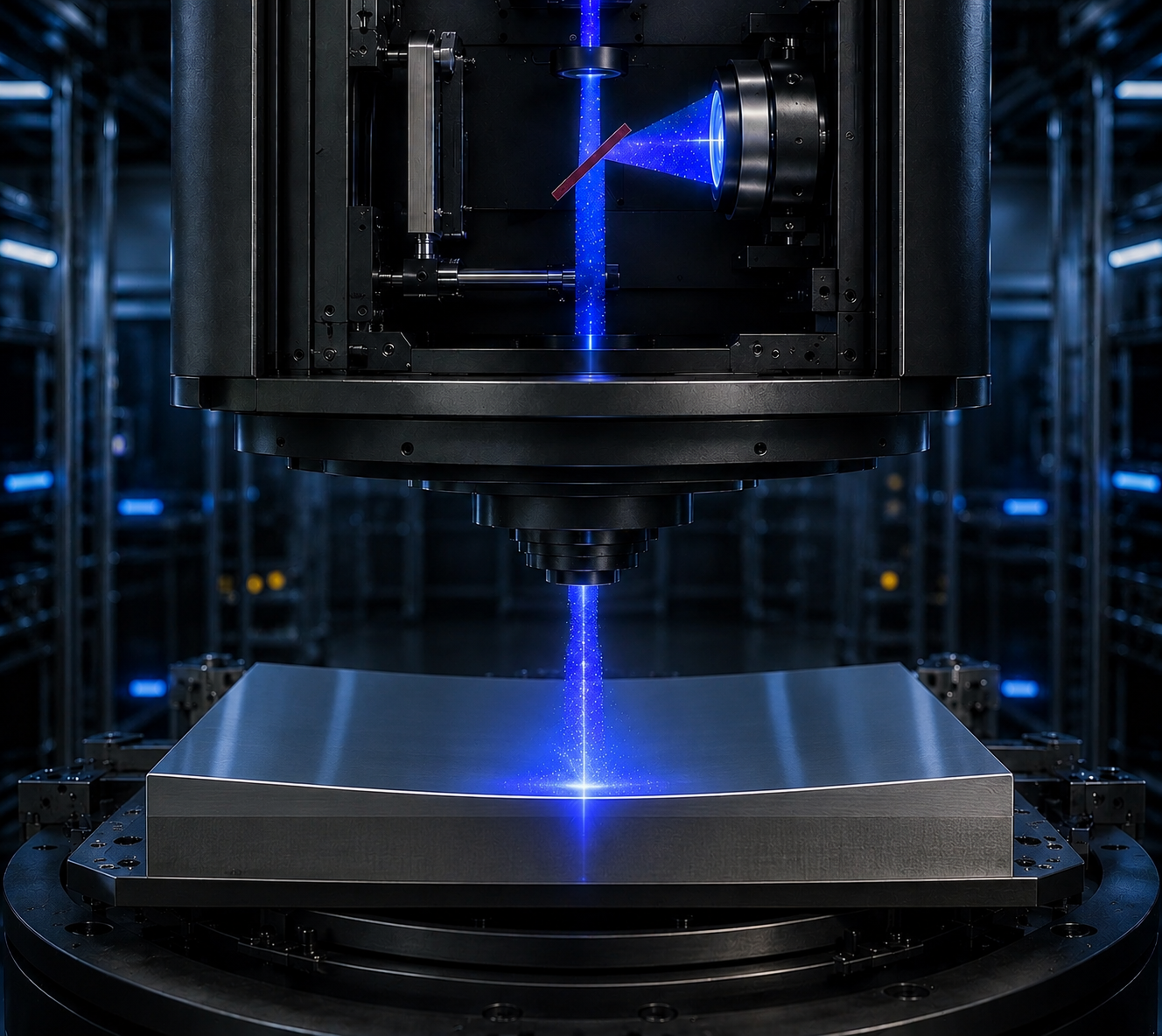
Interferometric techniques remain the gold standard for measuring flat and gently curved optics. However, strongly curved mirrors present significant challenges, as steep slopes can lead to fringe crowding and unstable measurements. SCOM addresses this by using laser speckle patterns as wavefront markers. A digital image correlation algorithm tracks subtle speckle displacements to determine surface curvature with high sensitivity. The instrument has demonstrated reliable measurements for mirrors with radii of curvature ranging from 10 metres down to just 100 millimetres - surfaces that are particularly challenging for conventional interferometers.
Dr Hongchang Wang, Principal Optics Scientist and leading and corresponding author of the study, said: "Strongly curved and freeform mirrors are becoming increasingly important for advanced beamline designs, yet they remain difficult to measure with traditional interferometry. SCOM provides a practical and robust solution that expands our metrology capabilities."
The compact design of SCOM also enables integration directly onto fabrication platforms and metrology gantries, making it well suited to on-machine metrology and real-time process monitoring.
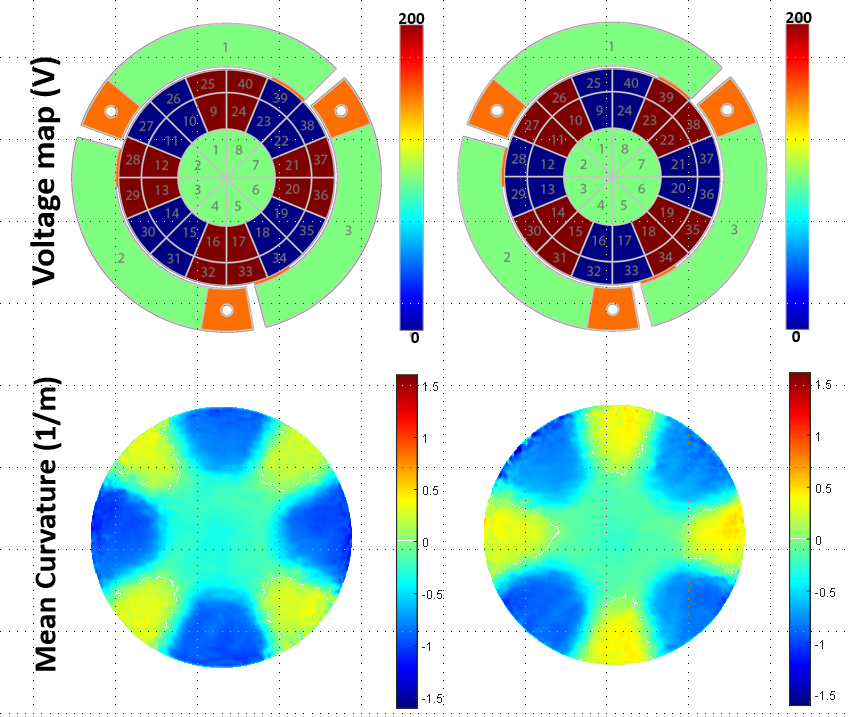
The instrument has already been used for deterministic figuring of X-ray mirrors, monitoring stresses during multilayer coating deposition, characterising deformable mirrors and measuring complex freeform optical components. SCOM produces detailed two-dimensional maps showing how the mirror curves across its entire surface. These maps can then be used to calculate the mirror's slope and height, providing valuable information about features that can affect X-ray beam performance.
Dr Kawal Sawhney, Optics and Metrology Group Leader at Diamond and co-author of the study, said: "Having access to full 2D curvature maps allows us to directly link mirror surface features to beam distortions. This helps us predict and optimise beam quality much more effectively."
While high-precision interferometric systems continue to provide exceptional nanometre-scale height repeatability, they often require careful alignment, extended acquisition times and custom optical components tailored to different mirror geometries. SCOM offers a complementary combination of precision, flexibility and portability, providing an effective solution for characterising complex optical surfaces. By extending Diamond's metrology capability to mirrors that have previously been difficult - or impossible - to measure reliably, SCOM supports the development, fabrication and optimisation of next-generation X-ray optics.
As Diamond prepares for the Diamond-II upgrade, advanced metrology techniques such as SCOM will help ensure the next generation of X-ray mirrors can meet the demanding optical performance required for brighter, more coherent X-ray beams. By enabling accurate measurement of increasingly complex mirror geometries, SCOM will support the design, fabrication and optimisation of the optics that underpin future beamlines.
Hongchang Wang, Riley Shurvinton, Paresh Pradhan and Kawal Sawhey. Speckle-based curvature optical metrology. Light Sci Appl 15, 192 (2026).

Diamond Light Source is the UK's national synchrotron science facility, located at the Harwell Science and Innovation Campus in Oxfordshire.
Diamond Light Source Ltd
Diamond House
Harwell Science & Innovation Campus
Didcot
Oxfordshire
OX11 0DE
Copyright © Diamond Light Source. Diamond Light Source® and the Diamond logo are registered trademarks of Diamond Light Source Ltd
Registered in England and Wales at Diamond House, Harwell Science and Innovation Campus, Didcot, Oxfordshire, OX11 0DE, United Kingdom. Company number: 4375679. VAT number: 287 461 957. Economic Operators Registration and Identification (EORI) number: GB287461957003.