The nanoscience of butterfly wings
Jul 23, 2026
Jul 23, 2026
Butterflies are known for their beautifully coloured and patterned wings. These striking patterns are not merely fantastic appearances to be admired; each wing serves a dual purpose. The top section (seen when the wings are open wide) is usually vibrant and used in attracting mates. The bottom of a wing (seen when they are closed) is often a different colour pattern to be used, either deterring predators or allowing the animal to blend in. In both cases, we can see that butterflies make good use of their brightly coloured wings and so it is important that these variations in colours exist.
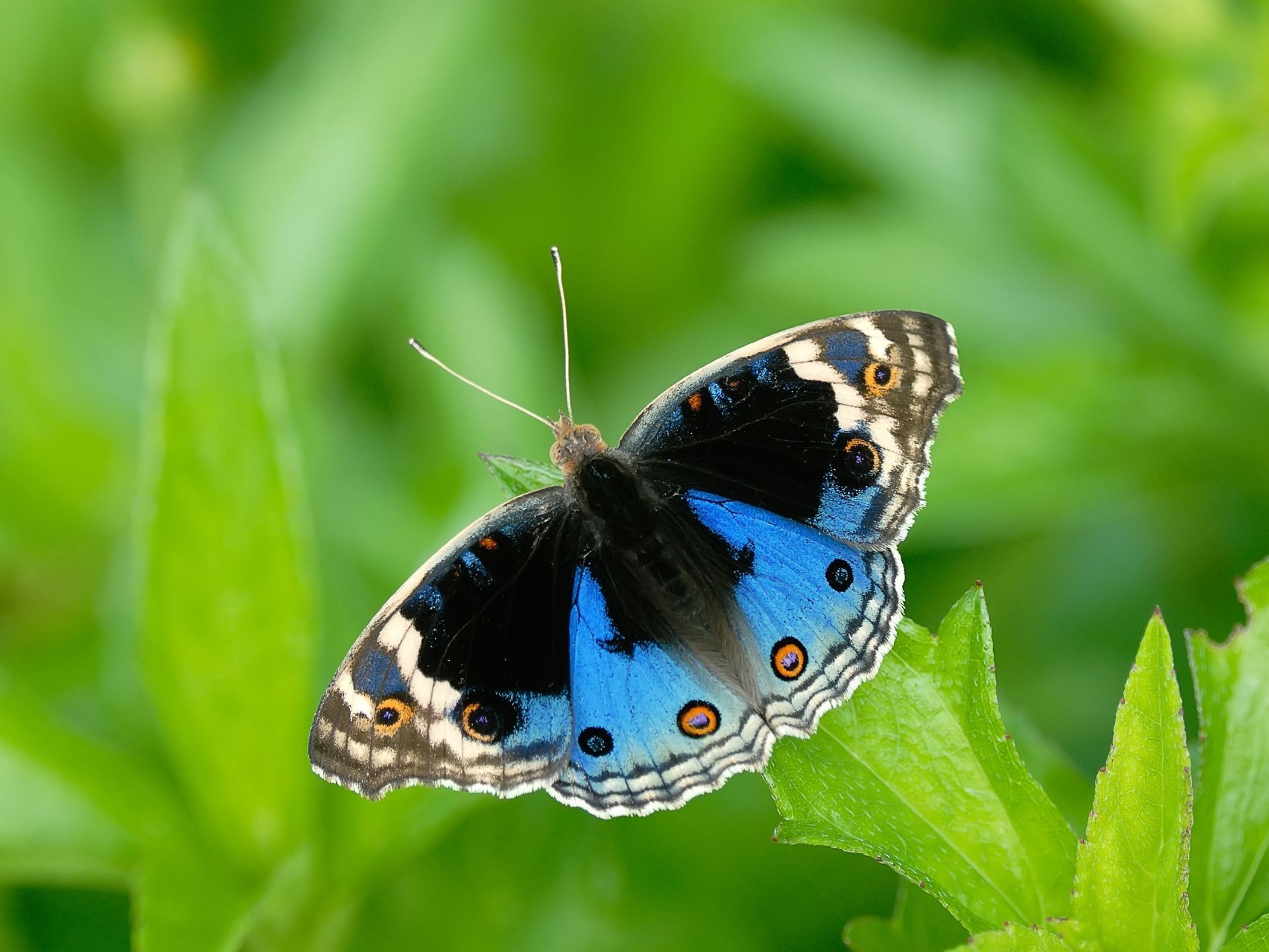
But how do butterflies achieve their famous and varied colours? A recent study in Nature Communications from an international collaboration of researchers (from Imperial, the National University of Singapore, University of Trieste and Diamond Light Source) took a closer look into the nanoscale structures responsible for this natural wonder. They found that the pigments in a butterfly’s wing, not only absorb certain wavelengths of light, but also change the physical structures in the wing to affect how light is reflected to produce the colour we see.
If you zoom in on a butterfly’s wing, you will find thousands of tiny overlapping scales. Each scale can have a different structure and contain a pigment of its own. During wing development, these scales secrete a substance called a cuticle, which is a highly complex, multilayered nanoscale structure. The pigmentation of the scale and the specific structure of the cuticle are known to be linked. However, the interplay between how these pigments and structures interact to reflect and tune a scale’s colour has not been studied in detail.
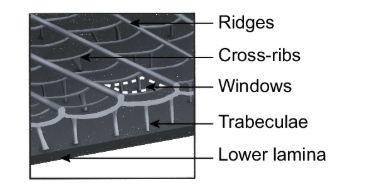
This gap in our understanding is in part due to a lack of modelling techniques able to combine both 3D densities and colour mapping. During the recent study, the international team used a technique called Ptychographic X-ray computed tomography (PXCT) at Diamond’s I13-1 beamline. This technique uses diffraction patterns collected at different overlapping positions at nanometre resolution, which is made possible by the highly coherent and intense X-ray beams at I13-1. Using these, researchers were able to produce a 3D density map alongside the colours produced from scales of two different butterfly species.
Importantly, from studying the cuticle structure it was found that during early development the cuticle splits into two distinct layers. The “lower lamina” becomes a flat, dense structure at the base, while the “upper lamina” becomes a complex structure of rods and ridges on top. Once pigments are introduced into these structures, they easily infiltrate through the gaps in the upper layer, whilst being barely able to interact with the dense base layer, instead simply lying top of it. Because the pigment can infiltrate the upper layer, it is likely able to alter the rod and ridge structure. Therefore, depending on the pigment interaction with this structure, the light reflection could produce a very different colour.
One of the species studied was the Blue Pansy butterfly. Within this species, males display a much brighter blue colour than their female counterparts. Researchers were able to see how these scales produce very different colours through variation in the cuticle structures. The ridges and rods within the male cuticles were spaced further apart than those within female cuticles. This created larger gaps within the structure called “windows”. The larger windows caused light to be reflected differently through the structure, resulting in bright blue scales rather than the brown of a female scale.
It is clear that butterflies are incredibly complex for their tiny size. This work demonstrates how tiny changes in the smallest structures are affecting the overall appearance of this creature. Potentially altering a gorgeous blue butterfly into a murky brown one. This has huge impact on the life of a butterfly from their ability to avoid predators or even attract a mate. Ultimately, we find that it is due to their complexity, that butterflies can display a multitude of different colour variations without being limited by the pigment alone.

Want to learn more about butterflies? The Big Butterfly Count launched this week and runs to Sunday 9 August 2026. The count is a nationwide citizen science survey aimed at helping to assess the health of our environment.
Butterflies are important indicators of biodiversity, responding quickly to environmental change. Monitoring their populations helps scientists track the health of ecosystems and guide conservation efforts.
Balakrishnan, D., Prakash, A., Daurer, B.J. et al. Nanoscale cuticle mass density variations influenced by pigmentation in butterfly wing scales. Nat Commun 16, 7085 (2025).

Diamond Light Source is the UK's national synchrotron science facility, located at the Harwell Science and Innovation Campus in Oxfordshire.
Diamond Light Source Ltd
Diamond House
Harwell Science & Innovation Campus
Didcot
Oxfordshire
OX11 0DE
Copyright © Diamond Light Source. Diamond Light Source® and the Diamond logo are registered trademarks of Diamond Light Source Ltd
Registered in England and Wales at Diamond House, Harwell Science and Innovation Campus, Didcot, Oxfordshire, OX11 0DE, United Kingdom. Company number: 4375679. VAT number: 287 461 957. Economic Operators Registration and Identification (EORI) number: GB287461957003.