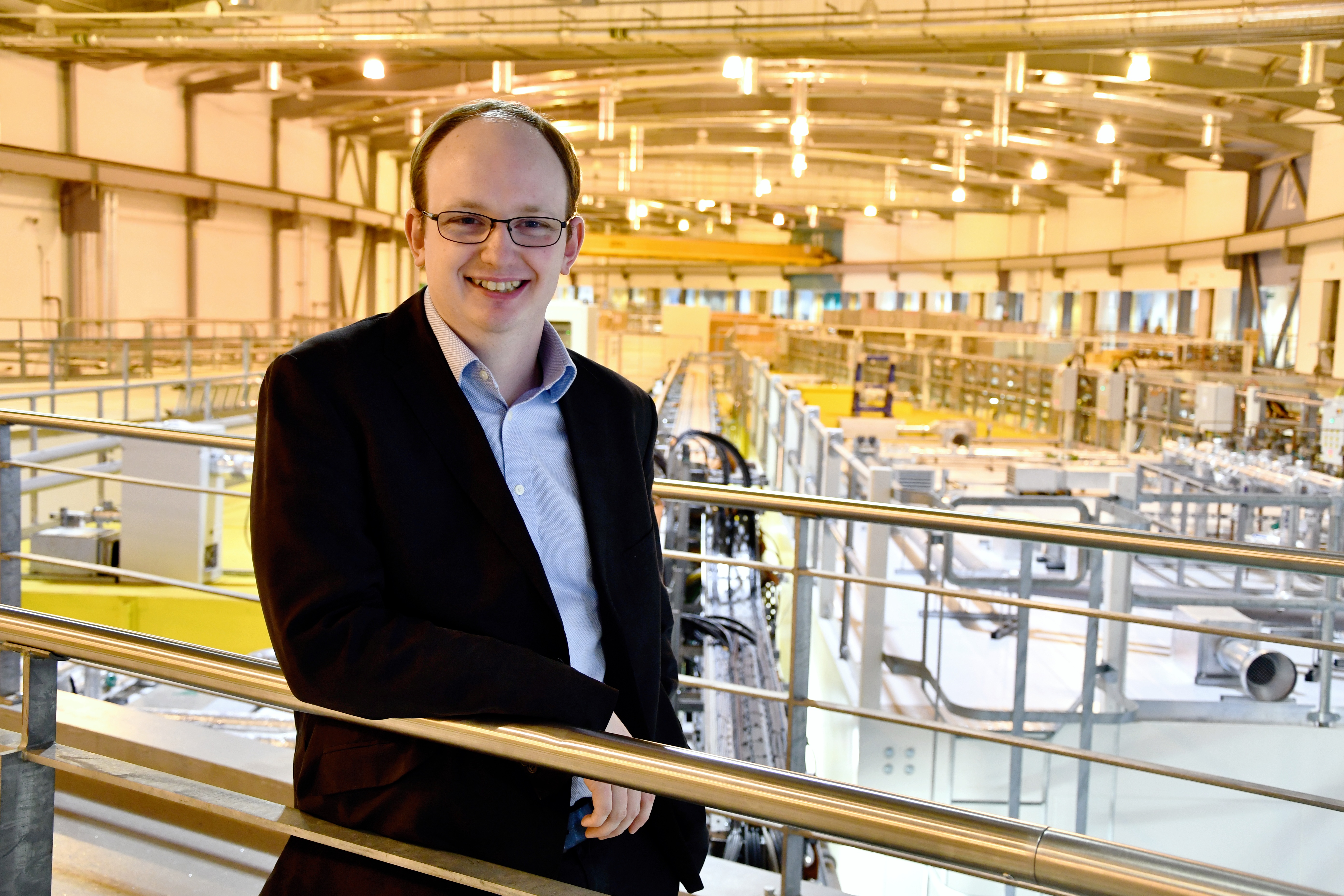
- Chris Charlesworth, Electrical Project Engineer
1. What’s your professional background and how did you first become interested in this field?
Some people say that engineering is about solving problems, I see it a little differently. To me an engineer is a solution creator, for that it is what we really do. We use our imagination and our knowledge to create a solution to a problem. Some may say that imagination is for art and music not for science and engineering, but think of this, one of the most famous artists in history is not only known for his art but his science and engineering prowess too, Leonardo Da Vinci.
Specifically with regards electrical engineering, it is a crucial part of the modern world. Quite simply, electricity is needed to make things work. This is from the smallest plug in the wall to supplying 11,000 V for a building. Wires are necessary and wiring is essential. Electrical engineering can be seen as the bridge between control systems and a physical machine. Mechanical Engineering is how a product looks, Control Engineering creates the software to operate the product and Electrical Engineering connects and completes the circuit, all three disciplines are required.
I have always wanted to be an engineer. I am one of the very few who knew at an early age what I wanted to be and I have never changed my mind. Knowing what I aspired to become made choosing schools subjects easy – Maths, Physics and Chemistry. I studied Systems and Control Engineering at The University of Sheffield which at the time (but maybe still) was the only university in the UK with a dedicated department to automatic control and systems engineering. Systems engineering is an interdisciplinary subject, it makes you take a project and look at it as a complete and fully integrated package. Being able to project manage effectively and having a good working knowledge of each aspect of engineering are key concepts to systems engineering. The controls side of my course complemented the systems side; it gave me an understanding of how to interface the physical components of a project to the computers which control it and how those computers use things like feedback to intelligently manage a system. In university, I took an interest in electrical engineering and it was a natural progression from Systems Engineering to becoming an Electrical Design Engineer.
After university I worked as a Maintenance Engineer for nearly two years, for two separate companies, following this I joined a small controls company before applying to Diamond.
2. Can you walk us through a typical day?
I arrive into work and make a pot of loose leaf tea, greet my colleagues, check my emails and ascertain what needs attention. It is there that a typical day stops. There are typical themes but no typical days in terms of Electrical Engineering and this is one of the factors I enjoy. I could spend my time talking to a variety of scientists to determine what work they need or what they envision for their beamlines; creating and checking drawings and then various team meetings. Communication is a key aspect in the world of engineering, a phone call or a face-to-face conversation is far more beneficial than an email.
As there are no typical days in my field, I cannot pick my favourite but I do love Wednesdays because of the Harwell Food Festival. Every Wednesday several of us meet up and have a nice stroll across site to enjoy the festival’s food. It provides a lovely break in the week, a change of scenery and both a walk and talk with great food and colleagues!
3. What do you enjoy about your job?
In a nutshell, I relish the challenges and variety of projects. Engineers spend their lives navigating through challenges, we are inherent problem solvers. We use our imagination constantly; you could say we are ‘imagineering’. Disney hires ‘imagineers’, they of course concoct characters and cartoons while we invent the most technologically advanced inventions in the world, but both involve creation and imagination.
I also enjoy dealing with technically minded people. Every day I am fortunate because I work with the best engineers and scientists in the country. Here at Diamond, we are on the cutting edge of technology. There is nothing in the market like Diamond.
4. What advice would you give to someone wanting to get involved in your field?
At the risk of sounding corny, my advice is to follow your heart. Think about what you enjoy and turn it into your future career. If you enjoy problem solving and are frequently imagining new ways of doing things – engineering is for you. Engineers use their imaginations constantly. If you want to be an Engineer start with that, your imagination, knowledge can be learned and discovered but imagination and creativity come from you.
I feel that it is not a career that you can just end up in, every Engineer at some point realised in their heart that it was the career for them. There are so many ways to become an Engineer whether it be by a degree, an apprenticeship or by other training; but the result is similar… you’re an Engineer; every day you’ll create solutions to both the problems of today and tomorrow.

Diamond Light Source is the UK's national synchrotron science facility, located at the Harwell Science and Innovation Campus in Oxfordshire.
Diamond Light Source Ltd
Diamond House
Harwell Science & Innovation Campus
Didcot
Oxfordshire
OX11 0DE
Copyright © Diamond Light Source. Diamond Light Source® and the Diamond logo are registered trademarks of Diamond Light Source Ltd
Registered in England and Wales at Diamond House, Harwell Science and Innovation Campus, Didcot, Oxfordshire, OX11 0DE, United Kingdom. Company number: 4375679. VAT number: 287 461 957. Economic Operators Registration and Identification (EORI) number: GB287461957003.