Ancient Climate from Plankton Shells
Oct 30, 2013
Oct 30, 2013
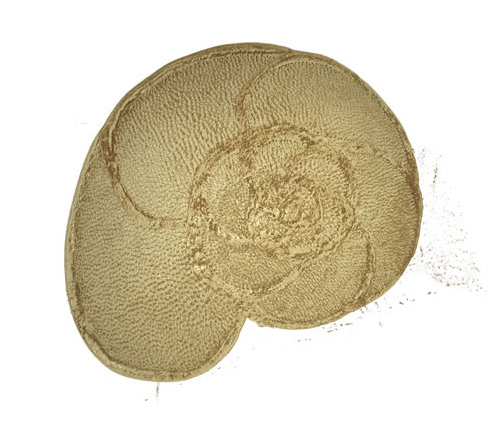 These are CT reconstructions of a foram measured at the Diamond Light Source, Credit: Oscar Branson, University of Cambridge.
Plankton shells show features like tree rings, recording historical climate.
It’s important to understand current climate change in the light of how climate has varied in the geological past. One way to do this, for the last few thousand years, is to analyse ice from the poles. The planet’s temperature and atmosphere are recorded by bubbles of ancient air trapped in polar ice cores. The oldest Antarctic ice core records date back to around 800,000 years ago.
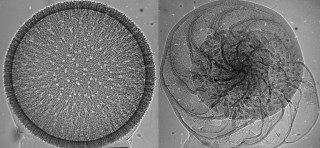 The intricate structure of plankton shells provides new opportunities to chart complex changes in climate. X-ray radiographs of plankton shells measured at Diamond Light Source, UK. Credit: Oscar Branson, University of Cambridge.
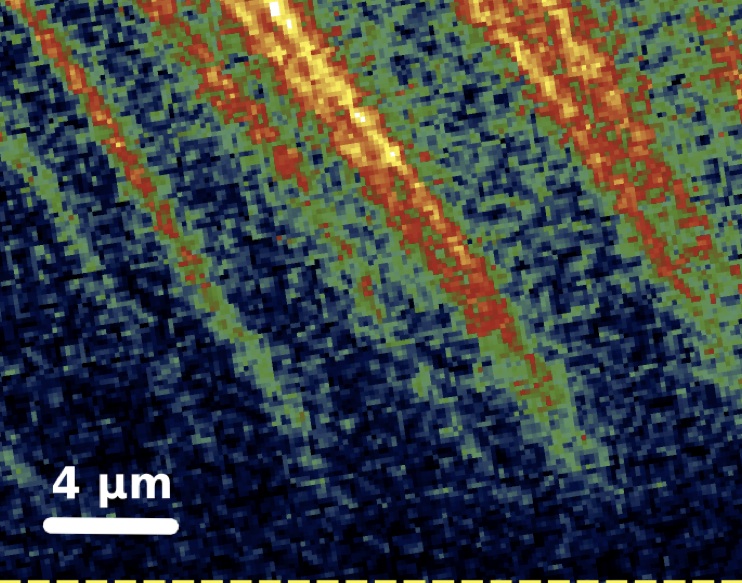 Magnesium bands in plankton shells show growth spurts and record temperatures of ancient oceans, measure at the Advanced Light Source, Berkeley National Lab., California. Credit: Oscar Branson, University of Cambridge.
Results published in the journal Earth and Planetary Sciences Letters

Diamond Light Source is the UK's national synchrotron science facility, located at the Harwell Science and Innovation Campus in Oxfordshire.
Diamond Light Source Ltd
Diamond House
Harwell Science & Innovation Campus
Didcot
Oxfordshire
OX11 0DE
Copyright © Diamond Light Source. Diamond Light Source® and the Diamond logo are registered trademarks of Diamond Light Source Ltd
Registered in England and Wales at Diamond House, Harwell Science and Innovation Campus, Didcot, Oxfordshire, OX11 0DE, United Kingdom. Company number: 4375679. VAT number: 287 461 957. Economic Operators Registration and Identification (EORI) number: GB287461957003.