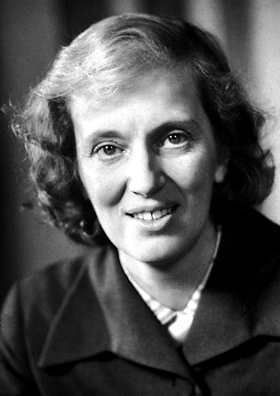
Born on this day in 1910, Dorothy Hodgkin would grow up to revolutionise the science of X-ray crystallography, using the technique to produce groundbreaking work on penicillin, insulin and vitamins.
X-ray crystallography allows scientists to use X-rays to determine the atomic structure of everything from viruses and bacteria to human cells. Knowing more about how biological structures like HIV or cancer are put together makes it easier for us to create ways of treating disease. The technique has proved invaluable throughout the twentieth and twenty-first centuries, helping scientists to develop a vast range of antibiotics, vaccines and medicine.
Dorothy Hodgkin was a pioneer of X-ray crystallography, and she used the technique to determine the structure of many important types of matter. Her work on penicillin aided the ongoing development of antibiotics, whilst her research into insulin was a huge step forwards in understanding and treating diabetes. It was for her work on vitamin B12 that Hodgkin was awarded the Nobel Prize in Chemistry in 1964, becoming the third woman to have received the honour.
Scientists today still use the techniques developed by Hodgkin in their research. But with machines like Diamond Light Source – the UK’s synchrotron science facility – the insulin studies that took Hodgkin 35 years to complete could now be done in a matter of hours. In fact, over 2000 structures have now been solved using the capabilities at Diamond and deposited in the
Worldwide Protein Data Bank. Thousands of researchers use the Diamond synchrotron each year to investigate the properties of everything from viruses to vaccines, from jet engines to nanotechnology.