

-
news
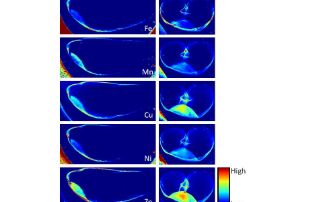
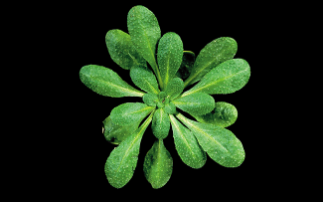
Arabidopsis thaliana, or thale cress as it is commonly known, made history back in 2000 by becoming the first plant to have its entire genetic code read by scientists, contributing to what is often referred to as biology's version of the book of life.
-
news
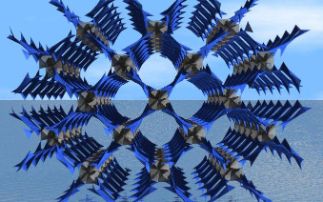
A collaboration of scientists from the University of Nottingham, STFC’s ISIS Neutron and Muon Source, Diamond Light Source, the University of Oxford and Peking University in China, have created a new low-cost material that can capture harmful gases, offering exciting prospects for combating atmospheric pollution.
-
news
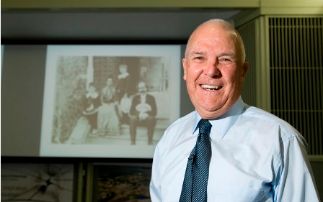
Diamond Light Source, the UK’s national synchrotron science facility, launched its first collection of fiction stories on Friday 7th September with the help of a 6ft leaking, inquisitive alien slug - the star of a witty and strangely credible story entitled The Sound of Science.
-
news
Dr Sihai Yang from the University of Nottingham is the winner of the 2011 Diamond PhD Investigator Award, a new initiative that rewards outstanding synchrotron research by Early Career Scientists.
-
news
Tom Carey, a Diamond/University of Birmingham PhD student who has been working on the synchrotron's Powder Diffraction beamline (I11), has been presented with the British Zeolite Association's Founders' Award for the most promising postgraduate student of the year. Tom received his Founders' cup trophy and cash prize at the British Zeolite Association's 35th Annual Meeting in Chester on the 19th July.
-
news
Diamond Light Source is being used to improve low cost methods for carbon capture. Scientists from the University of Leeds are using the UK’s national synchrotron to investigate the efficiency of calcium oxide (CaO) based materials as carbon dioxide (CO2) sorbents. Their results, published in the journal of Energy & Environmental Science, provide an explanation for one of the key mechanisms involved. This new knowledge will inform efforts to improve the efficiency of this economically viable ...
-
news
It was with great excitement and anticipation that almost 2,000 visitors arrived at Diamond Light Source, the UK’s national synchrotron science facility, to take part in a special series of Inside Diamond open days, held to mark the facility’s 10th Anniversary.
-
news
The first researchers to use the new Oxford Instruments high-field superconducting magnet at Diamond Light Source, the UK’s national synchrotron facility, are searching for “hidden magnetic states”. If found, they will provide important confirmation of a theoretical model which could have important applications in magnetic data storage. Diamond’s BLADE beamline is providing them with the tools for the search.
-
news
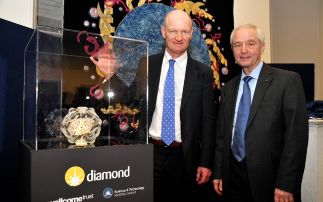
Stitching, sculpture and slug-like aliens all formed part of a special 10th Anniversary event that was on Friday 11th May at Diamond Light Source, the UK’s national synchrotron science facility, on the Harwell Science & Innovation Campus in Oxfordshire.
-
news
For our tenth anniversary celebrations we will be holding open days for the public on the 16th, 17th and 19th June 2012.
Inside Diamond is a series of public events, welcoming visitors to Diamond to meet our scientists, find out about the exciting work taking place here, and have a tour of the synchrotron itself.