-
news
As part of this weekend's activities at the Grand Palais, Sir Peter Westmacott launched at the British Embassy a brand new science and art project, called the World's largest diffraction pattern, by contributing a silver stitch to what will become the world's largest diffraction pattern.
-
news
Diamond Light Source will be joining several other European Light Sources at the Grand Palais as part of Paris European City of Science Festival from 13 - 16 November 2008.
-
news
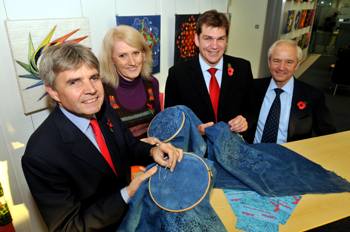
During a visit to Diamond Light Source on Friday 7th November, Lord Drayson, the new Science Minister, contributed the World’s largest diffraction pattern project by sewing the first silver stitch to what will become the world’s largest diffraction pattern.
-
news
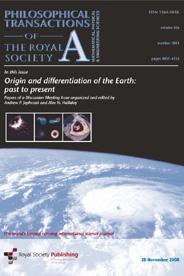
What are the origins of our planet, and the solar system that surrounds it? Without a direct geological record of the early history of the Earth, understanding how Earth and Moon were formed requires investigations in several distinct fields: Planetary dynamics, cosmo-chemistry and mass spectrometry, and material behaviour at the extreme conditions of planetary impacts and formation.
-
news
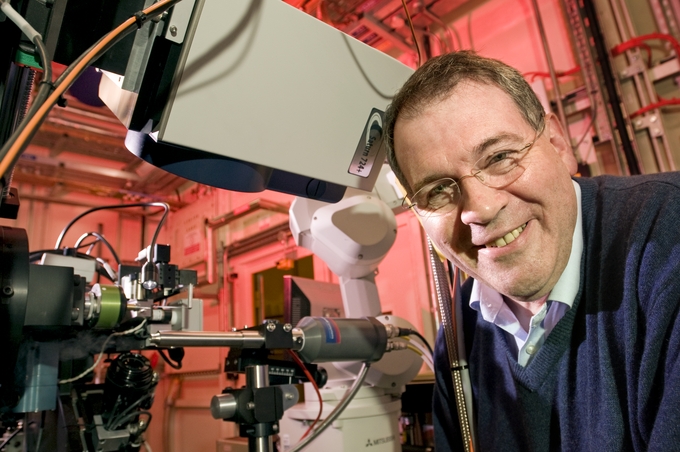
On Thursday 18th September, scientists from the University of Bath's Department of Chemistry became the first group of researchers to use Diamond Light Source's new Small Molecule Single Crystal Diffraction beamline (I19). Led by Professor Paul Raithby, who is also the chair of the group who helped to design and create I19, the team used Diamond's latest beamline to study the structures of metal organic frameworks (MOFs).
-
news
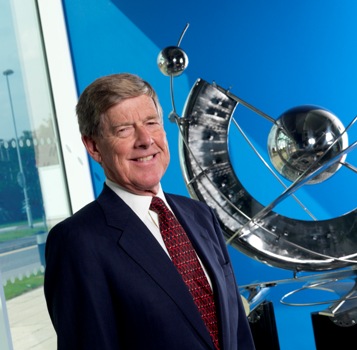
Diamond Light Source, the UK’s national synchrotron science facility, has appointed Professor Lord Broers as its new chairman. Lord Broers, who takes over from Sir David Cooksey, has had a distinguished career in electrical engineering, including almost 20 years in research with IBM, and is the immediate past President of the Royal Academy of Engineering.
-
news
Earthworm populations are helping scientists to understand more about soil that is contaminated with metal, how metals can drive evolution and what effect they themselves have on potentially toxic elements in the earth
-
news
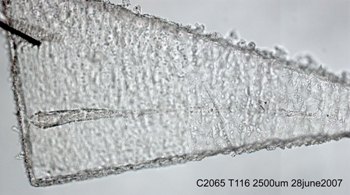
A new picture of the composition of comets is emerging with the help of 21st century technology available at Diamond, the UK’s national synchrotron light source, in Oxfordshire.
-
news
6 - 11 September 2008
As part of this week’s BA (British Association for the Advancement of Science) Festival of Science in Liverpool, Diamond Light Source will be showcasing its science in imaginative ways in a series of events across Liverpool.
-
news
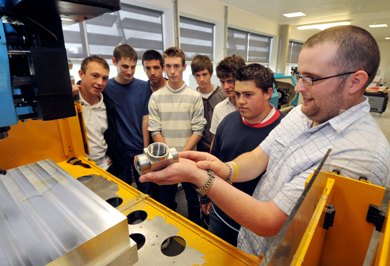
Six young prospective engineers are embarking on a renowned apprenticeship scheme which will see them training at two of Oxfordshire's most prestigious science facilities: Diamond Light Source, the UK's national synchrotron facility, and the Rutherford Appleton Laboratory (RAL).
-
news
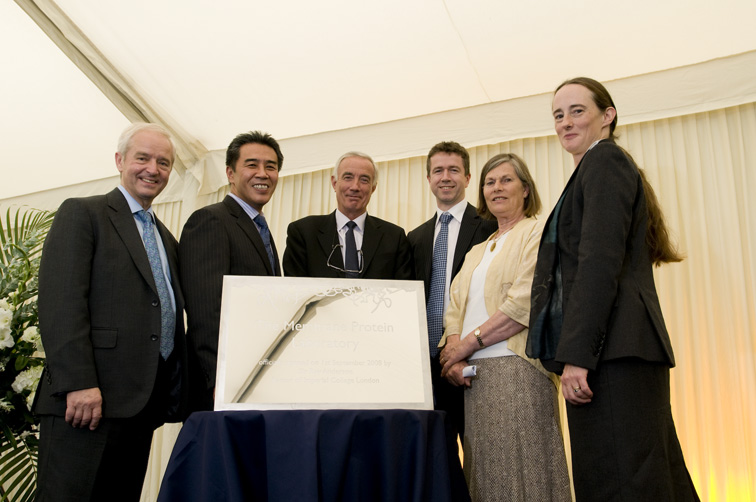
Today, Monday 1st September 2008, the official opening of the Membrane Protein Laboratory (MPL) takes place at Diamond Light Source in Oxfordshire, UK.
-
news
The eleventh experimental station to come online at the UK’s synchrotron facility has received its first users, a research group from the MRC-National Institute for Medical Research (NIMR), based in London, focusing on the structure and function of protein complexes that are involved in medically important disease processes.
-
news
Diamond scientists are planning new types of experiment that will enable them to study magnetic structures on the nanometer scale.
-
news
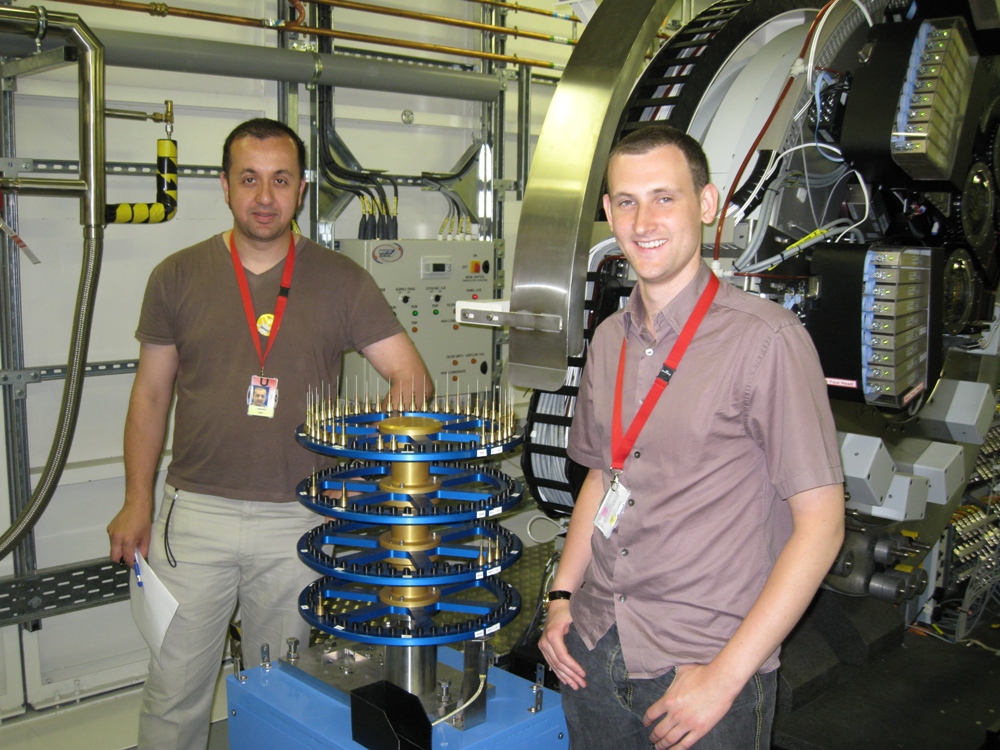
One month ahead of schedule, Principal Beamline Scientist Chiu Tang and his team on the powder diffraction beamline welcomed their first users, a research group from the chemistry department of University College London (UCL) interested in analysing heat-treated nano-ceramics for better automotive catalyst support materials.
-
news
Research into the understanding of how X-rays interact with matter could lead to the production of more powerful exotic magnets, such as those that will make electric vehicles more efficient and cost effective or those required to develop a new generation of CT scanners
-
news
The new Diamond Light Source synchrotron was the star of the show at the prestigious Royal Academy of Engineering Soirée in Didcot last night (26 June). More than 150 distinguished guests including His Royal Highness the Duke of Kent, the Academy’s Royal Fellow, attended the dinner at the Rutherford Appleton Laboratory.
-
news
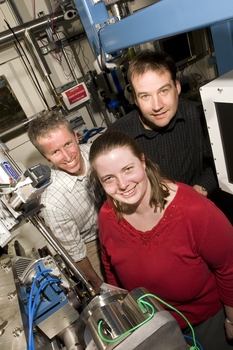
Diamond has announced that USA-based global biotechnology company Vertex Pharmaceuticals Incorporated is the first industrial user at the UK's world class new research facility, Diamond Light Source.
-
news
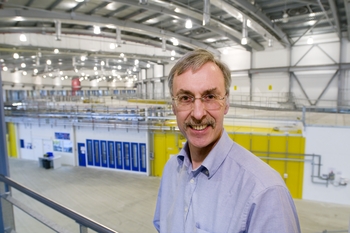
Diamond Light Source the UK's new synchrotron, this month announces the appointments of Professor David Stuart and Professor Trevor Rayment as Directors of Life Sciences and Physical Sciences respectively.
-
news
What does the future look like for UK Light Sources? Diamond may only just have gone into operation, but experts are already looking at the next generation of light sources. Following an independent review, a consultation project is now underway to develop a clear strategic vision for light sources that defines the needs of the scientific community in the decades to come.
-
news
In alignment with the themes set by the national body Science Learning Centres, and in response to the Public Attitudes to Science 2008 government report (PAS report) published on 11th March, Diamond plans to engage with the public by building a programme around three areas.