

-
news
Scientists from the University of St Andrews in Scotland, and their international collaborators from Emory University, USA, and Sun Yat-sen University, China, have discovered how the Lassa virus, which causes Lassa fever, remains invisible to the human defence system and causes thousands of deaths each year.
-
highlight
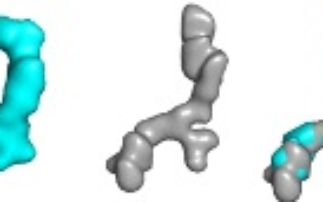
Virus infections in a number of insect families generally culminate in the occlusion of between one and several thousand virus particles within large proteinaceous crystalline occlusion bodies or polyhedra. Polyhedra are generally less than 7 μm in size, serve to protect the viruses from harsh environmental conditions and are made from a protein, polyhedrin, encoded by the viruses. Despite their small size, we solved the structure of polyhedra produced by the dsDNA baculovirus, Autographa ...
-
news
Scientists from Imperial College London have used data collected at Diamond Light Source to advance the understanding of how HIV and other retroviruses infect human or animal cells. The research, which is funded by the Medical Research Council, was published in Nature this week.
-
highlight
The structure determination of biomolecules, in particular of DNA and of proteins, is of utmost importance to understand their function in chemistry and biology. In recent years, DNA has become attractive as template for the creation of new materials in nano-biotechnology. The availability of synthetic DNA from automated synthesis has allowed using the sequence specific recognition of the complementary strand, together with a clever design of the DNA sequence, to form two and three ...
-
highlight
In muscle, assembly of ordered striated myofibrils requires the integration of hundreds of protein subunits in a sequential, regulated way by specific protein-protein interactions. The contractile filaments, composed of actin and myosin subunits, are crosslinked at the Z-disk and M-band, respectively, to give rise to a lateral assembly of molecular machines with nanometre precision. In the sarcomeric M-band, the giant ruler proteins titin and obscurin, its small homologue obscurin-like-1 ...
-
highlight
Transposons are pieces of DNA that can jump from one place to another in the genome of a cell and they make up a surprisingly large proportion of many genomes. In creating genetic diversity they have had a strong influence on the evolution of genomes. If they transpose they can directly affect gene expression, by inserting into genes or gene regulatory elements. However, their activity is more often suppressed by silencing mechanisms such as DNA methylation or RNAi. The mutational activity ...
-
highlight
X-ray reflectivity (XRR) is a non-destructive technique widely used for thin layered materials characterization. The brilliance achieved by third generation synchrotron sources, such as Diamond, has opened new opportunities for the study of materials at the micro and nanoscales and has driven the development of new X-ray micro-focussing optical devices, such as kinoform lenses. We have demonstrated the first practical application of kinoform lenses for the X-ray reflectivity characterization ...
-
highlight
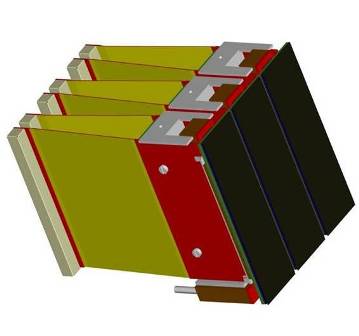
Monocrystalline diamond films with several metal contacts were characterized as radiation detectors in terms of responsivity as a function of X-ray energy, uniformity of response as a function of the position, speed of response, and stability with the time. The responsivity as a function of X-ray energy was found consistent with the physics of the metal to diamond interface and with the characteristic of the crystal in terms of lifetime of charge carriers The uniformity of response as a ...
-
highlight
Nicotinamidase catalyzes hydrolysis of nicotinamide to nicotinic acid and ammonia, in the NAD(+) salvage pathway. This enzyme activity has a fortuitous medical benefit since in Mycobacterium tuberculosis it converts the prodrug pyrazinamide nto the bacteriostatic pyrazinoic acid. Pyrazinoic acid is active against semidormant tubercle bacilli and together with rifampicin and isoniazid, forms the front line tuberculosis treatment. Studies of the enzyme have revealed aspects of structure ...
-
news
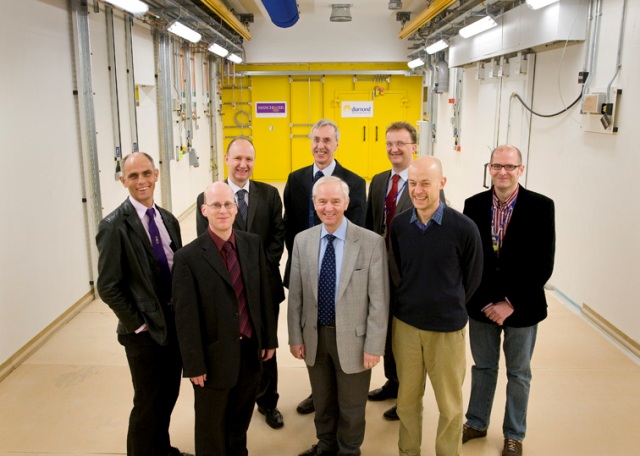
Chancellor George Osborne has confirmed that Diamond Light Source will receive funding for Phase III expansion in the Government’s spending review, part of a strategy to support world-class science and invest in infrastructure projects that contribute to economic growth.