New secrets revealed from the Herculaneum scrolls
Jun 25, 2026
Jun 25, 2026
The Vesuvius Challenge has achieved a historic breakthrough in the recovery of the Herculaneum scrolls - revealing new texts, titles and authors unknown to history and ushering in a new era for the study of the ancient world. The discoveries were made possible through high-resolution micro-CT scanning conducted at the ESRF and Diamond Light Source.
At the Biblioteca Nazionale di Napoli Vittorio Emanuele III, with Mount Vesuvius rising in the distance, lead researchers, collaborators and distinguished guests gathered to mark the milestone decades in the making. It also marks a pivotal moment for a project the University of Kentucky has led for years - steadily advancing toward a goal many once thought impossible.
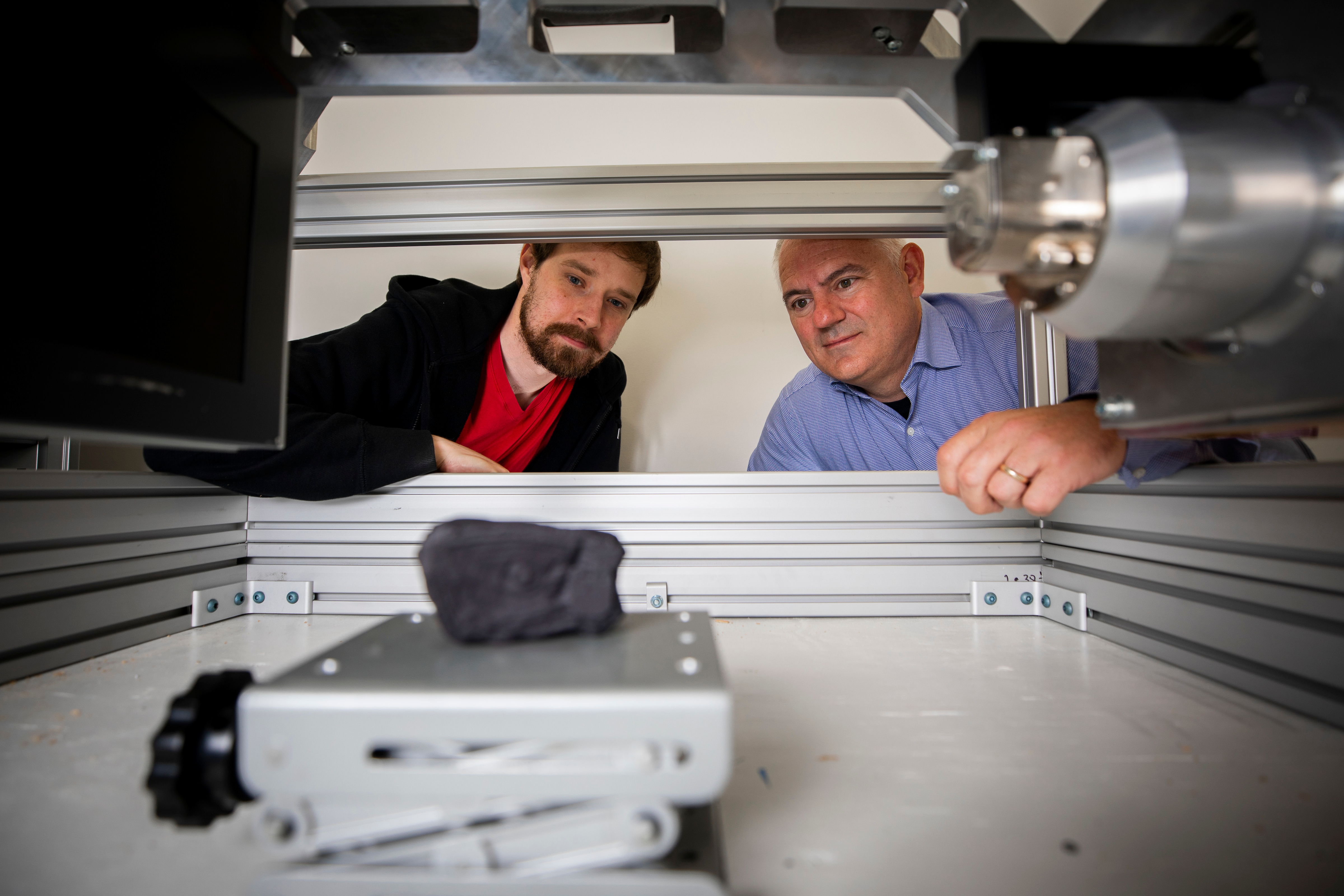
“For nearly two millennia, many of these texts have been physically preserved but intellectually inaccessible,” Brent Seales, Vesuvius Challenge co-founder and the Stanley and Karen Pigman Chair of Heritage Science at the University of Kentucky, said. “Today - after years of interdisciplinary work combining advanced imaging, artificial intelligence (AI), academic research and an innovation contest - we are finally able to read them.”
Among the recent discoveries is the full virtual unwrapping of the surviving portion of PHerc. 1667, revealing nearly 1.5 meters of text across 20 columns and the recovery of more than 70 columns of text from PHerc. 172, housed at Oxford's Bodleian Library.
The breakthrough was made possible through high-resolution micro-CT scanning conducted at major international facilities, including Diamond Light Source in the United Kingdom and the European Synchrotron Radiation Facility (ESRF) in France.
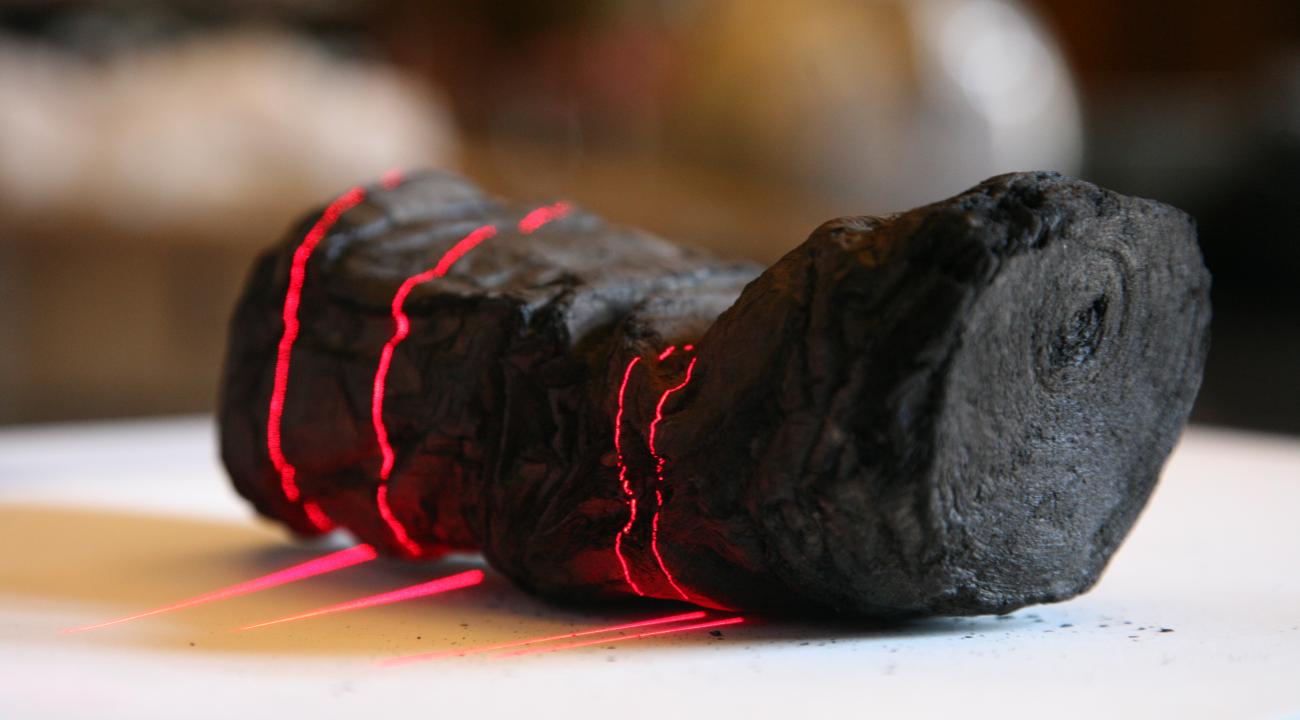
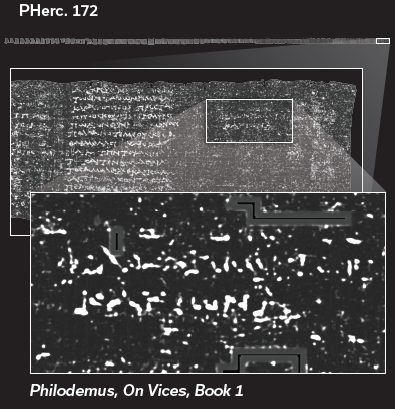
Pherc. 172 was scanned at Diamond using intense synchrotron-generated X-rays to perform imaging at a level of resolution not achievable with conventional laboratory-based instruments.
Researchers deciphered the end-title of the text right in the middle of the papyrus. It confirmed the scroll is a copy of On Vices by the Greek Epicurean philosopher Philodemus. The On Vices text explores negative character traits like greed, arrogance, and flattery.
“Using our I12 beamline, a high-energy beamline designed specifically for imaging, we were able to provide the first scan ever of a scroll housed in the Bodleian Libraries’ collection, producing exceptionally detailed images of its internal structure,” said Diamond’s Elizabeth Shotton.
PHerc. 172 demonstrated that virtual unwrapping could move beyond recovering isolated words and begin identifying complete works and authors.
One of the most significant recent breakthroughs has come from PHerc. 1667, a Herculaneum scroll housed in Naples. Using virtual unwrapping techniques, researchers have recovered nearly 1.5 metres of continuous text across around 20 columns from a scroll that was previously considered unreadable after unsuccessful attempts to physically open it in the 1980s.
Analysis suggests the scroll dates to the second century BC or possibly the late third century BC, making it one of the oldest in the Herculaneum collection. While the author remains unknown, the text appears to be a philosophical treatise focused on ethics and human behaviour. Researchers believe it may represent a Stoic work, potentially linked to the philosopher Chrysippus, whose writings survive only in fragments.
Recovered passages discuss key Stoic ideas including impulse, practical wisdom and the role of reason in guiding human actions. The discovery not only demonstrates the power of virtual unwrapping technology but also offers a rare opportunity to recover lost philosophical works from the ancient world.
A second breakthrough announced is the identification of a new book title within PHerc. 139. In the final portion of the virtually unwrapped surface, papyrologists were able to read: Philodemus, On Gods, Book 8.
The presence of Philodemus’ name - the most Epicurean philosopher in the Herculaneum library - allows scholars to date the scroll to between the first century BC and the first century AD. The discovery is significant. For the first time, it establishes that On Gods book was a multi-book work extending to at least eight books. Until now, only the first book was known (PHerc. 26).
Scholars are now reassessing related texts within the Herculaneum collection that address similar theological themes. Some - even if preserved under different titles - may belong to the same series.
For centuries, the study of ancient papyri has been constrained by fragmentary evidence and the physical limitations of fragile artifacts. Researchers say today’s breakthrough marks a turning point, not in technology, but in purpose.
As new texts are emerging faster than ever from the carbonized papyri, the focus is shifting from the engineers and computer scientists designing high-tech tools to the experienced papyrologists, classicists and historians who can interpret, contextualise and ultimately bring these ancient works back into human knowledge.
“Today, we are hearing voices that have been silent for 2,000 years,” Seales said. “For the first time, we are uncovering and reading them, but most importantly, we are beginning to understand them.”

Diamond Light Source is the UK's national synchrotron science facility, located at the Harwell Science and Innovation Campus in Oxfordshire.
Diamond Light Source Ltd
Diamond House
Harwell Science & Innovation Campus
Didcot
Oxfordshire
OX11 0DE
Copyright © Diamond Light Source. Diamond Light Source® and the Diamond logo are registered trademarks of Diamond Light Source Ltd
Registered in England and Wales at Diamond House, Harwell Science and Innovation Campus, Didcot, Oxfordshire, OX11 0DE, United Kingdom. Company number: 4375679. VAT number: 287 461 957. Economic Operators Registration and Identification (EORI) number: GB287461957003.