Magma superheating could improve eruption forecasts
Jun 9, 2026
Jun 9, 2026
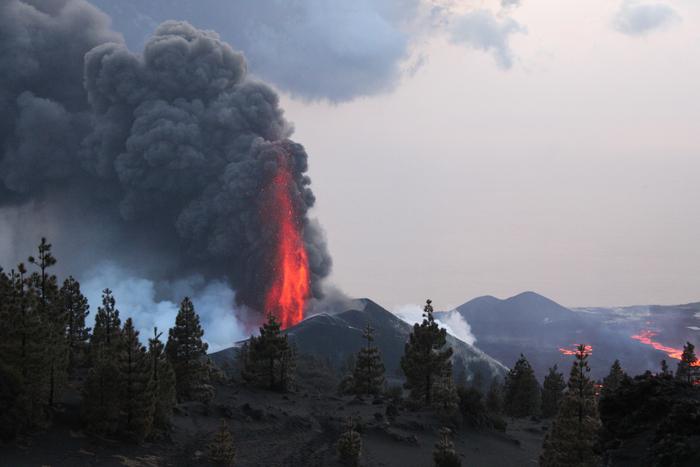
An international team, led by The University of Manchester, studied magma from the 2021 Tajogaite eruption on La Palma, Spain, and found that “superheating” - a state in which magma is heated above the temperature at which crystals are stable - can strongly delay the formation of crystals as magma rises towards the Earth's surface.
In situ observations were carried out at the I12-JEEP beamline at Diamond Light Source, using a dedicated X-ray-transparent Internally Heated Pressure Vessel apparatus coupled with fast synchrotron X-ray microtomography.
Published in Nature Communications, the study shows that high temperatures can dissolve tiny pre-existing crystal "seeds" that normally help new crystals begin to form. Superheating also changes the internal structure of the magma, making it more uniform, and less able to support the formation of new crystals.
This influences how quickly magma rises and how easily volcanic gases can escape, both of which play an important role in determining how explosive the eruption will be. The findings help address a long-standing scientific debate about how a magma’s thermal history influences crystallisation processes before and during eruptions.
Hosting an experiment requiring equipment providing conditions that are found inside volcanos has been a challenge. In addition to the synchrotron X-ray source and the detectors directly forming images of the process, Beamline I12 was designed with end-station space and facilities to accommodate large equipment that is required even with a very small target sample inside the equipment that provides the required temperature and pressure.
Robert Atwood, I12-JEEP Senior Beamline Scientist
Lead author, Dr Barbara Bonechi, Research Associate at The University of Manchester, said: “The history of crystal and bubble growth can dramatically control how a magma erupts, in particular as more crystals grow, they eventually have a dramatic effect on magma viscosity. Until now, we did not fully understand the dynamics of crystal growth for magmas that received an injection of superheat just before ascent. But using our exciting and newly developed X-ray transparent pressure vessel combined with synchrotron X-ray microtomography we can actually observe these processes ‘in situ’.”
The researchers recreated volcanic conditions in the laboratory using magma from the Tajogaite eruption, which may have experienced some degree of superheating prior to eruption and during ascent.
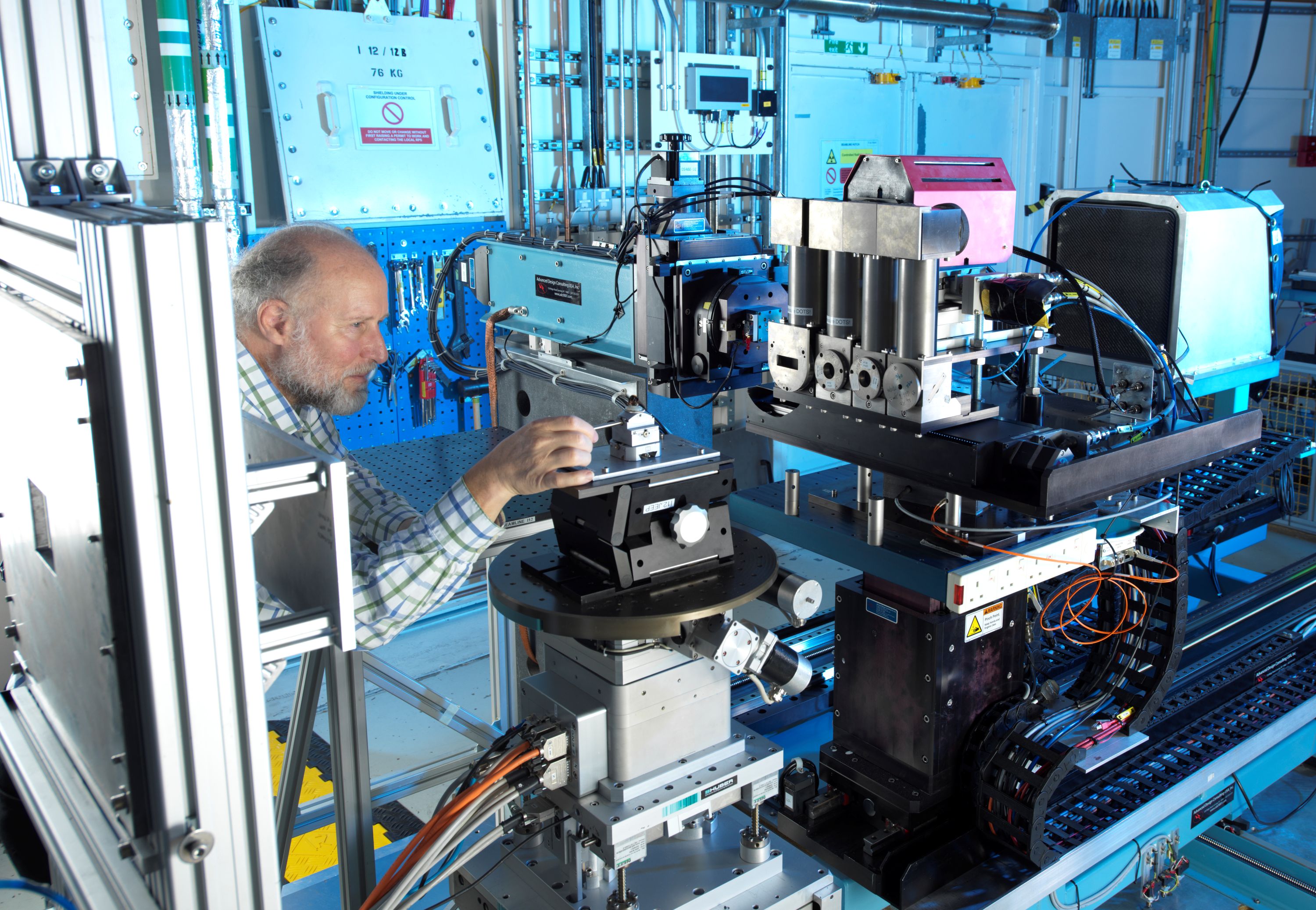
Using synchrotron X-ray microtomography at Diamond Light Source's I12-JEEP beamline, where crystallisation could be observed in real time, alongside complementary ex-situ experiments in Prague that allowed longer observation times, the team were able to track crystallisation processes under controlled conditions of high temperature and pressure.
They found that magma that had not been superheated began crystallising within around 20 minutes. In contrast, magma exposed to strong superheating, delayed crystal formation for more than eight hours.
The researchers then incorporated the experimentally measured nucleation delays into numerical models of magma ascent, simulations that predict how magma moves and evolves as it rises through the Earth’s crust.
The models showed that long crystallisation delays can allow magma to rise rapidly while remaining relatively fluid, potentially promoting dramatic lava fountaining behaviour. In contrast, magma that crystallises earlier becomes more viscous and ascends more slowly, allowing more time for gases to escape and favouring more gentle effusive behaviour. The researchers say the findings could improve how scientists interpret volcanic monitoring signals and forecast eruption behaviour.
Co-author, Dr Margherita Polacci, Senior Lecturer in Volcanology at The University of Manchester, said: “Current volcanic hazard models typically focus on magma chemistry, gas content and pressure changes. This work suggests that pre-eruptive thermal history and crystallisation kinetics may also play an important role in controlling magma ascent and eruptive behaviour, with implications for volcanic hazard assessment.”
Bonechi, B., Arzilli, F., Polacci, M. et al. Superheating in mafic magmas controls clinopyroxene nucleation delay and magma ascent dynamics. Nat Commun 17, 4962 (2026). DOI: 10.1038/s41467-026-73352-1

Diamond Light Source is the UK's national synchrotron science facility, located at the Harwell Science and Innovation Campus in Oxfordshire.
Diamond Light Source Ltd
Diamond House
Harwell Science & Innovation Campus
Didcot
Oxfordshire
OX11 0DE
Copyright © Diamond Light Source. Diamond Light Source® and the Diamond logo are registered trademarks of Diamond Light Source Ltd
Registered in England and Wales at Diamond House, Harwell Science and Innovation Campus, Didcot, Oxfordshire, OX11 0DE, United Kingdom. Company number: 4375679. VAT number: 287 461 957. Economic Operators Registration and Identification (EORI) number: GB287461957003.