Investigating Type 1 diabetes
Jan 18, 2012
Jan 18, 2012
“Type 1 diabetes is a result of the body’s own immune system attacking and destroying the cells in the pancreas that manufacture the hormone insulin. Insulin controls blood sugar levels and a lack of insulin is fatal if untreated. The mechanism by which the body attacks its own insulin producing cells in the pancreas is not fully understood. Our findings show how killer T-cells might play an important role in autoimmune diseases like diabetes and we’ve secured the first ever glimpse of the mechanism by which killer T-cells can attack our own body cells to cause disease.”Professor Andy Sewell, School of Medicine, Cardiff University
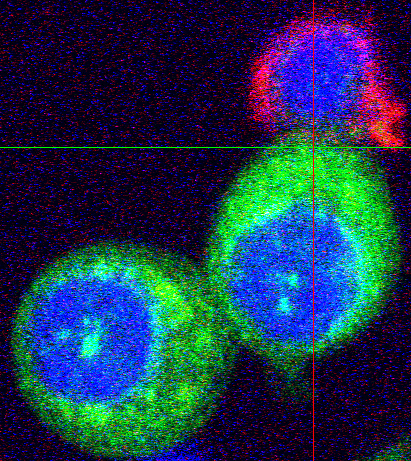 Co-author of the study, Professor Mark Peakman from the National Institute for Health Research (NIHR) Biomedical Research Centre at King’s College London and Guy’s and St Thomas’ NHS Foundation Trust said: “This first sight of how killer T-cells make contact with the cells that make insulin is very enlightening, and increases our understanding of how Type 1 diabetes may arise.The structure of the killer T-cell receptor bound to the insulin peptide shows that the interaction is highly focused on just a small part of the molecule (left).
Diabetes describes diseases where a person has high blood sugar. Treatment of diabetes and its complications represents a major health burden and accounts for over 10% of the National Health Service’s annual budget.
- ENDS -
“Structural basis of human b-cell killing by preproinsulin-specific CD8+ T-cells in type 1 diabetes” was published in the journal, Nature Immunology (15/01/12). “A single autoimmune T-cell receptor recognises over a million different peptides” was published in the Journal of Biological Chemistry (06/01/12)

Diamond Light Source is the UK's national synchrotron science facility, located at the Harwell Science and Innovation Campus in Oxfordshire.
Diamond Light Source Ltd
Diamond House
Harwell Science & Innovation Campus
Didcot
Oxfordshire
OX11 0DE
Copyright © Diamond Light Source. Diamond Light Source® and the Diamond logo are registered trademarks of Diamond Light Source Ltd
Registered in England and Wales at Diamond House, Harwell Science and Innovation Campus, Didcot, Oxfordshire, OX11 0DE, United Kingdom. Company number: 4375679. VAT number: 287 461 957. Economic Operators Registration and Identification (EORI) number: GB287461957003.