


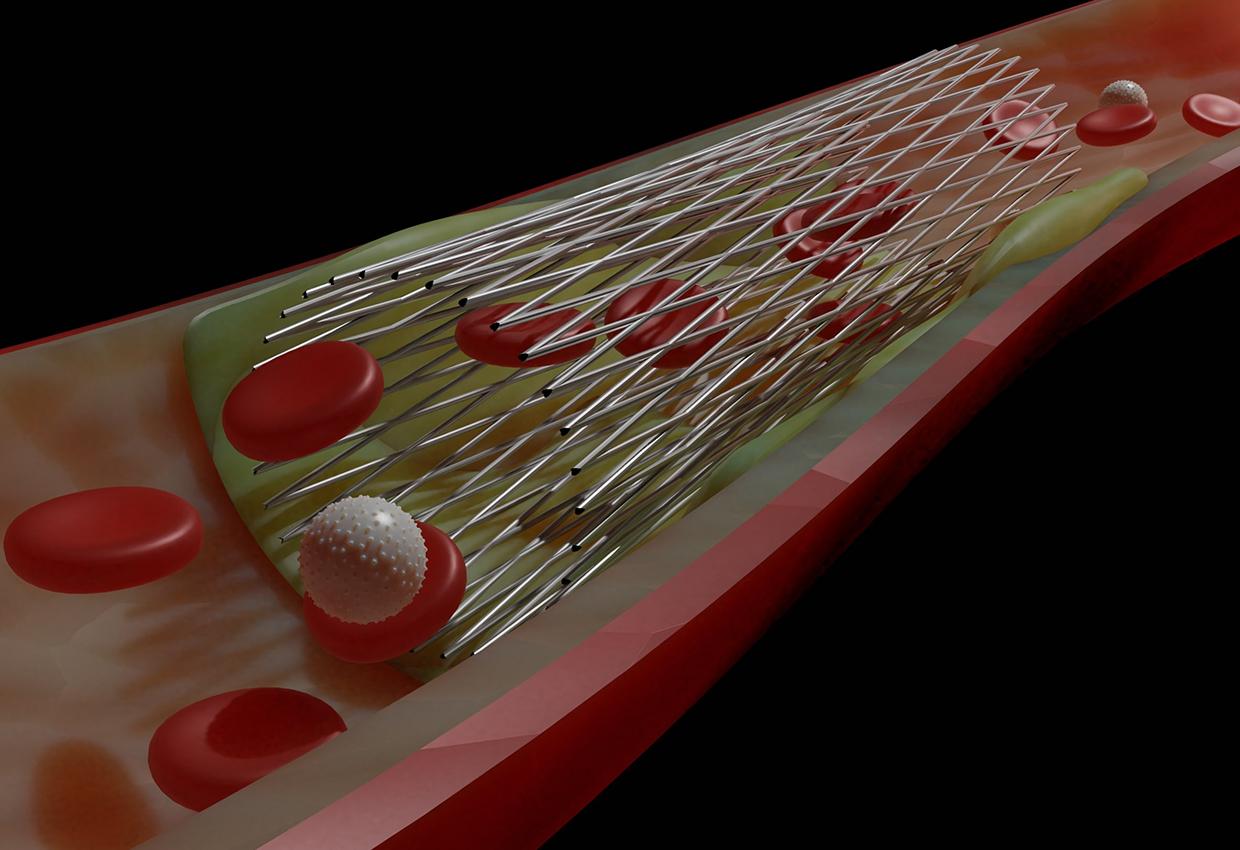
Characterising Stent Microstructure to Shed Light on Performance and Safety
Bioresorbable PLLA (poly‑L‑lactic acid) stents are increasingly used in vascular treatments to open narrowed or blocked vessels, restore blood flow, and provide temporary structural support.
PLLA is widely adopted for bioresorbable stents thanks to its biocompatibility, predictable hydrolytic degradation, and tunable mechanical properties. Because these stents are not permanent, they avoid long‑term complications associated with metal stents - such as chronic inflammation or impaired vessel remodelling - and they improve CT/MR visibility after dissolution, enabling clearer ongoing assessment and future treatment planning.
Since PLLA stents take 1–2 years to fully degrade at body temperature, a team of researchers from Boston Scientific, and a collaboration of universities, including Galway, and Queens University, Belfast set out to evaluate how the material breaks down over this period and whether any degradation‑related failures could affect safety. Their study focused specifically on braided PLLA stents, an understudied class that behave differently from other designs.